




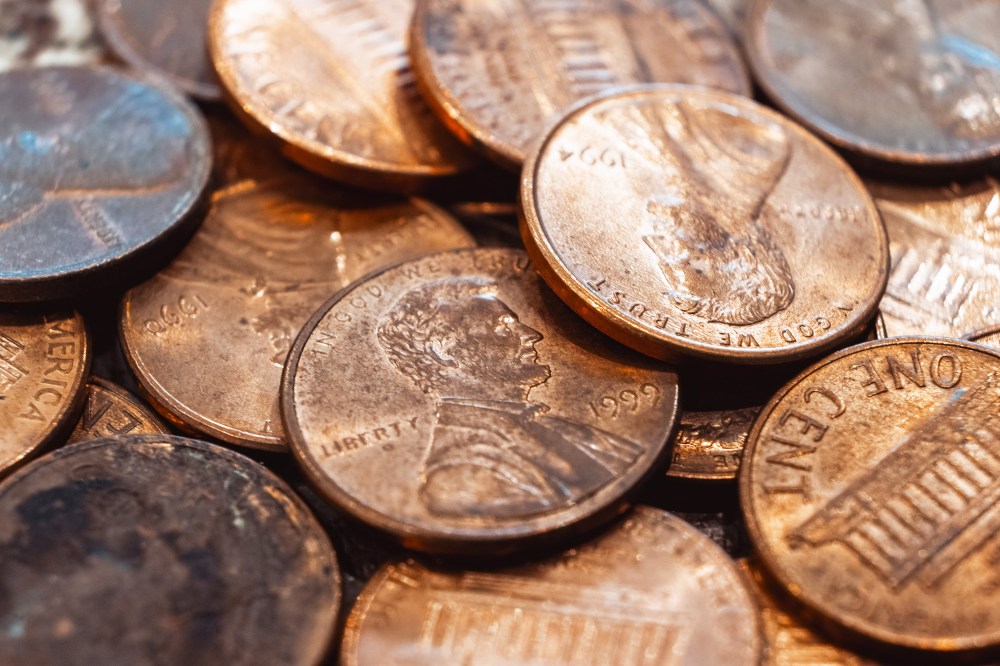
The American 1-cent piece will soon be a thing of the past, as the U.S. Mint in Philadelphia, which has produced pennies since 1793, prepared to strike its last circulating batch on Wednesday. In February, President Donald Trump ordered the Mint to stop production, and the U.S. Treasury said in May that it would begin phasing them out. Legislation has been introduced in Congress to formally eliminate the coin, but retailers are already planning for a post-penny future, rounding up prices to the nearest nickel.
This change in our spare change has long been expected. Since 2005, it has cost more to produce a penny than the coin is worth, while a study by a retail trade association found in 2006 that counting up pennies added 2.5 seconds to every cash transaction. Australia stopped minting pennies in 1992; Canada, in 2012. Abolishing the penny was even a subplot of a “West Wing” episode all the way back in 2001.
And yet I find myself mourning the humble penny, the smallest denomination of the world’s dominant reserve currency, the atom of the American economic universe.
First issued in 1793, when one coin could buy a piece of candy, the 1-cent piece found some currency in our everyday language. If you were frugal, you were a penny-pincher. If you were too focused on saving money, you were penny-wise and pound-foolish. Something cheap was penny-ante, but something valuable was worth a pretty penny. You could give a penny for someone’s thoughts or keep it, since a penny saved was a penny earned.
Pennies were often the first form of money kids got to keep.
Pennies were often the first form of money kids got to keep, long past the time when the coins could buy anything of value. Because the average penny can stay in circulation for decades, they were also the oldest thing kids could safely handle, with the year printed right on them. You could find a penny and pick it up for a day’s worth of good luck, or you could throw it in a fountain and make a wish.


Pennies might also be the last coin people encountered. Irish Americans often placed pennies on the eyes of the dead, which served the practical purpose of keeping eyelids closed during mourning and was related to the ancient Greek belief that you needed to pay the ferryman to cross over to the afterlife. An archeologist I once interviewed in North Carolina said he often identified unmarked graves by looking at the year of the pennies inside and cross-referencing census data on local people who died then. Some people also leave a penny on the headstone of a soldier as a marker to say they’ve visited.
For coin collectors, pennies were a gateway to the hobby. A pre-1958 penny with two stalks of wheat on the reverse instead of the Lincoln Memorial (or, since 2010, the Union shield) was often a numismatist’s first find, and it’s still fun to handle a 1943 steel penny (or “Steelie”), made when copper and nickel were being used for bullets and wiring to fight World War II. Schoolchildren could put a regular penny under a microscope to see the tiny statue of Lincoln in the center of the monument. Even the poorest kid could collect pennies, pressing them into a blue Whitman folder with their thumb.
The 1-cent piece was also at the heart of a now-dying souvenir industry: stretching pennies into commemorative tokens. There was a time when most every landmark had a machine on-site where those willing to part with their pennies could insert a coin and turn a hand crank to elongate it into an oval shape as a new image was stamped on. Now, pressed penny machines are so rare that they’ve become collectibles themselves.
The penny’s lack of monetary value was what made it invaluable to the user.
In all of these cases, the penny’s lack of monetary value was what made it invaluable to the user. You collected pennies, threw them in fountains, put them in your penny loafers, tiled your floor with them, left them on gravestones or stretched them into souvenirs precisely because they weren’t worth much. You might leave a few in a little cup by the cash register but still get excited when you found one on the street. Slashing a penny off the price was essentially meaningless, yet retail sales abound with offers for $19.99 or $49.99 or even $99.99 (especially on late-night TV ads). Even the price of a car was counted out to the second decimal, as though one were buying it entirely in pennies.
The penny is not the first American coin to be decommissioned. It is preceded in death by the little-remembered half-cent coin and $2.50 gold coin and the awkward, ill-considered Susan B. Anthony dollar. The nickel, which also costs more to produce than it’s worth, will probably also be retired before too long. But the penny was always worth more than a cent, and it will remain with us in spirit, as pennies are from heaven, after all. Good night, sweet pence.

Ryan Teague Beckwith is a newsletter editor for MS NOW. He has previously worked for such outlets as Time magazine and Bloomberg News. He teaches journalism at Georgetown University’s School of Continuing Studies and is the creator of Your First Byline.