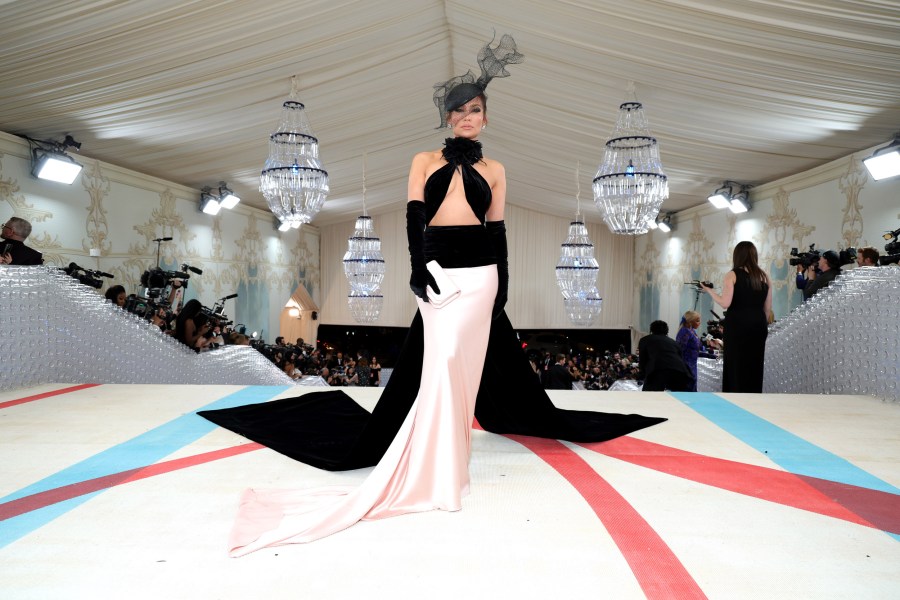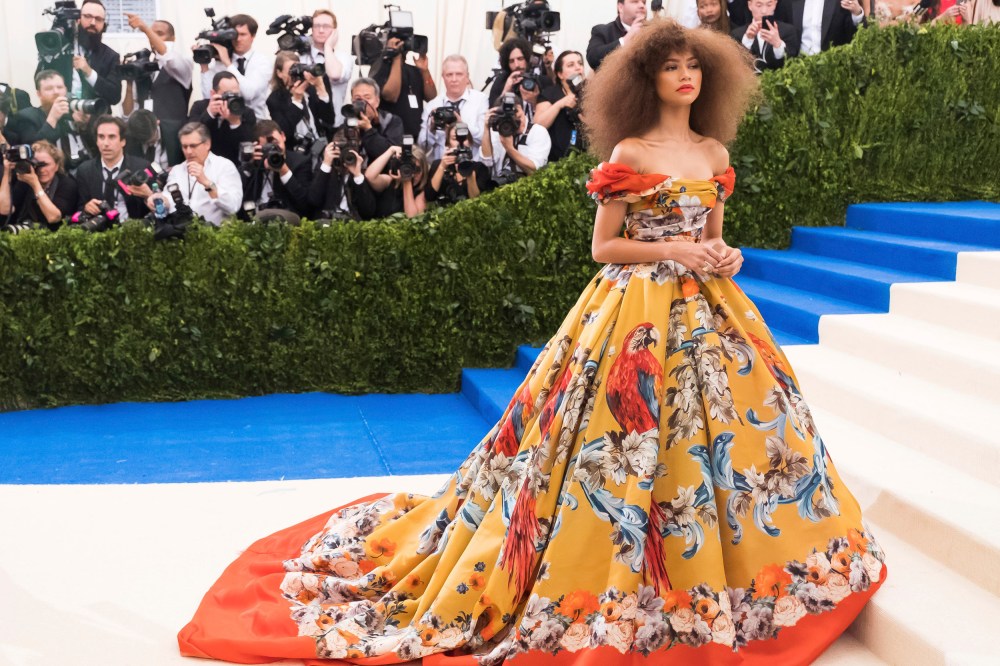
On Monday, people will tune in to ogle and judge the red carpet looks of the most elite fashion event of the year, hosted by the closest you can get to American royalty — mega celebrities Zendaya, Jennifer Lopez, Chris Hemsworth and Bad Bunny. Ironically, the dress code for this year’s Met Gala is inspired by a haunting piece of literature with biting commentary on the ruling class.
There is a long legacy of symbiosis between the literary and fashion worlds. In literature, fashion is symbolic. Clothing is context. An outfit can divulge more about a character than a page of dialogue: signaling a fall from grace, power and status, or even mental turbulence. Literature has given us enduring fashion icons: Truman Capote’s Holly Golightly, Ian Fleming’s James Bond, Leo Tolstoy’s Anna Karenina, F. Scott Fitzgerald’s Jay Gatsby, and Jessica Knoll’s Ani FaNelli. The list is long, impactful and ever-growing.
“The Garden of Time” explores many things, among them the fragility of humanity — specifically within the wealthy class.
In February, Ana Sui introduced her fall 2024 collection called “WHODUNNIT!!!,” for which models, wearing looks inspired by the “Queen of Crime” Agatha Christie and her beloved character Miss Marple, breezed past shelves of leather-bound books in The Strand’s rare books section. Before that, literary heavy-hitter Zadie Smith was featured in the pages of British Vogue wearing a gold, architectural orchid necklace by one Alexander McQueen. And in just a few hours, at the Met Gala, the pinnacle event in the fashion world, celebrities, actors, influencers and contemporary fashion icons will unveil looks inspired by J.G. Ballard’s short story “The Garden of Time.”

Published in 1962, “The Garden of Time” tells the story of Count Axel and his wife. The aristocratic couple are sequestered to their villa and expansive walled garden by an advancing mob of working-class serfs. In the shade of their Palladian villa, “time flowers” grow. They’re 6 feet tall, with slender stems that bear a translucent, goblet-sized flower. Every few days Axel snaps one of the time flowers from its stem, magically winding back time and reversing the mob’s advancement toward them. About three pages into the short story, the ending becomes clear: Axel and his wife will die. Eventually, the mob does reach the villa, but finds it in ruin. The once-high walls have crumbled, the doors have rotted from their hinges, and Axel’s wife’s harpsichord has been chopped up into firewood. Between the wrecked balcony and the tumbled wall, two stone statues of the count and countess stand side by side, surrounded by an impenetrable wall of thorn bushes and poisonous belladonna.
So how will this translate into red carpet glamour?
Vogue steered red carpet attendees to hone in on the “garden” part of “The Garden of Time,” urging them to “think melancholic florals (as moody florals aren’t moody enough).” And likely, that is what we’ll see this evening: gowns echoing the other-worldly and fragile beauty of the time flowers, paying homage to the belladonna wall protecting the statues of the count and countess, or exploring the once beautiful villa’s decay. It will be beautiful, but it will also underutilize the story; a missed opportunity to embrace the darker, more provocative themes of a piece of literature that has resonated for the better part of six decades.

Of course, good literature is good literature in part because it elicits different interpretations. “The Garden of Time” explores many things, among them the fragility of humanity — specifically within the wealthy class — and the passing of time. Axel and his wife are a study in control throughout the short story. They’re dressed well, Axel in a “black velvet jacket, a gold tiepin glinting below his George V beard, cane held stiffly in a white-gloved hand” and his wife with “her hair, swept back behind her head into a jeweled clasp, touched with silver” in a brocade dress cut “low across her breast.” They don’t react emotionally about their inevitable end until the mob arrives. Yet their small world, filled with beautiful things and protected by strong walls, isn’t enough to stave off death or change their destiny. Time, once on their side, runs out. They’re returned to the earth as pieces of stone in an untamed garden.
Ballard was known as a provocateur, whose science fiction literature explored technology, sex and human psychology. He was also, according to the obituaries and tributes written after his death in 2009, an enjoyable man devoted to his three children. You likely know his work, even if you don’t recognize his name. Ballard is perhaps best known for “Empire of the Sun,” a fictionalized account of his experience as a young boy during the Japanese occupation of Shanghai during World War II, and “Crash,” which follows a group of people who are sexually aroused by car crashes. Both have been made into movies by Steven Spielberg and David Cronenberg respectively. “Crash” has long captivated the fashion community. Before he was Moschino’s creative director, Jeremy Scott’s first collection was inspired by the book. Givenchy’s 2013 runway show featured a smoking pile of sedans with their windows smashed. Although far from a monolith, Ballard’s work grapples with dystopian modernity and the psychological effects of technology. “The Garden of Time” reads as a commentary on the inevitable fall of the wealthy, ruling class. Try as Count Axel and his wife may, the working people are on the horizon and they’re coming closer and closer. Axel doesn’t wish for more time flowers just to spare his and his wife’s lives, but rather to preserve the order and privilege they both enjoy behind their stone walls. He wants to stop the revolution. This reading, within the context of the Met Gala, an event that famously sells a single ticket for $75,000 — about $16,000 more than the average America makes in a year — is particularly thought provoking. Amid two deadly wars, deeply fraught cultural unrest, and a presidential election that looms overhead like a dark cloud, perhaps the rich and famous Met Gala attendees are trying to tell us that they know. Perhaps, the Met Gala is slyly acknowledging and embracing its own tone deafness before we have a chance. And yet, that same Vogue article that broke down the “The Garden of Time” dress-code described the working-class mob in “The Garden of Time” advancing toward the count and countess as “unthinking.” Whatever Vogue’s aim in assigning Ballard’s story to the Met Gala this year, the reality is this: Tonight, as we watch American royalty mount the Met steps — separated by our television screens, the scroll of social media, or the security blockades lining Fifth Avenue — we’re outside the garden walls. And that is the most Ballardian metaphor of all.
Hannah Holland
Hannah Holland is a producer for MS NOW's "Velshi" and editor for the "Velshi Banned Book Club." She writes for MS NOW.