




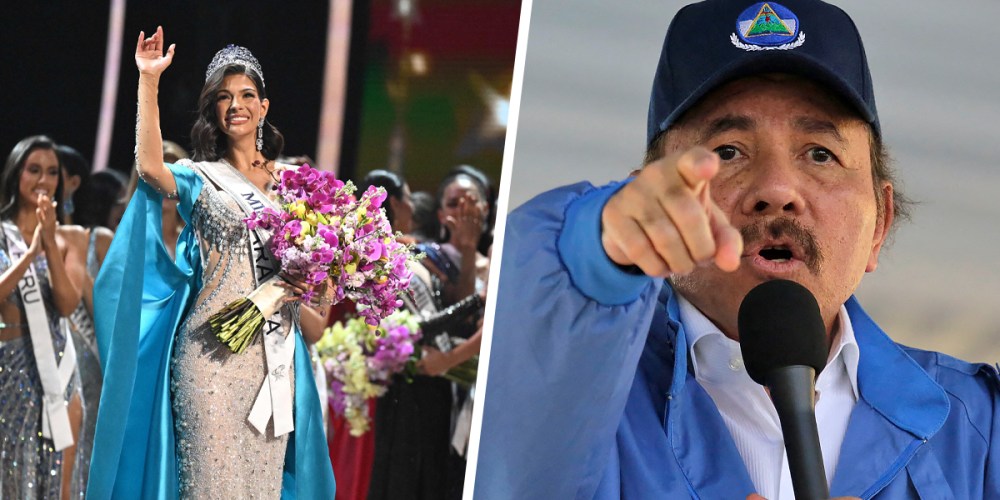
In November, Nicaraguan President Daniel Ortega called the country’s first Miss Universe win a symbol of “legitimate joy and pride.” Weeks later, the crowning of Miss Nicaragua, Sheynnis Palacios, had turned into allegations of treason, purportedly a coup attempt against a regime determined to quash any hint of opposition. How a beauty contest managed to stir up deep feelings of national pride and antagonism against Ortega’s regime reflects a political miscalculation on his part.
There is no question that Ortega faced something more powerful than he is.
Such a turn of events might sound comical to Americans observing from afar, but to Latin Americans who have long seen the Miss Universe pageant as the ultimate expression of cultural and national pride, the panic from Ortega and his allies comes as no surprise. An erstwhile revolutionary, who now refuses to relinquish his power, overplayed his hand. Ortega thought he had to act quickly for his own political survival. That he saw a reinvigorated political opposition in the widespread celebration of national pride in a beauty contest may reflect some degree of narcissism or paranoia on his part — but I believe it says more about the political power that cultural phenomena like the Miss Universe contest hold.
The story starts on Nov. 18, when Palacios was crowned Miss Universe, a historic first for a country not known for winning much on the international stage. The accolade sparked joyous celebrations, the country’s largest public demonstrations since anti-government protests in 2018 led to hundreds of deaths, thousands injured and reports of many being disappeared. National flags flew in full force, a clear repudiation of the Ortega regime, which has largely forbidden public display of the blue-and-white flag in favor of the Sandinistas’ red and black.

Despite claims of being a leftist populist, Ortega’s popularity ranks at about 15%, down from 19% in 2021, when he “won” his fourth term as president. Pope Francis has called the regime a “gross dictatorship,” and a recent Amnesty International report concluded that “human rights defenders, journalists and other activists continued to be harassed and criminalized.”
After Palacios’ win, photos of her participating in those 2018 protests, waving the national flag, surfaced on Facebook. For the Ortega regime, the joy drained immediately from the Miss Universe win. Now it was an attempted coup: “In these days of a new victory, we are seeing the evil, terrorist commentators making a clumsy and insulting attempt to turn what should be a beautiful and well-deserved moment of pride into destructive coup-mongering,” Nicaragua’s first lady and vice president, Rosario Murillo, said on Nov. 22, just three days after Palacios’ win.
At the beginning of December, the Nicaraguan police had planned to arrest Miss Nicaragua pageant director Karen Celebertti for “intentionally rigging contests so that anti-government beauty queens would win the pageants as part of a plot to overthrow the government,” The Associated Press reported. While she evaded possible arrest after not being able to enter the country, her home was raided and both her husband and son were reportedly arrested. Police claimed that Celebertti had also participated in the 2018 protests. This past Monday, Celebertti announced she was retiring from her post, noting on X that Palacios’ win was “for every Nicaraguan, without political distinction.”
There is no question that Ortega faced something more powerful than he is. The beauty contest, however manufactured it might be, still has strong cultural relevance in Latin American identity, especially for Latin American women.
The origins of beauty in the region were driven by the rise of Western multinational corporations in the 20th century. In one historical overview from Harvard Business School professor Geoffrey Jones, the beauty push into Latin America created a culture of winning at all costs, in which winning a beauty contest ironically led to advancement in other fields (even though it was clear that such “beauty” rewarded primarily whiteness). “The rewards for winners were dazzling, for careers opened up for them as models and television presenters, and even occasionally in politics,” Jones writes.


The culmination of such success remains winning the much-maligned Miss Universe contest, which Latin American countries have dominated for 72 pageants. Since Miss Peru was the first Latin American to win in 1957, there have been 25 winners from Latin American countries, with Venezuela taking seven crowns, Puerto Rico with five, Mexico with three and both Brazil and Colombia with two each. Six other Latin American countries, now including Nicaragua, have won it once each, accounting for more than a third of all winners. Talk about a Latin American dynasty.
As a Puerto Rican who vividly remembers the yearly family watch parties from the ’70s into the ’90s, I can attest that when a Puerto Rican won the contest, it was one of the highest points of national pride, as momentous as when Puerto Rico defeated the United States in Olympic basketball or when Puerto Rican baseball players represent their country in the World Baseball Classic. As I meet more and more Latin Americans in my life, it is clear this cultural significance is not limited to Puerto Rico: Miss Universe is on the same level as the World Cup for bragging rights. If you win Miss Universe, you become an instant celebrity. Your country adores you, and suddenly you have power and influence, thanks to a long-standing pageant that should have probably been canceled years ago.
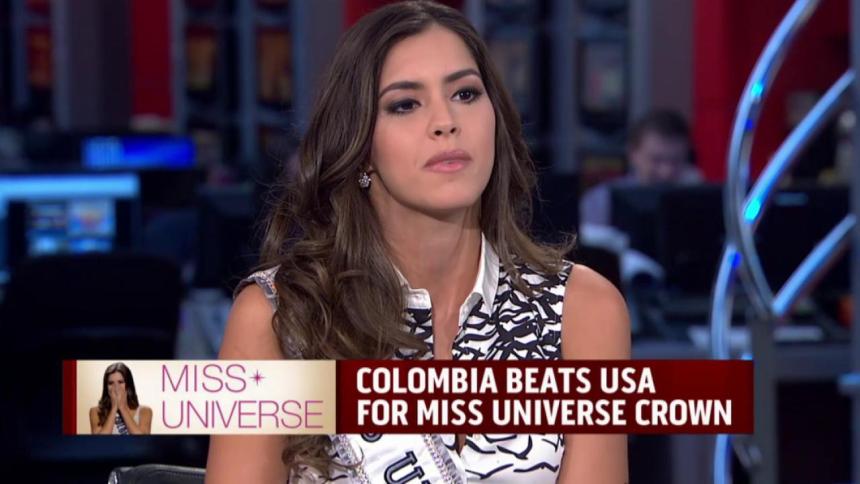
Shrugging off the Nicaragua story as folly is naive. Sure, one can easily dismiss it all, given that the organization that owns the pageant filed for bankruptcy. Yet Miss Universe continues to become more and more a platform for contestants’ political messages. This year’s contest also featured two transgender contestants — and the results of the Palacios win have obviously been politically consequential.
For a beauty contest with a long string of controversies that have led some to question its very existence, the Miss Universe pageant has set a new benchmark. One can ignore the Nicaraguan Affair, but some events will always be bigger than politics.
Dictators and governments, beware: The beauty queens are coming.

Julio Ricardo Varela is the founder of "The Latino Newsletter" and co-editor of "Pressing Issues from Free Press."