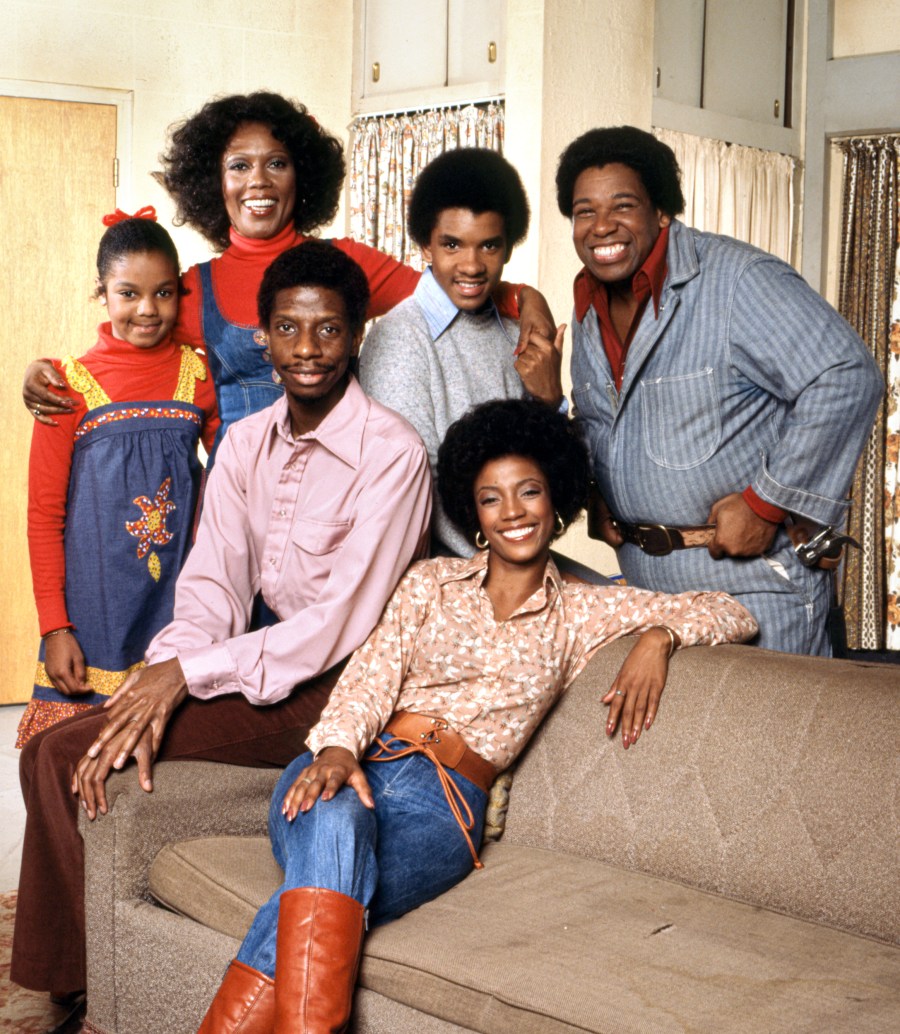
The new Netflix reboot of “Good Times” is, for good reason, being roundly criticized for trafficking in Black stereotypes and serving as more of a spoof of the classic 1970s TV series than a tribute to the original show, which was created by Eric Monte and Mike Evans and produced by Norman Lear.
There were certainly tricky issues around the representation of Black characters in the original series, which premiered in 1974, especially around the elder Evans son, J.J. (played by comedian Jimmie Walker), who was initially portrayed as clownish and less than intelligent and was memorable for his catchphrase “Dy-no-mite!” Even members of the original cast accused “Good Times” of perpetuating negative Black stereotypes. It was also problematic that the Black creators of the series (which ran through 1979) were sidelined.
That original series struck a nerve with Black audiences because of how raw and honest it sometimes felt.
Even so, that original series struck a nerve with Black audiences because of how raw and honest it sometimes felt. Despite highlighting the struggles of a Black family living in Chicago’s infamous Cabrini-Green housing project, it foregrounded a close-knit family, lighthearted sibling rivalries and a loving marriage — those “evergreen topics” that resonate across broad audiences and that Lear’s portfolio of television series spun into gold.
However, the remake, which features the fourth generation of the Evans family, makes the family the butt of the joke. This Evans family has a talking, drug-dealing baby who packs a gun, a character far more offensive than J.J. ever was. Father Reggie Evans (played by JB Smoove) is a Homer Simpson type who is often shown naked from behind or wielding fried chicken. Reggie bears little resemblance to his grandfather James Evans, played by John Amos, who was an affable but thoroughly serious character in the original series and was the proud heartbeat of the show. We also see talking roaches, mother Beverly Evans blowing the family’s rent money on an ankle-length fur coat and fast food restaurants serving gizzard lunch specials.

Netflix describes the series as the “spiritual sequel of sorts to the live-action original.” Many viewers, on the other hand, describe it as alarmingly offensive, a sort of modern minstrel show on which Black characters play out racist stereotypes of themselves to entertain largely white audiences. At its core, Aramide Tinubu wrote for Variety, “the writing just isn’t funny.” NPR’s Eric Deggans said the show seems “almost genetically engineered” to provoke outrage. It struck me as a more offensive AI version of the original series.
Netflix most likely won’t bemoan the outrage, because such outrage is likely to bring additional viewers. Since the series dropped, it has been in the top 10 most popular shows watched on the platform. In this moment of clicks, views and subscriber counts, even packaging the series as a reboot of the original show, when it has so little of the original’s spirit, feels more like clickbait and a trick of branding. The Netflix series has more in common with animated shows like “South Park” (cue the fart jokes) and “Family Guy” than the original “Good Times.” “Family Guy” creator Seth MacFarlane helped produce this reboot, as did other high-profile backers, including NBA star Stephen Curry. This is a star-studded affair all around.
Yvette Nicole Brown, who voices Beverly Evans, has been busy defending the series, urging viewers to give it a chance and to push past their initial impressions to appreciate the larger project or the full plotline.
Yvette Nicole Brown, who voices Beverly Evans, has been busy defending the series, urging viewers to give it a chance and to push past their initial impressions to appreciate the larger project or the full plotline. And there is one. All of the characters do experience some growth, perhaps except Reggie, who is mostly celebrated just for sticking around. “I would never abandon my family,” he says. We learn that the inexplicably thuggish baby really longs to bond with Reggie, who is inexplicably resistant to do so, instead dropping and cursing the baby for his drug-dealing ways. The elder son, Junior (voiced by Jay Pharoah), and daughter Grey (voiced by Marsai Martin) are both grappling with their changing bodies as teenagers as they try out different versions of themselves, clothes, speech and behaviors that might make them appear prettier, smarter or more popular than they actually feel.
Perhaps to Brown’s point, Beverly has the widest arc. At the beginning of the series, she’s a devoted housewife longing for her home decor and family unit to be the envy of the building. At the end, she’s the housing project president, having replaced her nemesis, Delphine (Tisha Campbell). The campaign that Beverly and Grey embark upon to improve their building is undermined by their own power-seeking ways, which make them easy pawns for white developers who want to displace the residents to make way for white gentrifiers.
So yes, there is a plot, just as there are heavy-handed attempts at social critique, including animated depictions of Donald Trump, Jeff Bezos, Elon Musk and Bill Gates, all of whom have found ways to profit off Black pain. But the story doesn’t feel like anything remotely real. And maybe we shouldn’t expect that of an animated series, but we should expect to not have to sit through so much shucking and jiving to get to the larger project or message. That the original series felt raw and real had as much to do with the format as the content. The original “Good Times” came as America was still discussing the 1965 Moynihan Report, its controversial “culture of poverty” thesis and its belief in the supposed pathologies of the urban poor. An audience was primed. The show also came at a time when filming in front of a live studio audience still felt experimental, with performers and audience members bouncing lines and laughter off one another. Watching it must have felt something like watching “An American Family,” essentially a reality show about the gradual unraveling of an affluent white family, which had aired on PBS just a year earlier, in 1973. “An American Family” felt raw and honest, too, and it challenged a lot of assumptions that money meant a happy family life. “Good Times,” on the other hand, by featuring a loving two-parent Black family, challenged a lot of assumptions that poverty had to mean a miserable family life. Americans remain fascinated by stories about the everyday lives of poor Black people, especially the most exaggerated stories. Netflix’s turn to adult animation to remake the story of the Evans family arises from its recognition of that fascination. Just as other production teams have turned to musicals to recast Black pain as palatable, Netflix took a fictional family that felt real in the 1970s, created what feels like a ChatGPT rip-off and thought we’d watch and have a good time.
Robyn Autry
Robyn Autry is a sociology professor and director of the Center for the Study of Public Life at Wesleyan University. She is the author of “Desegregating the Past: The Public Life of Memory in the U.S. and South Africa.”