




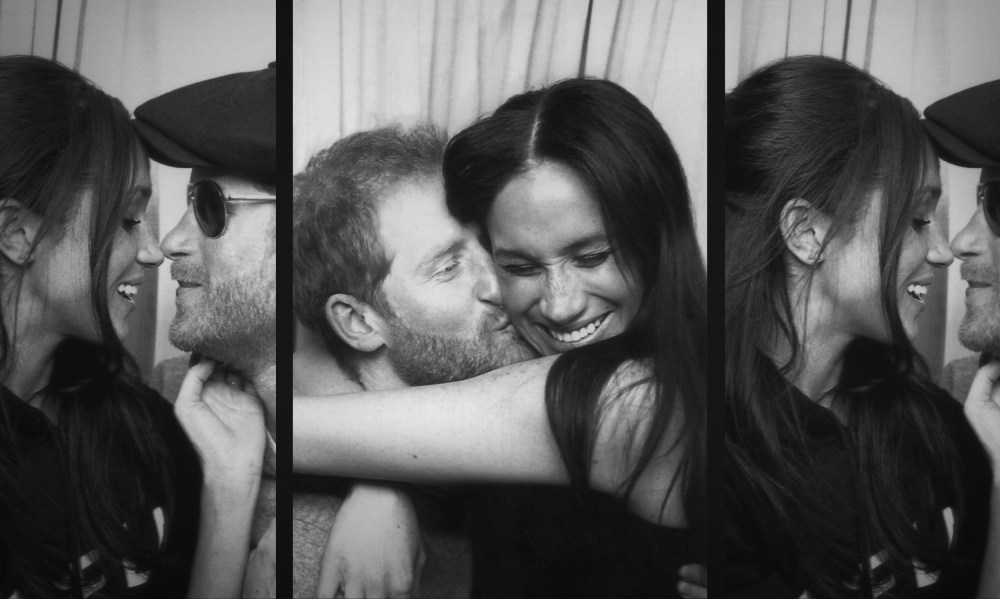
The moment has finally arrived, gentlefolk. The first three of the six episodes of Prince Harry and Meghan Markle’s Netflix docuseries “Harry & Meghan” dropped Thursday. “No one knows the full truth. We know the full truth,” Harry says in the first episode. “Doesn’t it make more sense to hear our story from us?” Meghan asks later.
Despite it being billed as the unvarnished truth, so far the series is, predictably, beautiful propaganda with high production value. The difference between what the documentary says it is and what it actually is gets at the heart of what this documentary does effectively: plays with the power dynamics between the observer and the observed.
This one-sided story is one of many truths.
This subversion, however, isn’t always executed with self-awareness. How can any story told from a place of pain and persecution be the unvarnished truth? I do not mean to deny their reality but instead to suggest this one-sided story is one of many truths.
The tension between the observer and the observed is set up early on in the series. Connecting the story of his mother, Princess Diana, to the racist, cutthroat coverage of Meghan, Harry says, “To see another woman in my life going through this feeding frenzy, that’s hard.” He says, “It is basically the hunter versus the prey.” And, so, the hunted become the hunters and use their series to expose the media, or at least facets of it, as inhumane, ruthless and corrupt in their relationship with the monarchy.
The series implicitly plays with the theme of the watched doing the watching. We see a clip of Princess Diana saying of her sons: “William, he’s a typical 3-year-old… very enthusiastic, whereas perhaps Harry is more quiet and just watches. He’s certainly a different character altogether.” We see a clip of young Harry with two paper towel rolls stuck together and hear a newscaster say, “The young prince made a pair of cardboard binoculars, determined to beat the press at their own game.” The moment foreshadows the docuseries itself.


In its successful portrayal and exploration of the couple’s humanity, the docuseries is, at times, a compelling watch and it is precisely how the couple beats the press at their own game. Grief is a common and heartrending thread throughout their story. Harry loses his mother. Megan becomes estranged from her father when she begins to date Harry. The couple feels a sudden loss of autonomy and control. Harry loses his wider family. This heartache and tragedy is not to be trivialized. One can’t help but be moved in moments and it helps draw the viewer into a David and Goliath narrative. So much so, one almost forgets that any strife within the royal family is in fact, a Goliath and Goliath narrative.
In its successful portrayal and exploration of the couple’s humanity, the docuseries is, at times, a compelling watch.
And this is perhaps the docuseries and the couple’s shortcoming: a seeming lack of self-awareness. Yes, everyone has a prerogative to tell their own story and, yes, the couple — Meghan, especially — were hunted and eviscerated by the press. But it is precisely that feeding frenzy the couple leans into and exploits for enormous financial benefit and continued relevancy. Their production company, Archewell Productions, has a lucrative multimillion-dollar deal with Netflix. This docuseries is only the first that will come out of the deal. Archewell also has a lucrative podcast deal with Spotify. Then, there’s Harry’s forthcoming tell-all autobiography, Spare, which is scheduled to hit shelves in January 2023.
In the first three episodes, the couple’s lack of self-reflection hits its low point as they explore Meghan’s relationship with her much older half-sister, Samantha Markle, who allegedly sold negative, fictionalized stories to tabloids in exchange for large sums of money. The stories themselves were painful enough to have to deal with, but then Meghan yielded to the palace’s recommendations that she disinvite Samantha’s daughter, with whom she was very close, from her wedding.

The story is heartbreaking, to be sure, but it’s uncomfortable watching this powerful couple use their platform to go to war with a woman who is painted as troubled and in need of money. And it leaves the viewer wondering what it is, exactly, the couple is trying to say with their documentary aside from air grievances? The link between the monarchy and colonialism and the slave trade is highlighted (a well-established relationship) but it stops short of questioning the present-day relevancy of the institution. We already knew the press was racist and ruthless in their treatment of Meghan and that some of her family got swept up in the frenzy. So at no point are we really learning anything new, nor are they asking any meaningful, probing questions.
The series is somewhat empowering in that it flips the script on observer-observed power dynamics and gives Harry and Meghan the opportunity to tell their own story. But it also overcorrects, turning the couple, at times, into the very thing they rebuke: a powerful institution wielding its power to bend the narrative to their will.

Noor Noman is a writer focused on culture, race and LGBTQ issues.