




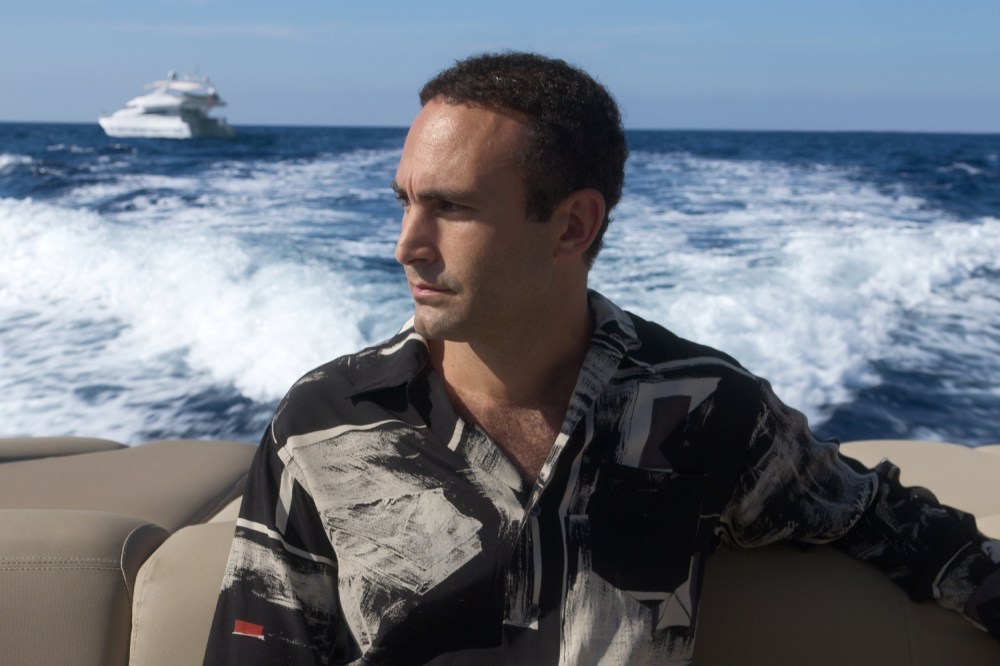
In the latest and final season of Netflix’s “The Crown,” the first four episodes of which dropped Thursday (the last four are due for release Dec. 16), creator Peter Morgan and his fellow writers have created something memorable: an appallingly racist show. As a so-called historical show, it takes the wrong lessons from history by relying on the same tropes upon which empires are justified and built.
Creator Peter Morgan and his fellow writers have created something memorable: an appallingly racist show.
Mohamed al Fayed (the famed Egyptian businessman who owned Harrods) and his son Dodi (who was dating Diana when they were killed in a 1997 car crash), are portrayed as manipulative, coercive, and sometimes perverse misogynists who are completely devoid of moral compasses and are instead driven by their desire to climb socially. Gaining the acceptance of powerful white people and living a Western lifestyle appears to be their ultimate goal, and the characters (and the writers) fetishize and glorify whiteness in the process.
In contrast, the royal family — particularly Charles — is painted as deeply human, with complex emotional realities. Charles is portrayed as the noble hero and lasting love interest in Diana’s life, which is a curious artistic choice given that he was widely chastised by the British public for his cruelty toward her when she was alive. For example, one of the reasons he reportedly married Diana was she was presumed to be a virgin. He swiftly discarded her for Camilla Parker Bowles, with whom he continued his pre-existing romantic relationship.
After decades of journalists, academics, pundits and the public calling out the royal family’s often cruel treatment of Diana and pointing out how that cruelty contributed to the unraveling of her life, “The Crown’s” final season rewrites history, showing the royal family as loving and steady, who have her best interests at heart even though they are trapped by the confines of the institution. Meanwhile, the Fayeds, through their fictionalized manipulation and coercion, are painted as being solely responsible for her death.
In the show’s version of history, the Fayeds effectively entrap Diana and take her to Paris as part of an elaborate plan hatched by the elder Fayed to get Dodi to propose, but all the poor princess wants is to get back home to England to be with her boys. In “The Crown,” Diana wants to fly directly from St. Tropez (where she and Dodi are holidaying) to England, but Dodi, his father’s puppet, is instructed to take her to Paris without her consent, which distresses her.
There’s no evidence to suggest that Diana was trapped or tricked into going to Paris, where she died, nor is there evidence that Dodi proposed. In fact, an inquiry into her death, which took place 10 years later in 2007, concluded that Dodi did not propose before they died.
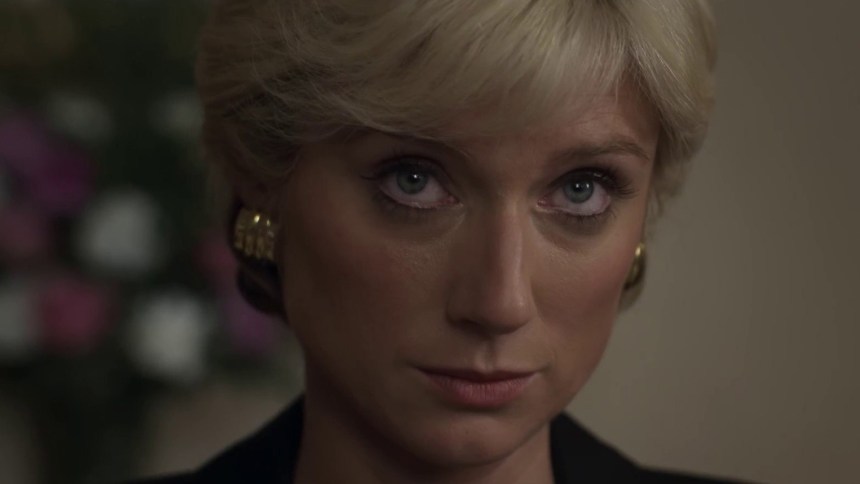
As Dodi and his father are shown to entrap Diana, “The Crown” offers its audience contemporaneous intercutting with a young William killing his first stag. The interwoven storyline at least suggests that Diana, much like the stag, is being circled and hunted by the Fayeds. While William is shown partaking in a “civilized” rite of passage, the Fayeds, on their hunt, are conversely portrayed as barbaric, as Diana is dehumanized by them and depicted as their conquest.
Mohamed Al Fayed is painted not just as predatory, but also as perverse. In one scene, he asks a member of the yacht staff if Dodi and Diana are having sex. When the white man, who finds it undignified to discuss such matters, is of little use, Mohamed asks the maid the same question. In another scene, the father tells his son that he’s served Diana on a plate for him. Additionally, he’s shown as funding, and orchestrating, the famous shot of Diana and Dodi kissing on the yacht taken by paparazzo Mario Brenna. Again, not only is there no evidence of this, but even Brenna has said this plotline is “absurd and completely invented.”


These tired and dangerous tropes of Muslim men as barbaric, perverse, uncivilized and devious have real-world consequences.
These tired and dangerous tropes of Muslim men as barbaric, perverse, uncivilized and devious have real-world consequences. It’s the same cultural logic that the empire used, historically, to justify the violent subjugation of brown-skinned people and, it’s the same logic that’s been used to justify endless wars in the Middle East. These dehumanizing tropes create and reinforce narratives whereby the West is the bedrock of civilization and civility (e.g. human rights, good governance etc.) and the Global South is in constant need of its intervention or invasion. Indeed, we’re seeing this dynamic play out right now in the Israel-Hamas war. Israeli Defense Minister Yoav Gallant ordered a “complete siege” of the Gaza Strip in October, noting “We are fighting human animals and we are acting accordingly.”

With its casting choices “The Crown” also reinforces the seemingly paradoxical but trope of more barbaric brown men as less masculine, or even effete, compared to their white counterparts. By and large, the royal family is made to be much more attractive than they are in real life. Dominic West, who plays Charles, is an especially generous casting choice. The Fayeds are made less attractive. Mohamed al Fayed, who stood just under 6 feet in real life, is portrayed by actor Salim Daw, small in stature, which means that on screen, he’s constantly towered over by those around him. Photographs of Dodi standing next to Diana show him around her height, or taller. He was also stocky. Instead, Khalid Abdalla, who was cast as Dodi is slight and next to Elizabeth Debicki, who plays Diana and soars at 6’3,” he is noticeably smaller than her.
Furthermore, when Diana speaks to Charles in “The Crown,” she takes him seriously. When she speaks to Dodi, she has to sit him down like a child and explain the world to him, just as she does after he proposed to her (again, in a fictionalized account in the show), and explain why his proposal is so unrealistic.
By and large, the royal family is made to be much more attractive than they are in real life. The Fayeds are made less attractive.
The show offers us a heavy dose of white saviorism, not least in Diana’s final conversation with Dodi, in which she tells him to grow a spine and disentangle himself from his controlling father. Implicitly, “The Crown” here critiques the collectivism of many brown cultures, portraying them as stifling enmeshment, and instead uplifts the supposed dignity of Western individualism (an ironic subtext given the nature of the royal family, which does not reward individualism).
This penultimate batch of episode spends so much time villainizing the Fayeds, and taking away Diana’s agency in the process, that the show dehumanizes Diana in the same way it suggests the Fayeds did. It strips her of her voice, of her choices, of her story. In making her prey to coercive, amoral and uncivilized brown men, it also reinforces the paradigms that made, and make, the brutality of imperialism possible, paradigms that have no place in 2023.

Noor Noman is a writer focused on culture, race and LGBTQ issues.