




UPDATE (April 18, 2024 11:10 p.m. E.T.): A source confirmed to NBC News on Thursday night that Israel had carried out some sort of operation in Iran. The U.S. was warned but did not participate. The move is sure to heighten tensions in the region.
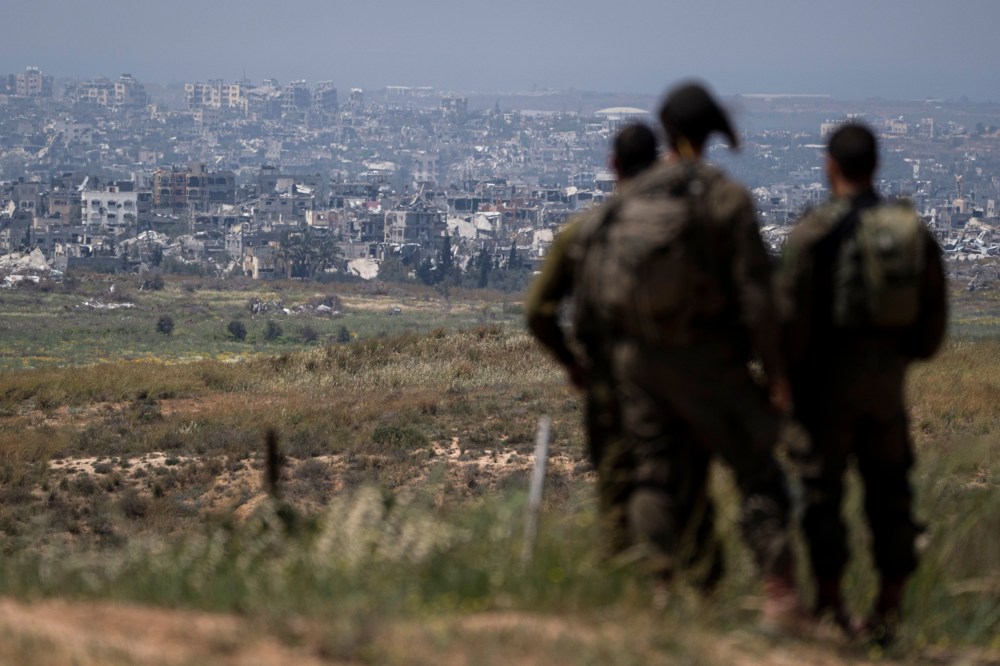
Israel is now potentially facing war on two fronts. The country’s invasion of Gaza, a response to the Oct. 7 assault by Hamas militants, is now in its sixth month. Now there’s every reason to anticipate a reaction to Iran’s weekend attack that directed more than 300 drones and missiles toward Israel.
What does anyone gain by allowing violence to escalate in the Middle East?
Many will argue that, of course, Israel must respond — with force and finality — but focusing on the most immediate cycle of action and reaction ignores the far bigger dilemma gripping Israel, Iran and, by extension, the United States: What does anyone gain by allowing violence to escalate in the Middle East? Is shaking up the way things have been — the “status quo” — worth it in a region known as a tinderbox?
Israel has always had its right to exist questioned, immediately after the Balfour Declaration drew the first boundaries in 1917 — and later after the United Nations established the state of Israel in 1947. Its rapid military advancement since then has been prompted by national survival. Prime Minister Benjamin Netanyahu’s contribution to Israel’s foreign relations policy has been to challenge Iran’s nuclear program and call out the terrorist networks Iran supports throughout the Middle East.
In 2015, Netanyahu bypassed President Obama and made his case straight to Congress, in search of allies who would pursue regime change in Iran. An unpopular leader in a country where national security is the No. 1 voting issue, Netanyahu benefits by keeping Israel embroiled in wars; the focus on outside enemies is the glue keeping his threadbare coalition together.
Since the Iranian Revolution in 1979, which ousted the pro-Israel, pro-U.S. Shah of Iran and brought “Death to America” chants into living rooms across the United States, the regime in Iran has also benefited internally from focusing its public’s attention on external threats. As successive international sanctions have crippled Iran’s economy, the Iranian Revolutionary Guard stays laser-focused on where it can undermine and disrupt the interests of its enemies — and where it can also provoke other countries into costly escalation.
Iran’s provocations have cost lives across the Middle East, but this is not new. Israel and Iran have long used other countries’ land and other countries’ populations to conduct a shadow war against one another. Those conflicts have included Iranian proxies arming militants in Gaza and Lebanon, and Israel killing Iran’s scientists and military leaders when they travel.


Israel killed Iranian officials in Damascus, Syria, on April 1, and Iran warned the region that it would launch counterstrikes. Those counterstrikes would not just be a threat against Israeli civilians, but serve as a test of the United States’ ability to defend Israel with weapons systems. By firing missiles and sending drones over the weekend, Iran put itself in direct conflict with Israel, the one thing that both countries had avoided in the past.

Prior to Iran’s attack, the Biden administration had recently warned Netanyahu that his choices during his country’s the invasion of Gaza have made Israel’s position in the world more precarious; the deaths of so many Palestinian children and noncombatants has made it difficult for the state of Israel to maintain sympathy as the victim, as it had on Oct. 7. In fact, Iran’s attack proved Israel’s power. The Iron Dome system intercepted nearly all of the missiles directed at Israel.
World leaders are scrambling to prevent the conflagration from spreading. Though the Biden administration has made it clear that the United States will not engage in a direct conflict pitting Israel against Iran, Netanyahu, who leads a military the U.S. helps fund, retains the right to make his own choices about when and how to use the weapons and military aid provided by the United States. And Netanyahu, a leader who has repeatedly ignored American officials’ calls to restraint, now has the power to respond to Iran and put American troops at risk throughout the Middle East.
“We reserve the right to do everything in our power, and we will do everything in our power to defend this country,” Israeli government spokesperson David Mencer said. Israel’s military chief vowed, “Iran will face consequences for its actions.”
That’s why the focus is now on Netanyahu’s war Cabinet meetings and his decisions. Regime change and war with Iran has its ardent supporters in the United States, most notably in former national security adviser and U.N. Ambassador John Bolton. But for a generation of voters who were raised against the backdrop of America’s failures in Iraq and Afghanistan, there is zero appetite for opening a new war front with Iran. Diplomats and leaders from around the world are on the phones around the clock, trying to pour cold water on a hot situation — urging restraint while readying their own resources should Israel make a move toward war.

Nayyera Haq is a global affairs journalist.