




American cinema is mired in intellectual property hell. The percentage of movies that are franchise entries, remakes, sequels or spin-offs has surged in recent decades. We are trudging through a muck of constantly recycled nostalgia and sameness, with film studios hoping to cash in on familiarity rather than invention or risk-taking. When I heard that Robert Eggers, one of the most ingenious directors living today, was remaking “Nosferatu,” the classic 1922 German vampire film, I immediately steeled myself for another exciting artist to be felled by the curse of mindless repetition.
Fortunately, Eggers has defied my expectations. His new version of “Nosferatu” is an admiring homage to the earlier film, with many references to its iconic visual language and dialogue. (F. W. Murnau’s original “Nosferatu” is a silent film, in which dialogue is conveyed through intertitles.) At the same time, Eggers’ film is a radical departure because of a shift in perspective from its male protagonist to his wife, overlaying this new point of view atop the foundation of the first one. The result is less a remake than a reinterpretation that changes the story from one about fear of the other to fear of what lies within us. Not everyone will love this film, but Eggers has done us a service by showing us how an artist can remain faithful to their source material while still subverting it to cultivate new themes.
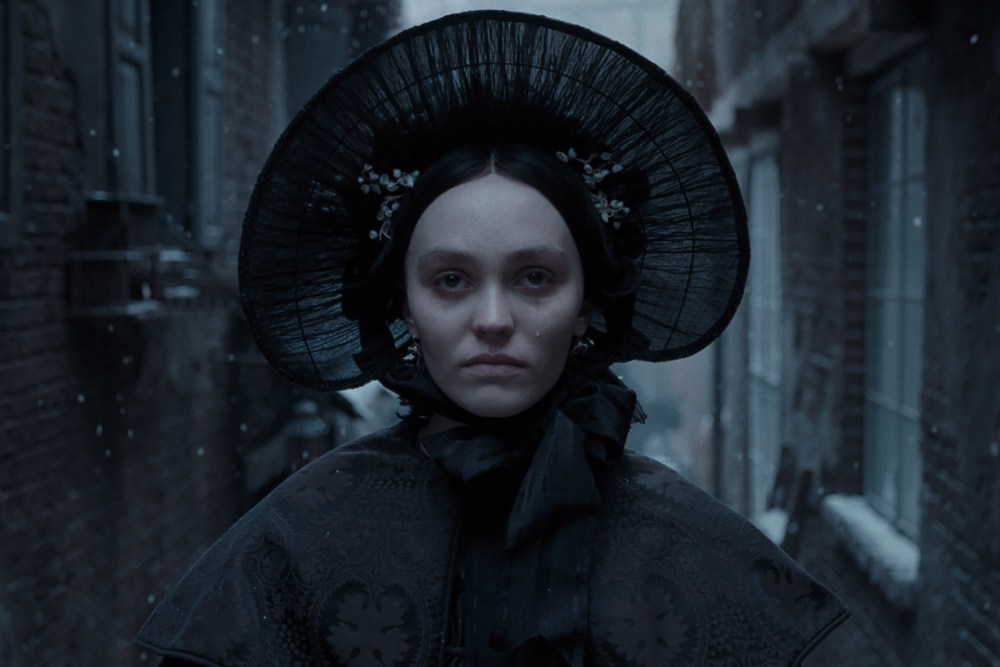
In Eggers’ telling, Ellen is not the “innocent maiden” of the original, but a more ambivalent figure who is ensnared in a Gothic love triangle.
A short synopsis of the original “Nosferatu” — an unauthorized and loose adaptation of Bram Stoker’s novel “Dracula” — is important to identify the specific twist that Eggers pulls off. (If somehow you have managed to avoid any encounter with this endlessly adapted classic story, a warning that this article discusses major plotlines.) In Murnau’s original, the protagonist is Thomas Hutter, a newlywed German real estate agent who journeys to Transylvania to finalize a contract for a mysterious client, Count Orlok, to purchase a property in Thomas’ hometown of Wisborg. Orlok is revealed as a vampire and becomes obsessed when he stumbles upon Hutter’s miniature portrait of his wife, commenting that she has “a lovely neck.” Shortly thereafter, Orlok attacks Thomas and then sets out to Wisborg to obtain Thomas’ wife. In his unstoppable advance, Orlok feasts on locals and unleashes the plague on Wisborn. In the end it is Thomas’ wife, not Thomas, who is able to stop Orlok after she sacrifices herself to him by distracting him and preventing him from getting back to his coffin before daybreak, which causes him to disintegrate.
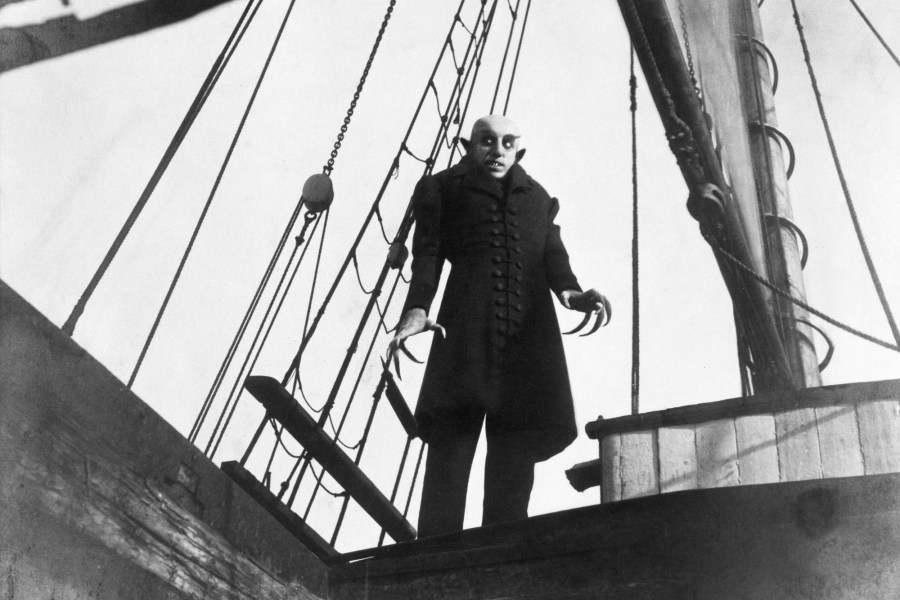
What’s clever about Eggers’ version is that by pulling out threads in the original, it offers its own radical reinterpretation. On a narrative level, one of the more striking features of Murnau’s original is that the unexpected hero of the story is Thomas’ wife, Ellen, even though she seems an ancillary character until the climactic scene. Moreover, the way she becomes a hero is important. She is able to slay Orlok only through an act of deception toward her beloved Thomas: The night she sacrifices herself, she feigns illness in order to send him away from the house, so that Nosferatu can take her alone. While Orlok is ghastly, there is a sexual subtext to Ellen’s act of lying to her spouse to await her final fate alone in their bedroom.


Eggers turns the tale of Nosferatu on its head by centering the perspective of Ellen, played by Lily-Rose Depp, and creating a backstory and inner life that elaborates on the context for her final act of guile. In Eggers’ telling, Ellen is not the “innocent maiden” of the original, but a more ambivalent figure who is ensnared in a Gothic love triangle. In the opening sequence, a young Ellen establishes some kind of existential psychic bond with Orlok (played by Bill Skarsgard), laying the groundwork for his eventual quest to Wisborg. Whereas in the original, Ellen’s episodes of sleepwalking suggest her connection to Thomas (Nicholas Hoult in the new film), here her violent, somnambulistic visions are the medium for her connection to Orlok. Ellen has evolved from object to subject, and while her love for Thomas appears sincere, her inner life is not defined by simple devotion but by a conflict between love and something more animalistic. This all makes her final act more complex than straightforward altruism.

Eggers’ telling of “Nosferatu” also dramatically reshapes the themes of the movie. The original “Nosferatu” hinted at German anxiety about outside intrusion and social change, and functions as antisemitic allegory in the aftermath of World War I. Eggers’ version flips the story inward to focus on an individual who is reckoning with her demons and her darkest impulses. Orlok represents — as the movie explicitly names him in some of its clunkier moments — Ellen’s “shame,” “melancholy” and the “appetite” for darkness and sin within her.
I suspect this movie could be polarizing. Eggers strived for historical authenticity in his depiction of Orlok as a vampire out of Romanian folklore, but that effort may not spook or engage some contemporary audiences. (There is also some visual and aural tension between Eggers’ desire for a corpse-like Orlok and the story of her seduction.) And I can imagine some “Nosferatu” heads being miffed by the liberties that Eggers’ sweeping reinterpretation takes. But in an age of regurgitated dreck and infantilizing nostalgia plays, Eggers has shown appreciation for a classic work while making something provocative and new. It’s a statement that honors tradition and the act of artistry itself.

Zeeshan Aleem is a writer and editor for MS NOW. He primarily writes about politics and foreign policy.