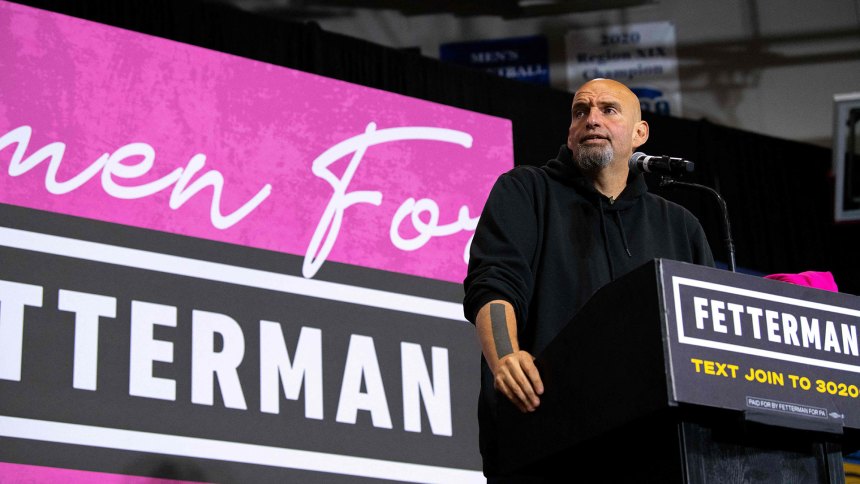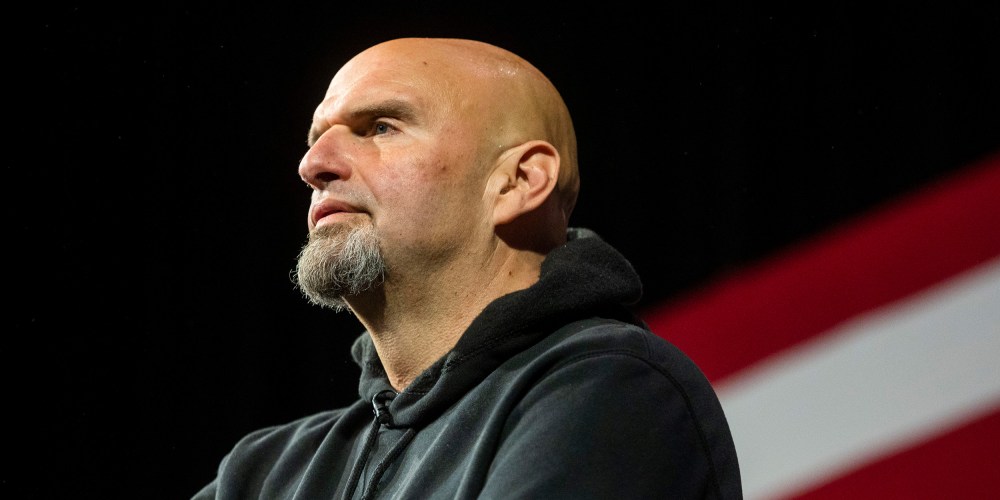
After weeks of calls for a debate from his opponent, Pennsylvania Democratic Senate nominee John Fetterman has finally committed to debating Trump-backed Republican opponent Mehmet Oz on Oct. 25.
It will be a high-stakes affair for Fetterman, who’s ahead in the polls and still dealing with noticeable effects of a severe stroke he suffered in May. Should just one particularly jarring moment of Fetterman struggling to understand or articulate words go viral, it could potentially be a death knell for his promising candidacy.
It will also be a high-stakes affair for the nation, since Fetterman’s race is one of a handful of widely watched contests that could determine which party controls the Senate during the second half of President Joe Biden’s term.
Despite the risks ahead, this is the civically virtuous thing to do.
There is no question that Fetterman and his team have thought extensively about whether participating in a debate — which is a norm, but not required for candidates — could be an unforced error that torpedoes his comfortable lead. But they’ve made the right decision; despite the risks ahead, this is the civically virtuous thing to do.
After experiencing what he called a near-fatal stroke in May, Fetterman took a break from the campaign trail for about three months. He’s gently waded back into campaigning, but with more restrictions on his appearances, and with assistance to help him with issues tied to his recovery. He has auditory processing issues, which can make processing spoken language slower and at times confusing for him; he’s also exhibited word retrieval issues which have led him to noticeably misspeak at times.
This is likely part of why he has limited engagements with reporters and has been selective about public appearances in the run-up to Election Day. He relied on closed-captioning during a recent video interview with the The New York Times and has had staff members repeat questions for him at live events.

Fetterman’s campaign reports that he’s performed normally on two neurocognitive tests, and some reporting indicates that he appears to be improving in his speech capacity. A stroke expert at Massachusetts General Hospital found the report about his test scores “reassuring,” according to the Times. Dr. Kavita Patel, a primary care physician and MSNBC contributor, told me that she has “no reason to question his mental capacity” based on his public appearances. She also noted that while she was troubled by his initial lack of transparency about his medical conditions and wished he’d release more detailed medical records, she was not skeptical of his ability to fulfill his job responsibilities, even if with some assistance for his lingering issues.
A debate would shine a bright light on all of Fetterman’s health challenges, and for some voters it could raise questions of his fitness for office. Fetterman has requested closed-captioning to assist him during the debate, and it’s unclear how well this will work or how it will scan to audiences.
And if he stumbles over his words particularly badly, there’s nothing stopping Oz from using it to try to bludgeon him to oblivion on social media and with new attack ads. Oz has already sought to exploit Fetterman’s commitment to debate to score political points and depict him as weak, demanding that the debate moderator inform the audience that Fetterman is using closed-captioning and demanding a longer debate. But voters deserve to see candidates in a debate setting to get extended, real-time exposure to their ideas and observe the way they comport themselves as aspiring public servants. Debates provide unique opportunities to not only discuss policy, but also allow politicians to express their political philosophy to a wide audience. And while there is a real, unfortunate possibility that disability bias could influence voter perception of Fetterman’s reliance on closed-captioning or possible verbal stumbles, it is valuable for voters to get a substantive opportunity to judge how their representative will handle a key part of their job — public persuasion in an unscripted, high-pressure scenario. Moreover, with the Republican trend of boycotting debates out of spineless political expediency, it’s more important than ever for Democrats to lead by example and uphold this healthy democratic practice of public engagement and accountability. Ultimately it’s not clear that voters will be able to disentangle questions of Fetterman’s auditory and speech issues from their perception of his cognitive capacity. But a poor performance may very well not matter nearly as much as his political views, particularly when Democrats are fired up over abortion rights and concerned about Republican extremism against democracy. His debate will be just two weeks out from the contest — a lot can change in that period, but it also isn’t a ton of time to make a deep impact if he has a poor performance. Perhaps with his lead as strong as it is, his campaign decided that they can handle a potential blow, win the race, and pull off a win-win for himself and democratic norms. Regardless of all the motives, it’s the right thing to do.
Zeeshan Aleem is a writer and editor for MS NOW. He primarily writes about politics and foreign policy.