




Could the drug ads that flash across your television screen offering better health soon be coming to an end?
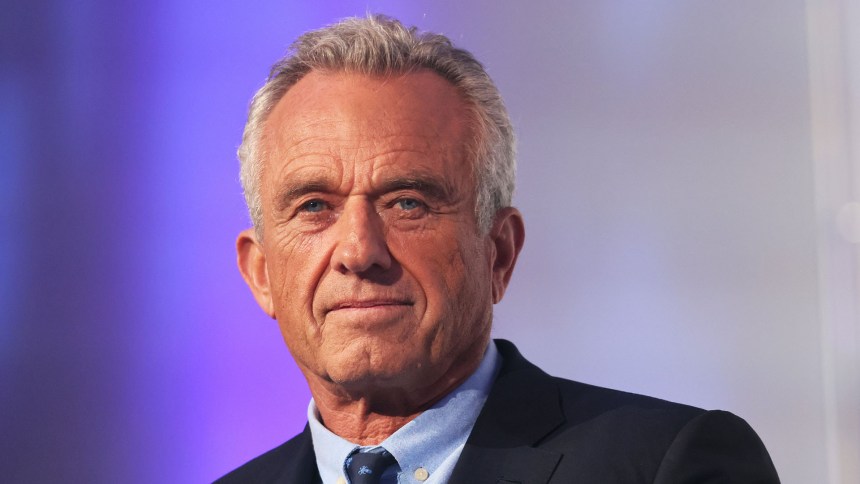
President Donald Trump’s nominee for health and human services secretary, Robert F. Kennedy Jr., is looking at banning drug ads on television. Trump’s nominee to chair the Federal Communications Commission, Brendan Carr, is on board. Elon Musk, the world’s richest man and Trump’s most powerful ally, likes the idea. The American Medical Association called for prohibiting ads for prescription drugs almost a decade ago. And many Americans support a ban.
There is a reason we are all familiar with these ads: They work.
You know these ads. They generally include someone barely making their way through the day; then suddenly, as if by magic, the world goes from black and white to color. A previously ill person can sing and dance, pet their golden retriever and run over bridges without a care in the world. And then at the end of the ad, in fine print or a rushed voiceover, the drug’s potential side effects fly by at lightning speed.
There is a reason we are all familiar with these ads: They work. Hawking pharmaceuticals directly to consumers is a multibillion-dollar business.
Pharmaceutical companies, not to mention the television companies that profit from the ad revenue raised from running those ads, now find themselves in the administration’s crosshairs. But can the government ban television ads? Is this even permitted under the First Amendment?
During the first Trump administration, a federal judge prevented it from requiring that commercials for prescription drugs include prices for all drugs that cost more than $35. Three major drug companies — Merck, Eli Lilly and Amgen — sued to block the rule, in part on First Amendment grounds. The judge didn’t take a view on that question, though, instead ruling that the Department of Health and Human Services lacked the regulatory power to implement such a rule.

If the Trump administration once again tries to regulate pharmaceutical ads, the first question will be how it tries to accomplish that. The easiest way to get to this place would be to pass legislation, which the pharmaceutical lobby no doubt would fight fiercely. If Trump, instead, were to issue an executive order or direct an agency, like the Department of Health and Human Services, to create a new rule, the first legal question would be whether the government has the power to create such a rule or issue such an order.
But let’s assume we clear that first threshold and that a judge concludes that the government has the power to restrict pharmaceutical ads. This would bring us to the meaty legal question of whether any such restriction could withstand a First Amendment challenge. And the answer is: It depends.


The First Amendment prevents the government from banning speech, except in the most extraordinary circumstances. Its protections extend beyond political speech to other types of speech, including commercial speech such as advertisements by drug companies.
Besides New Zealand, other developed countries severely restrict ads by pharmaceutical companies.
That having been said, while commercial speech is protected by the First Amendment, it doesn’t enjoy the same level of protections as political speech. Back in 1980, the Supreme Court created a multi-part test to determine whether the government can restrict commercial speech. Assuming the speech concerns lawful activities and it isn’t misleading, a regulation of commercial speech would be upheld only if the government’s interest in regulating the speech was “substantial,” the regulation “directly advances” that substantial government interest and the “regulation is not broader than necessary” to achieve than substantial government interest.
So our first question is whether the government has a substantial interest in restricting or banning pharmaceutical ads on TV. Opponents of the ads say yes, arguing that these ads promote medications that don’t make Americans healthier and often are more expensive than effective alternatives. It is true that, besides New Zealand, other developed countries severely restrict ads by pharmaceutical companies. But those countries tend not to have the same robust protections for the freedom of speech that we do.
If a court answered the first question in the affirmative, then the second question is all but a foregone conclusion. Assuming there was a substantial interest in limiting pharmaceutical ads on TV, a ban would substantially advance that interest.

The last question a court would ask is whether the regulation of speech was too broad. For instance, could the government’s interest be achieved by placing more limits on these ads than on banning them altogether? Would, for example, more warnings solve much of the problem the government was seeking to address? Or would legislation targeting only certain types of medications advance the government’s interest? First Amendment precedent suggests that the courts might look more favorably on restrictions as opposed to outright bans.
Legally, the Trump administration’s ability to ban pharmaceutical ads on television boils down to how it wants to enact that ban — by executive order, rulemaking or legislation — and then whether any such ban would survive First Amendment scrutiny. But any claims that pharmaceutical ads can be banned easily should be met with a healthy dose of skepticism.

Jessica Levinson is a Loyola Law School professor and MS NOW columnist.