




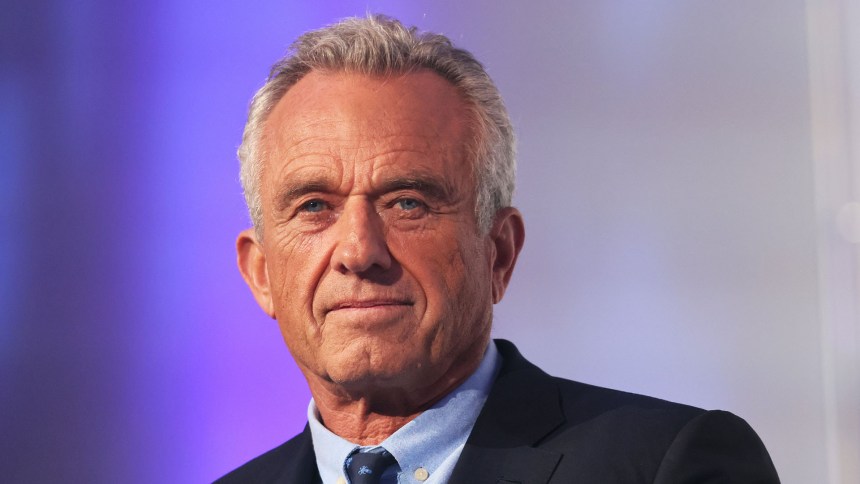
Sometime in the early 2020s the idea of evil seed oils took hold in the public consciousness. Social media influencers like Joe Rogan and Dr. Mark Hyman on the wellness front lines began advocating against what became known as “the hateful eight”: soy, corn, rice bran, canola, sunflower, safflower, grapeseed and cottonseed oil. Another big booster of this claim? Robert F. Kennedy Jr., President Donald Trump’s nominee to lead the Department of Health and Human Services.
Since then, you could find people arguing seed oils are to blame for a whole host of major health ills, from heart disease to cancer to chronic inflammation. Kennedy, whose Senate confirmation hearings begin on Wednesday morning, has joined the seed oil conspiracy theorists who believe Americans are being “unknowingly poisoned” by them.
You can find people arguing seed oils are to blame for a whole host of major health ills, from heart disease to cancer to chronic inflammation.
Food and nutrition science can be confusing, but there are few areas in this health field that have as extensive a body of evidence. The health benefits of polyunsaturated fats — including the omega-6 fatty acids characteristic of vegetable seed oils — is one of these areas.
Indeed, despite the catchy “hateful eight” moniker, there is an overwhelming body of scientific evidence confirming this family of oils is more healthful than harmful in moderation.
Most seed oils contain something called linoleic acid, an omega-6 fat. The National Academy of Sciences (NAS) recommends adults consume an average of 12 to 17 grams of linoleic acid per day. In a 2009 scientific advisory from the American Heart Association, the NAS advisory was updated with a recommendation that 5% to 10% of daily calories come from these polyunsaturated fats. And a 2017 American Heart Association presidential statement concluded that lowering one’s intake of saturated fat and replacing it with omega-6 fats can actually lower heart disease rates.
It is hard to believe that a qualified nominee for such a critical position as secretary of HHS would be unaware of this body of evidence or, possibly worse, simply open to ignoring it. And yet, in October, RFK Jr. wrote a long post on X culminating with the rallying cry: “It’s time to Make Frying Oil Tallow Again.”
Fast Food is a part of American culture. But that doesn’t mean it has to be unhealthy, and that we can’t make better choices. Did you know that McDonald’s used to use beef tallow to make their fries from 1940 until phasing it out in favor of seed oils in 1990? This switch was… pic.twitter.com/ygijMtsSQt
— Robert F. Kennedy Jr (@RobertKennedyJr) October 21, 2024
So what are these concerns rooted in, if not actual scientific research?
One popular argument seems to be that the omega-6 fats commonly found in seed oils cause inflammation in the body. But this claim was addressed and quashed in a 2012 review of 15 randomized controlled trials.
I believe some of the confusion may lie in the comparative properties of omega-6 and omega-3 fats. For some aspects of metabolic regulation, the dietary omega-6 and omega-3 fats compete with each other, and the omega-3 types tend to be more anti-inflammatory. Somehow this finding is being misunderstood to suggest that the omega-6 fats are inherently pro-inflammatory, which isn’t supported by evidence.
Researchers also suggest our bodies need more omega-3 fats than omega-6 fats. Unfortunately there aren’t that many ways to increase consumption of omega-3s. Flax oil (also known as linseed oil) is the only plant source of fat that is higher in omega-3 than omega-6. Some other sources of omega-3 fats are walnuts, soy oil and canola oil. But all three of these omega-3 sources actually have more omega-6 than omega-3. And it’s simply unrealistic for most people to incorporate copious amounts of flax oil into their cooking.


What would be stunningly appreciated by me and many in the health care profession is if Americans finally made significant reductions in their ultraprocessed food intake.
Where does this leave us? Moderation — and a healthier overall diet that focuses on the worst offenders.
In fact, I generally agree with RFK Jr. on the topic of ultraprocessed foods (UPFs). And while there are several nuances that don’t always make it into the popular discourse, it’s true that many ultraprocessed foods also contain seed oils. These foods — think french fries, soda, hot dogs and other junk food — are already high in added sugars, sodium and saturated fats. And despite decades of recommending Americans limit or avoid these foods, too many people are still consuming them on a regular basis.
What would be stunningly appreciated by me and many in the health care profession is if Americans finally made significant reductions in their ultraprocessed food intake. And if some people end up doing that because many of those foods also contain seed oils, I’ll take the win. I think the health of Americans would strongly benefit from such a shift. But any overall health benefits would be hard to attribute to cutting out seed oils, when the Americans in question would have also lowered their added sugar, sodium and saturated fat intake.

So as you watch Kennedy testify in front of Congress this week, you may want to take some of his health recommendations with a grain of salt (but not too much). Don’t worry about cutting seed oils out of your daily diet, especially if you use them in small amounts for things like salad dressings, sautéing and baking. That said, alternates like olive oil and avocado oil are good additions to your cooking routine, if the price isn’t prohibitive. Butter can also be fine in small amounts.
When eating out, try to avoid or limit ultraprocessed foods (including those that contain seed oils) and deep-fried foods. Given the extensive scientific body of literature on this topic, prioritize replacing saturated fats like butter, beef tallow and lard with polyunsaturates like seed oils.
But don’t throw out all your seed oils and replace them with tallow, no matter what you see on TikTok — or at a congressional hearing. In the words of Neil deGrasse Tyson, “the good thing about Science is that it’s true, whether or not you believe in it.” Hopefully our next secretary of health and human services can follow that advice.

Christopher Gardner
Christopher Gardner is the Rehnborg Farquhar Professor of Medicine and a nutrition scientist at Stanford University. He recently served on the 2025 U.S. Dietary Guidelines Advisory Committee, was the chair of the American Heart Association Nutrition Committee from 2022-2024, and has worked with both the AHA and American Diabetes Association (2019) on dietary recommendations.