





UPDATE (July 21, 2024 8:20 p.m. E.T.): President Joe Biden on Sunday announced that he is withdrawing his bid for re-election from the 2024 presidential race.
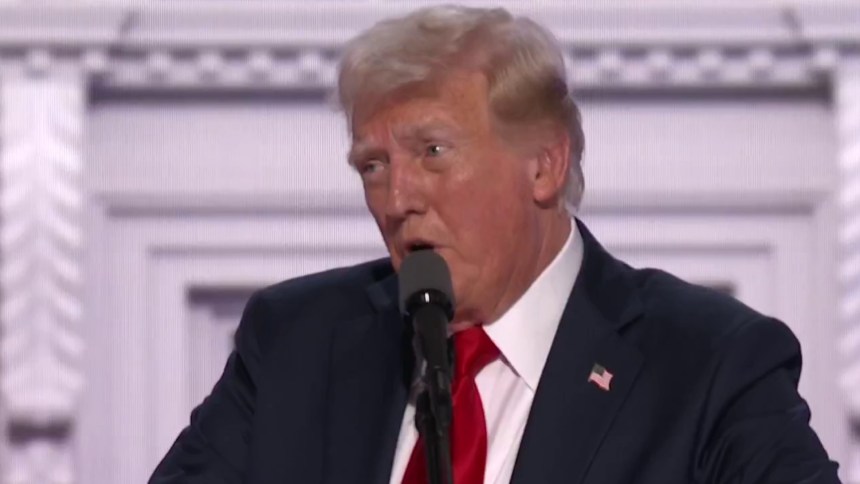
Republicans’ spirits are high after the party’s national convention. The GOP is fervently unified behind former President Donald Trump as its presidential nominee. Trump is leading President Joe Biden in most national and battleground polls. Despite being convicted of 34 felony counts, Trump’s base remains loyal as ever. And an adoring crowd seemed to hang on his every word during his acceptance speech Thursday night, as Trump used his survival of an assassination attempt to frame his nomination as ordained by God.
That picture of harmony is likely the envy of many Democrats as they prepare for their own convention in August. As Trump is feted, Biden is struggling to keep his candidacy afloat. The president faces a tremendous pressure campaign from his own party to drop his White House bid. Poll after poll spells potential disaster for him and his party. Fundraising totals have plunged since last month’s presidential debate. Should Biden depart the race, Democrats would almost immediately have to decide between anointing Vice President Kamala Harris and a divisive open convention. At the same time, dozens of pro-Palestinian groups are planning to demonstrate against Biden’s Israel policy around the convention, hoping to echo the protests on college campuses that captured headlines earlier this year.
In the longer view, the Democratic Party’s chaos is a sign of the party’s health, while the GOP’s unity is a symptom of its sickness as a political entity.
In short, the contrast between the two parties in both unity and confidence at this moment could not be clearer. But in the longer view, the Democratic chaos is a sign of the party’s health, while the GOP’s unity is a symptom of its sickness as a political entity.
Political parties win and govern effectively by producing candidates who can secure as big of a majority as possible among their constituencies. Yet entering the summer, both parties had opted for candidates who were, by any typical standard, remarkably weak. Trump currently may be ahead in most polls, but he remains a uniquely unpopular presidential candidate, plagued by low favorability ratings. He has never won the popular vote. He was the first and only president to never breach over 50% in approval ratings. Independents remain wary of his criminal convictions and his personal character. And during his leadership of the GOP, the party has performed poorly in midterm elections.


So while the polls indicate that Trump has a very serious chance of winning in November, his vulnerabilities ensure that he does not have a decisive lead. That the GOP is turning over and over again to such a divisive, risky candidate is a sign of party dysfunction. There are multiple sources of that dysfunction: conservative media, which thrives on deception and discord; the party’s diehard base, which buys every conspiracy theory thrown its way and worships Trump as a savior; and GOP lawmakers, almost all of whom tremble with fear at the mere thought of criticizing Trump. But the upshot is that the Republicans have lost most if not all of their identity beyond Trump and his lackeys. Beyond him, they are lost, and with him they’re not much better off.
The intra-party debate over Biden reflects a party with a sharply different, healthier goal. The intense debate over Biden’s candidacy reflects the beliefs of many Democratic voters, lawmakers, party leaders, donors, and commentators that, despite Biden’s many accomplishments, he’s no longer in a position to campaign effectively. This conclusion was reached based on a fact-based appraisal of his sustained difficulty at carrying out a politician’s most important job: communicating clearly with the public. And it was made all the more urgent because evidence indicates that this problem is key to explaining his trailing in the polls to an exceptionally weak candidate. For the purposes of the party’s long-term effectiveness as an institution, the party’s splits over Biden reflect a healthy distance from him — a view of the president not as the party itself or an infallible hero, but rather a vessel for its values, policies and ideas. And while the timing of this internal division is far from ideal, it also reflects a nimbleness and sensitivity to the electorate that seems inconceivable in the sclerotic GOP.
Right now the Democratic Party is riven by division — some of it rather rancorous, much of it long overdue — but that division will be ephemeral. The scramble is to figure out who the best candidate can be ahead of the party’s convention. After the convention, in all likelihood the overwhelming majority of Democrats will fall in line behind whoever the candidate is and lock arms against Trump and the Republicans.
It is possible that this extended period of intra-party division could hurt the Democrats ahead of Election Day. If Biden stays in, maybe he’ll be irreversibly hurt by weeks of infighting and demoralization. If Biden is replaced, it’s possible the new candidate will also be weak against Trump. But it’s also possible that this period of intra-party strife produces the impetus for the party to reset and achieve its goals in a manner it otherwise couldn’t have. What’s clear is the party is responding earnestly to the giant electoral warning signs it sees — the kinds of signs that Republicans have socialized themselves to ignore. In the long term, any healthy movement or party must ultimately always balance commitments to unity with introspection and honest reckonings over whether it’s uniting behind the right things. That’s what the Democrats are doing, and it’ll serve them well for the future.

Zeeshan Aleem is a writer and editor for MS NOW. He primarily writes about politics and foreign policy.