





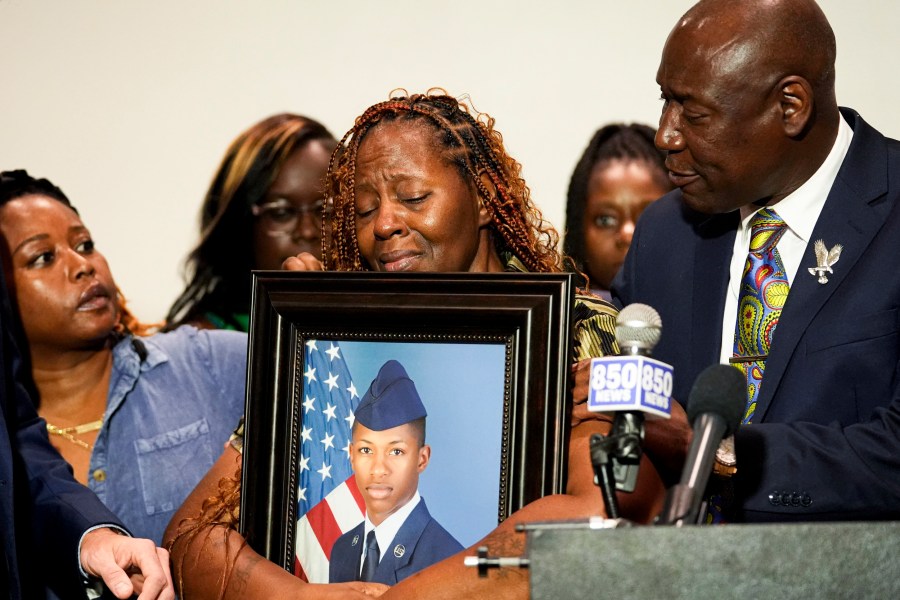
On May 3, almost eight years after a Minnesota police officer shot dead Philando Castile, a Black motorist who’d dutifully informed the officer of his firearm, a Florida sheriff’s deputy shot dead Roger Fortson, a Black 23-year-old senior Air Force airman who answered the banging on his door with his legally owned pistol pointed at the floor. A funeral for Fortson was to be held Friday at New Birth Missionary Baptist Church in Stonecrest, Georgia, an Atlanta suburb.
The killing of Castile and Fortson is a reminder that many have trouble perceiving a Black man as being in need of protection.
In our country, guns are consistently marketed as necessary for one’s protection. However, the reflexive killing of Castile and Fortson by law enforcement officers is a reminder that many have trouble perceiving a Black man as being in need of protection. Instead, a Black man with a weapon is viscerally interpreted as a threat.
Reports show that for a variety of reasons — ranging from blatantly racist political unrest to a vague dread ushered in by Covid — more Black Americans have chosen to arm themselves. According to an August 2019 NBC News / Wall Street Journal poll, 24% of Black voters said they or someone in their house owned a gun. In a November 2023 poll, that number had risen to 41%, a dramatic 17-point increase. (As for white voters, 56% report that they or someone in their house owns a gun, a 3-point increase in four years.)
There’s no shortage of Black gun rights advocates and gun safety instructors proselytizing about the importance of Black people being armed. I count at least three Black men on my Facebook feed who teach firearm safety or concealed-carry training courses, and I’ve seen multiple posts from Black women signaling (sometimes with photos of their targets from the gun range) that they’re good shots.
But when I asked Army veteran Gary Ballier Jr. Wednesday about the fears Black people express when he encourages them to get a gun and learn how to use it, the New Orleans-based firearms instructor said, “Probably ‘The police will shoot me if I got a gun.’”
Black mothers especially, Ballier said, worry about their grown sons carrying and getting killed by the police like Castile and Fortson were killed. Some Black people who decide to buy guns don’t want to carry them, he said. They’re loath to bring their weapons outside out of fear of what will happen to them if they do.
Of course, Fortson wasn’t outside. He was inside his apartment near Hurlburt Field in the Florida Panhandle. The Okaloosa County Sheriff’s deputy who killed him was dispatched after a report of a disturbance inside his apartment. Contradicting authorities claim that the deputy went to the right door, while Fortson’s family maintains that the deputy went to the wrong apartment. “What disturbance?” they say. He was home by himself and talking to his girlfriend on FaceTime.
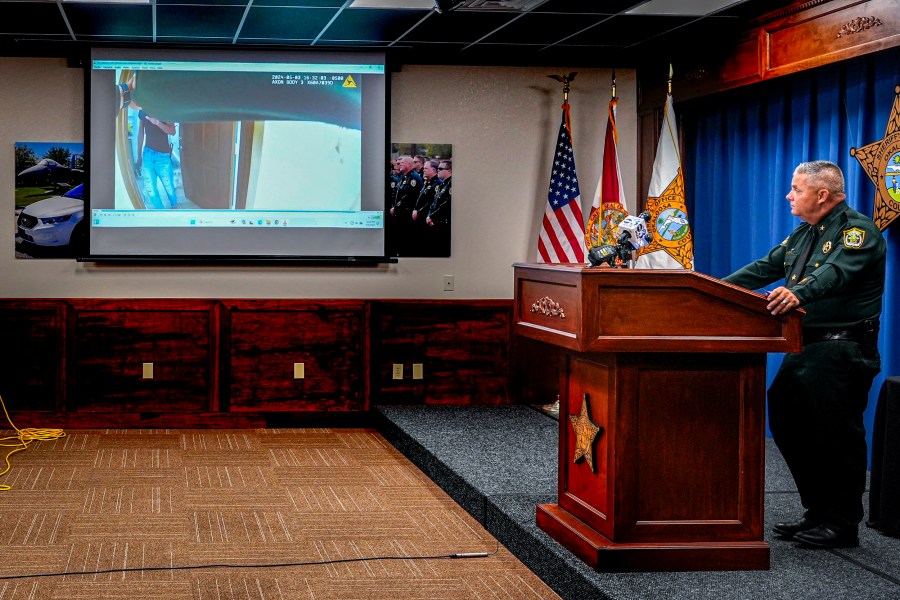
According to footage from the deputy’s bodycam, the deputy knocks and twice says, “Sheriff’s office. Open the door.”
When Fortson opens the door, he appears to be holding a gun that is facing downward. The deputy says, “Step back,” and shoots Fortson six times. Fortson falls to the floor. The deputy twice yells, “Drop the gun,” to which Fortson replies, “It’s over there.”
Sheriff Eric Aden said at a news conference last week that no determination had been made as to whether the deputy, whose name has not been made public, was justified in fatally shooting Fortson. But it seems obvious to Philip Smith, founder of the National African American Gun Association (NAAGA), that he was not.


Comparing the deputy’s killing of Fortson to the 2016 killing of Castile, Smith said: “It’s a different scenario, but the same result. Every time. And we’re tired of it. I cried when I heard about this brother here. It’s the same thing. We’re obeying the law. We’re within the law. Our actions are legal, and yet a life is taken. I’m personally tired. I’m tired of the excuses.”
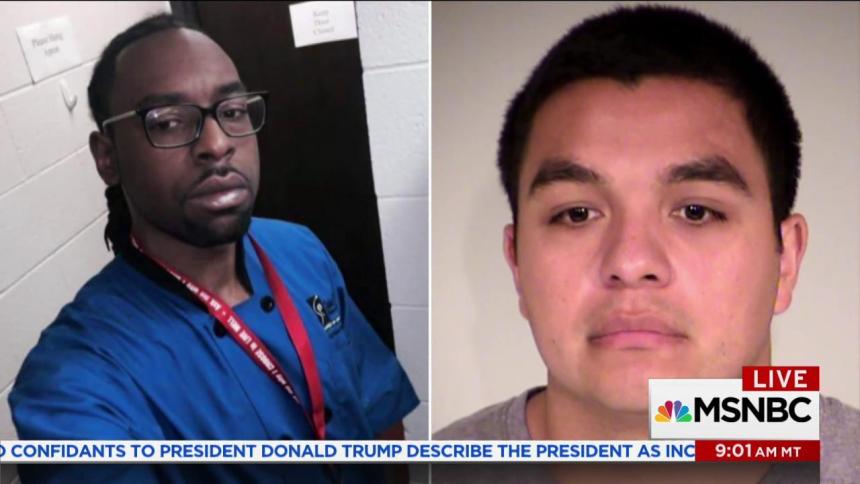
Smith started NAAGA in 2015. The next year, America saw the Facebook Livestream that Castile’s girlfriend, Diamond Reynolds, started seconds after the officer had shot him. “He’s licensed to carry,” she said to the camera. “He was trying to get out his ID and his wallet out of his pocket and he let the officer know that he was — he had a firearm and he was reaching for his wallet.”
When Officer Jeronimo Yanez says, “I told him not to reach for it!” Reynolds responds, “You told him to get his ID, sir, his driver’s license.” Yanez was acquitted of manslaughter and other charges in Castile’s death, and he left the department.
Smith said that, after Philando was killed, he told every Black person who’d listen to conceal carry “and open carry where you can” to demonstrate that the unfair killing of a lawful Black gun owner by police would not scare other Black people out of bearing arms. NAAGA’s membership exploded after Castile’s death. There has been a similar spike in interest in his organization since Fortson was killed, he said. And plenty of anger from some members of his organization, both Black and white.
The killings of Castile and Forston underscore the disservice many news outlets have done in their stories emphasizing that a Black man killed by the police was “unarmed.” The implication is that if a victim killed by the police had been armed then, by that fact alone, police would have been justified in shooting him. But based on the bodycam footage from the Okaloosa deputy, Ballier said of Fortson, “He’s armed, but he’s not a threat.”
It doesn’t matter if you agree with Smith and Ballier (who also belongs to NAAGA) that more Black people need to arm themselves; there’s no arguing the point that Black people who do appropriately arm themselves are as covered by the Constitution as anybody else and ought not be reflexively treated as criminals.
But the fear of Black people — to say nothing of the fear of Black people with guns — is so deeply burrowed in the American psyche that it’s hard to fathom a country where a Black person who carries a gun for safety isn’t paradoxically making themselves more vulnerable — especially when they’re in the presence of the police.

Jarvis DeBerry is an opinion editor for MS NOW Daily. He was previously editor-in-chief at the Louisiana Illuminator and a columnist and deputy opinion editor at The Times-Picayune.