




By all accounts, Sally Rooney’s highly anticipated fourth novel was not a typical book release. When it comes to a galley release, most books get the same treatment: paperback advanced copies, called ARCs or gallies, are released five months or so ahead of publication and then once again after the official cover is released. By design, this drums up interest, excitement and media ahead of the publishing date. But frankly, should you have a foothold in the literary world, gallies are generally not that hard to get ahold of.
By commodifying a novel into a status symbol, its literary merit becomes secondary, maybe even entirely irrelevant.
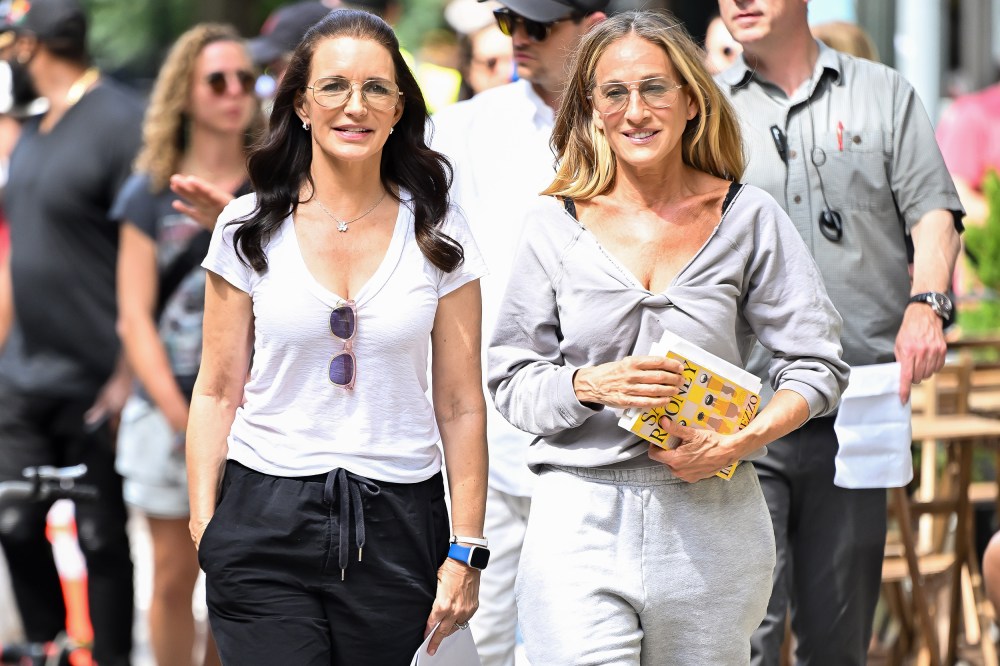
Not so for this book. Just 2,500 copies of “Intermezzo,” Rooney’s latest book, were reportedly sent to journalists, critics, influencers, booksellers — and celebrities. Each galley was named and numbered. The result was sudden, dramatic and frenzied. Sarah Jessica Parker was photographed reading an advanced copy in July on the set of “And Just Like That.” My social media pages were plastered with photos of “Intermezzo” resting aesthetically next to an Aperol Spritz on a wrought iron table, or strategically covering the face of a bikini-clad lit-fluencer reading on a high-pile beach towel. Everyone wanted a copy. “Intermezzo” had become a status symbol.
The novel is written in close third person, with chapters that alternate between two brothers, Peter and Ivan. Peter is a 32-year-old Dublin lawyer, torn between his 23-year-old girlfriend, Naomi, and his ex-girlfriend, Sylvia, with whom he is still very much in love. Ivan, a former chess prodigy who, much to his brother’s frustration, lacks some social faculties, is in love for the very first time with a woman 14 years his senior. Peter and Ivan’s relationship, strained at the loss of their father and plagued by fundamental misunderstandings, is the bedrock of the novel. “Intermezzo” explores the realities of generational divide, the push-pull of brotherhood and family, and the constrains of time. Because it’s Rooney, “Intermezzo” saliently explores love, sex, grief and guilt with her trademark stripped-down writing style.
Whether or not the book is any good is entirely beside the point. By commodifying a novel into a status symbol, its literary merit becomes secondary, maybe even entirely irrelevant. It’s like a designer handbag: If you want one and you’re going to buy one, reports of subpar craftsmanship and evidence of inflated cost are of little consequence. The reality, though, is that even without the scarcity-model galley frenzy, Rooney was already experiencing increasingly devout internet fandom. For better or for worse.

Like author Colleen Hoover, a comparison I am deeply reluctant to make, much of Rooney’s readership is chronically online young women. #Intermezzo, for example, had 130,000 posts on Instagram on Thursday. Now that the book is out, there will be many, many more. BookTok, Bookstagram, and the influencers that drive them, have the power to propel an author from obscurity to literary royalty. The problem is, they’re making their money from book reviews too. It might not pay to introduce a more obscure title into the millions of reviews on social media. The result is a revolving door of familiar authors and books, Rooney among them. Does this undermine her? It could — but it doesn’t, because Sally Rooney is an excellent writer.
“Intermezzo” was destined for popularity and success largely because so many readers, including this one, love Rooney. Often called the “Salinger of the Snapchat generation,” Rooney adeptly captures millennial anxiety, aspiration and reality. Readers love her sincere appreciation for love, her nuanced characters, her restrained writing style, and her women-centered sex scenes.


Between the nonstop attacks on access to books in public schools, the hugely influential rise of BookTok and the emergence of book-as-status, literature has proven to be a key tenant to mid-2020s culture.
Despite her meteoric success in literary circles, online, and in whatever overlap exists between them both, she is notoriously private. It’s ironic, really. Rooney’s deliberate attempts to eschew the spotlight are a large part of what has made her shine so brightly. Take her own celebrity-laden book party hosted by actress Emma Roberts, which she didn’t even attend. Vogue, which covered the event, attributed her absence to the physical distance between County Mayo, Ireland and New York’s 11th Avenue and how Rooney “prefers to let her work be the star of the show.” Even if that is entirely true, there would have been less to write in the feature had she had just gone to the party.
Rooney has rejected celebrity to the best of her ability since the onset of her career in 2017 with the massive success of “Conversations with Friends.” Once, in 2018, she deactivated her X account, then called Twitter, after posting, “novelists are given too much cultural prominence.” And that was before she cemented her place as a BookTok immortal with a historic galley rollout. Rooney has often decried fame as a barometer for success; notable, certainly, in a culture now accustomed to cheap and deliberate fame grabs. But Rooney, now incredibly wealthy and influential, can no longer claim victim to her runaway success. “Intermezzo” as a status symbol proves that.
On Monday night, à la Harry Potter and Twilight madness of yesteryear, there were “Intermezzo” midnight release parties at book shops across the country. These community events for booklovers, apparently just excited to read the latest from their favorite author, feel much more akin to who Rooney is still trying to hold on to. A real, honest-to-God, Irish writer, just outside of the shine of the spotlight. Whether or not she can, remains to be seen.
Although the list is short, “Intermezzo” is not the first novel to go viral before publication. Last summer, for example, we had Emma Cline’s “The Guest.” Aside from what a dizzying example of late-stage capitalism, this galley mania is (sorry to Rooney, a self-proclaimed Marxist), it also speaks to the renewed cultural capital of literature.
Something is happening to books. Between the nonstop attacks on access to books in public schools, the hugely influential rise of BookTok and the emergence of book-as-status, literature has proven to be a key tenant to mid-2020s culture. We say this a lot on MSNBC’s Velshi Banned Book Club: books have power. If you don’t believe me, go and try to find a copy of “Intermezzo” at your local bookshop. I am sure it has sold out.

Hannah Holland
Hannah Holland is a producer for MS NOW's "Velshi" and editor for the "Velshi Banned Book Club." She writes for MS NOW.