
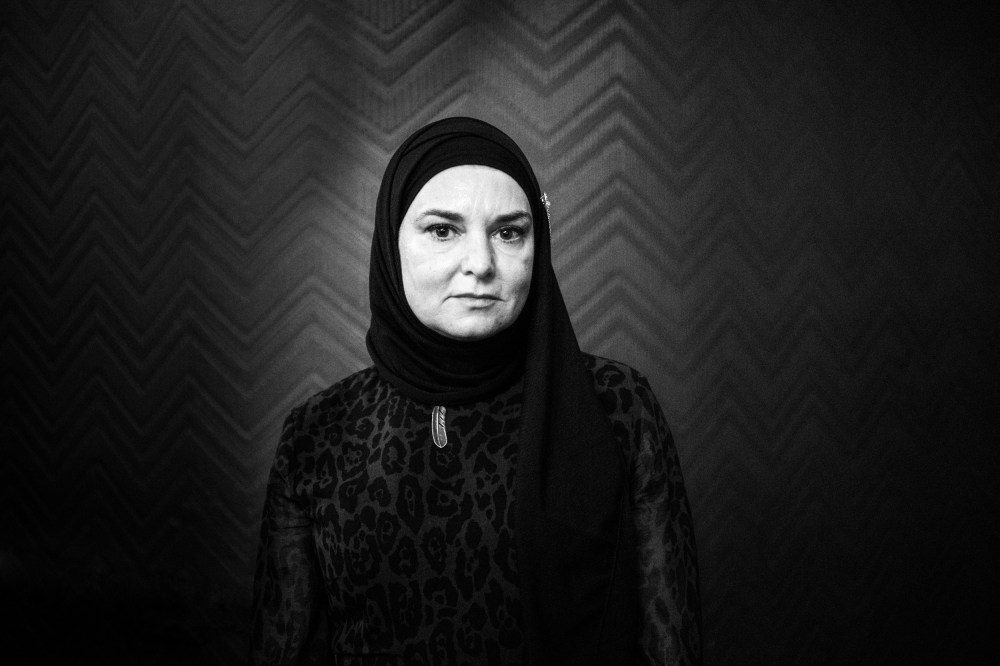
From the moment in October 1992 that Sinead O’Connor tore to shreds a picture of Pope John Paul II on NBC’s “Saturday Night Live,” she faced strong opposition from a public that did not understand the reason for her protest or her ethics. Her amazing voice had drawn so many in, especially on her biggest hit, a cover of Prince’s “Nothing Compares 2 U,” but her disdain for fake piety and conventional stardom took her down a path in which her provocative, but often spot-on statements, put her at odds with many in the media, the recording industry and with fans.
Her provocative, but often spot-on statements, put her at odds with many in the media, the recording industry and with fans.
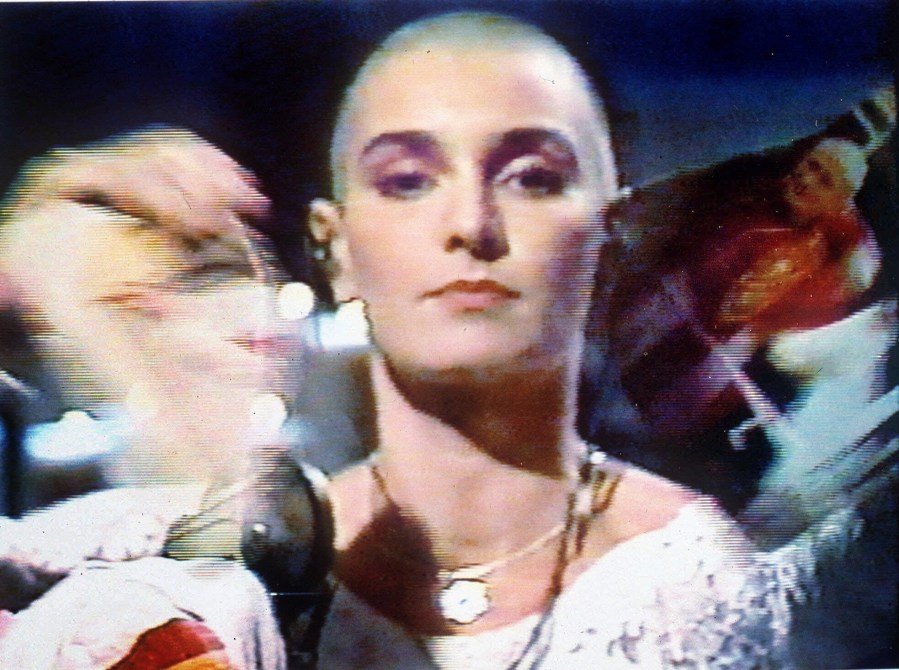
Her performing Bob Marley’s “War” on “SNL” and ripping up the pope’s picture as she landed on the last word of the song — “evil” — created what we now would consider a viral moment. The pile-on from fellow celebrities and the media followed her for years to come. Even in some obituaries for O’Connor (who later in life was known as Shuhada Sadaqat) the vitriol remains.
She spoke truth with clarity, and sometimes with epithets. But that’s what being an authentic person can demand.
Tearing up the picture of John Paul II was a dual protest. According to O’Connor, the photo belonged to her late mother, a devout Catholic who had physically abused her, and the Catholic church in Ireland was well known to have inflicted so much sexual and physical abuse on children. John Paul II was the head of the church, and therefore, to O’Connor, the person who represented all that had gone wrong for Catholic children in Ireland. But for tearing up his picture, she was vilified, taunted and shut out.

O’Connor’s untimely death this week at age 56 calls for a reconsideration not only of her enormous singing talent, but of her justice-oriented faith and her commitment to truth. A religious seeker, a prophet without the honor she was due, her life was filled with contradictions, but she always had a certainty about what was right — and what was wrong. Too many people did not understand, or even try to understand her, until it was too late to appreciate her struggles and her greatness.
O’Connor was far ahead of the press, the church and the public in recognizing the abuse that could come from strict religious upbringings and did come from the church itself. But she was liberating herself and thousands of others who had good reasons not to trust any clergy, not even Pope John Paul II who, according to a recent report out of Poland, knew when he was an archbishop there in the 1970s that priests he oversaw were sexually abusing children. (According to The Associated Press, Polish church officials whose mission it is to protect minors say more research into the matter is needed.)
Her life was filled with contradictions, but she always had a certainty about what was right — and what was wrong.
More than nine years before The Boston Globe’s Spotlight team helped reveal the extent of sexual abuse by priests and the extent to which church leaders in this country had worked to keep that abuse from being known, she had already paved the way for the truth of sexual abuse in the church to be received by the world.
That didn’t mean her life was without controversy. Like most prophets, O’Connor’s statements and behavior sometimes alienated those around her. But religion would remain a constant.
In a hotel room in 1999, she was ordained by an independent Irish bishop, Michael Cox, and given the name Mother Bernadette Marie. “A person shouldn’t become a priest unless they take it dreadfully seriously,” she told RTÉ, Ireland’s national broadcaster. “What I call my holy trinity is I am a mother, I am a singer, and I am a priest, these things are equally sacred to me.”
It might seem strange that O’Connor would become a priest in one of Catholicism’s most conservative breakaway churches, but, she said, “I became a priest because I believed in the church and I don’t want the church to die, and I believe in the power of prayer.”
O’ Connor’s search for God, I believe, made her the person she was. She was committed to truth, wherever she thought she might find it. She was generous with her money, her possessions and her time. Apparently, becoming a priest wasn’t enough to get her through the next phase of her life. She converted to Islam in 2018 and tweeted that becoming a Muslim was “the natural conclusion of any intelligent theologian‘s journey. All scripture study leads to Islam. Which makes all other scriptures redundant.” As Shuhuda Sadaqat, she argued for Palestinian rights. An Irish woman leaving Catholicism for Islam may not be typical, but nothing about O’Connor’s life was typical. It’s not unusual for people to change religions over the course of their lifetime, but for an internationally known figure like O’Connor, it is noteworthy. A search for religion after abuse and neglect is often about making the world understandable as that suffering and grief are processed. An Irish woman leaving Catholicism for Islam may not be typical, but nothing about O’Connor’s life was typical. After having endured so much, her son Shane’s suicide seemed to have brought her the most intense grief. Days before her own death, she posted on social media about him, saying that she had been living as an “undead night creature” since his passing. That was the kind of pain that she couldn’t call out with a protest. That was the kind of pain for which there was no identifiable villain. Shuhada Sadaquat, née Sinead O’Connor, is now gone from us: Inna lillahi wa inna ilayhi raji’un. May she rest well. And may we have her courage to call out evil wherever we see it.
Anthea Butler is a professor of religious studies and Africana studies at the University of Pennsylvania. 

