




On Tuesday, the Senate Rules Committee — which is made up of eight Democrats, one independent and nine Republicans — voted 14-1 to support a bill that would shore up our presidential election certification process. The legislation is a much-needed response to then-President Donald Trump’s efforts to overturn the results of the 2020 election. As part of that scheme, Trump leaned on then-Vice President Mike Pence to refuse to certify the electoral votes from states where Republicans were wrongly claiming voter fraud.
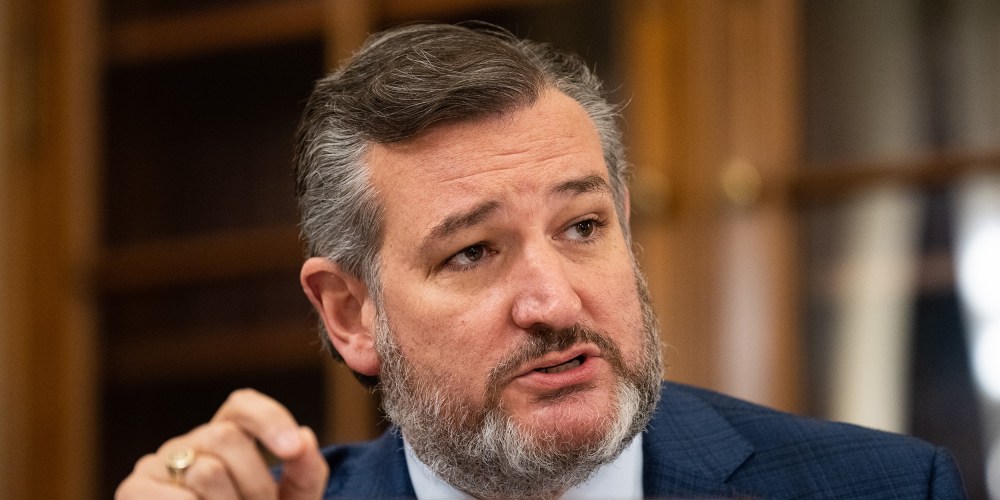
The lone vote against the bill that would help protect our elections came from Sen. Ted Cruz, R-Texas.
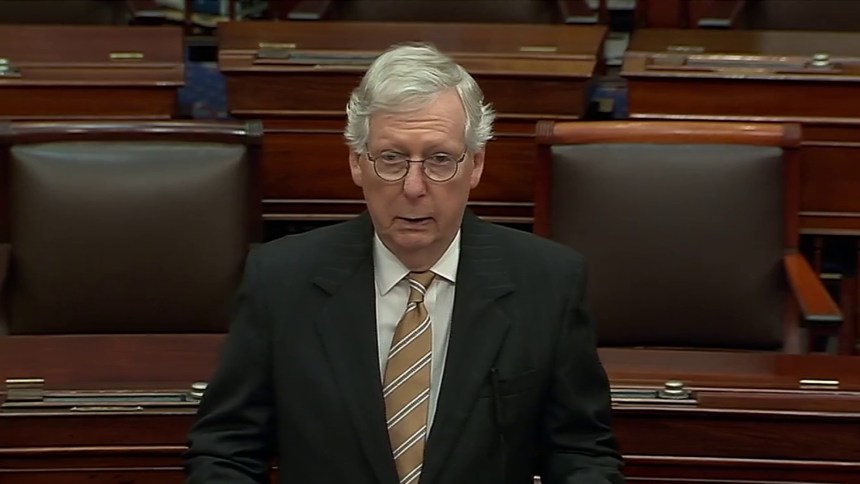
Senate Minority Leader Mitch McConnell, R-Ky., a member of the rules committee, has spoken in favor of the bill. It would explicitly limit the vice president’s role to a ceremonial one, set at 20% the percentage of House or Senate members needed to object to any state’s electors, and clarify that states may not select electors after Election Day, as Trump’s allies tried to do after the last election. Including McConnell, seven of the eight Republican committee members who were present for the committee meeting voted for the bill.
Follow our 2022 midterm elections live blog at msnbc.com/midterms beginning Nov. 7 for the latest results, news and expert analysis in real time.
The lone vote against the bill that would help protect our elections came from Sen. Ted Cruz, R-Texas, who declared that the legislation designed to protect our democracy was “bad for democracy.” But then he said something that was partially correct: “This bill is all about Donald J. Trump.”
Of course it’s about Trump, given that he’s the one who, after he lost the election, demanded that Pence do the unthinkable and overturn the election results to keep him in power. And it was Trump who misled and even radicalized his supporters to support his efforts — even with violence — to keep him in power.
But if this were only about Trump, then we could rest a little easier. It’s not. It’s about the Republican Party and its disinterest in preserving our democracy.
The bill clarifying the election certification process is supported by the Senate’s most powerful Republican, but Cruz’s opposition is more reflective of Republicans in general. The week before the Senate committee’s vote, the House voted on similar legislation drafted by Rep. Liz Cheney, R-Wyo., and Zoe Lofgren, D-Calif. It passed, but only nine of the 212 Republicans in the House supported it.
And those nine Republicans are all leaving Congress come January after losing primaries or retiring. That’s right, on Jan. 6, 2021, 139 House Republicans opposed without basis certification of the 2020 results, but only nine GOP members — who are leaving Congress — voted to protect our democracy.
Apparently, Republican House members’ typical fear that they will lose in a Republican primary to a more conservative candidate has been replaced by the fear that they will lose to a more antidemocratic one.
Recent developments inform us that being antidemocratic is now a core part of the GOP’s ideology. On Wednesday, a Politico-Morning Consult poll found that around 66% of Democrats support legislation to make it harder for a Congress or state governments to overturn election results. But when it came to GOP voters, only around 42% voiced support for such measures.
Add to that a Yahoo News-YouGov poll released last week, which asked voters if losing candidates should concede. Only 43% of Republicans agreed, compared with 74% of Democrats. A candidate conceding a loss fosters confidence in our democracy. Yet the majority of Republican voters either reject the idea of their losing candidates conceding (37%) or say they are unsure (21%).
Conceding a loss fosters confidence in our democracy. Yet an overwhelming majority of Republican voters reject the idea of their losing candidates conceding. In an interview with MSNBC’s Alex Wagner as part of the Texas Tribune Festival in Austin, Texas, California Gov. Gavin Newsom said, “I worry about Trump, because Trump has proven that democracy is now partisan, which is remarkable.” Three days later, Cruz confirmed the accuracy of Newsom’s remarks when he said that a plan to protect our democracy is “about Donald J. Trump.” As President Joe Biden so aptly warned in his September speech in Philadelphia outside Independence Hall, where the U.S. Constitution was debated and adopted: “Democracy cannot survive when one side believes there are only two outcomes to an election: either they win or they were cheated. And that’s where MAGA Republicans are today.” In November 1863’s Gettysburg Address, Abraham Lincoln, the first Republican president, said: “We are engaged in a great civil war, testing whether” our nation “can long endure.” We find ourselves at a similar existential battle — though thankfully not by way of a bloody civil war. But this republic cannot “long endure” when one of the two major parties is more concerned with defending one person and promoting his election lies than with protecting our democracy. Lincoln closed his Gettysburg Address with the hope “that government of the people, by the people, for the people, shall not perish from the Earth.” Ironically, it’s via Lincoln’s own party that we might see such a government perish, just so that party can appease Donald Trump.


