




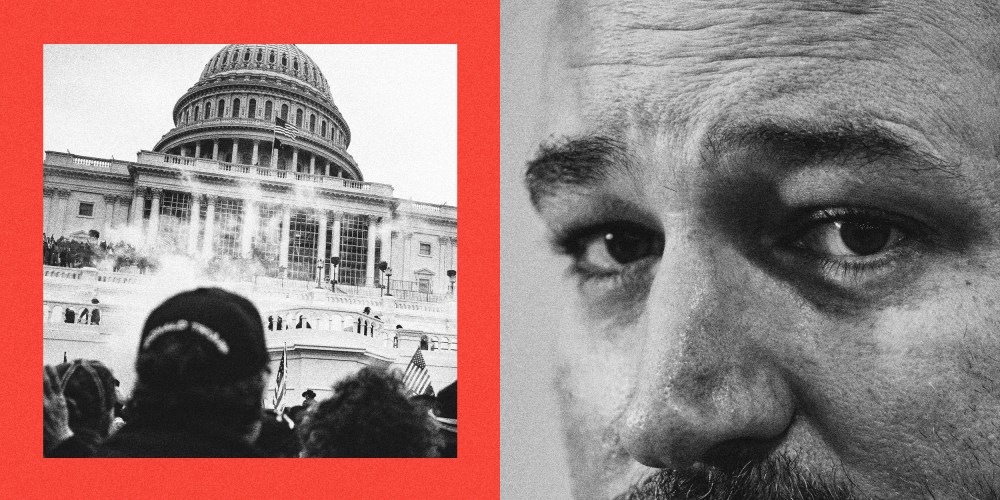
It’s widely known that Sen. Ted Cruz, R-Texas, is a shameless opportunist. But could he be even more shameless and opportunistic than we believed?
Potentially yes, according to a report from The Washington Post published this week detailing just how closely Cruz worked with then-President Donald Trump to overturn the 2020 election results. Reporter Michael Kranish also revealed that Cruz has known Trump’s attorney John Eastman — who authored legal memos he hoped would be used to deny the certification of the election — for decades. That raises questions over whether Cruz coordinated directly with the White House on legal strategy designed to undermine the election.
Cruz’s barefaced opportunism is a window into the party’s embrace of authoritarianism.
As a result of conspiring with Trump, Cruz lost allies and friends. But today, even as more evidence emerges tying him to Trump’s Big Lie, he is far from a GOP pariah. Still, one of the most prominent lawmakers in the party, Cruz is openly eyeing another presidential run. His barefaced opportunism is a window into the party’s embrace of authoritarianism.
According to the Post, Cruz and Trump began working on plans to undermine the election two days after Election Day, to the surprise of many of Cruz’s aides. Cruz spoke to Trump directly on the phone, acted as a Trump surrogate spreading 2020 disinformation on Fox News and pitched himself as a legal asset because of his experience working with George W. Bush’s campaign during the recount of the Florida vote in 2000. Among other things, Cruz agreed to represent Pennsylvania Republicans’ attempt to block certification of their state’s presidential results before the Supreme Court. (The Supreme Court didn’t end up taking the case.) And as Cruz backed a lawsuit arguing that Texas had the authority to throw out election results in several other battleground states, some of his advisers worried he was turning his back on his conservative federalist principles.
But perhaps the most shocking possibility raised by the Post’s reporting is the implication raised by Cruz and Eastman’s friendship. Cruz and Eastman met while clerking for then-U.S. Appeals Court Judge J. Michael Luttig nearly 30 years ago. Cruz’s plan calling for the Senate to delay the certification of the 2020 election results seemed to be running on a “parallel” track to Eastman’s legal memo.


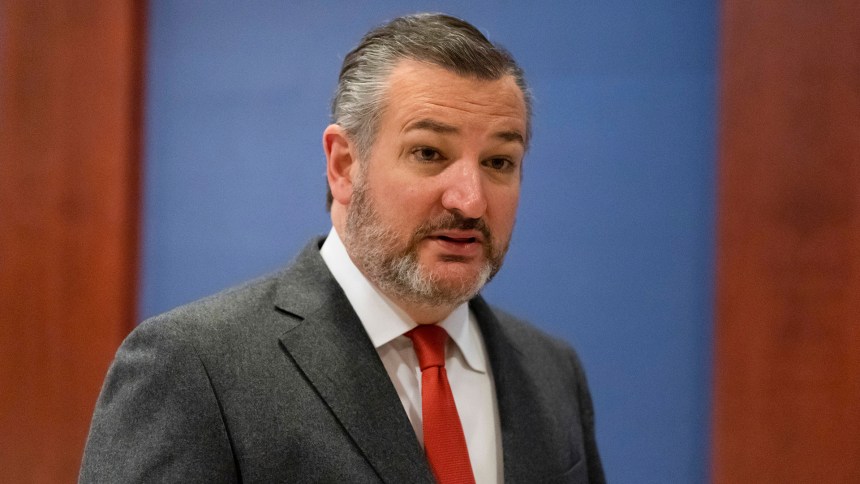
When asked if he and Eastman had been in contact about challenging the election, Cruz issued a cagey statement that did not rule out the possibility. “Sen. Cruz has been friends with John Eastman since they clerked together in 1995,” a Cruz spokesperson told the Post. “To the best of his recollection, he did not read the Eastman memo until months after January 6, when it was publicly reported.” And when Eastman was asked by the Jan. 6 congressional committee about his communication with Cruz, he invoked the Fifth Amendment.
Cruz’s ideological commitments have long been secondary to his political ambition. While the Texas senator paints himself as a pure ideologue, he has abandoned and changed his positions on issues like immigration, foreign policy and surveillance out of concern that they could harm his presidential prospects. 0ne of Trump’s fiercest critics during the 2016 primary season, Cruz refused to endorse Trump’s nomination at the Republican convention, to boos from the crowd. But he has since become not just a staunch but an effective Trump ally.
Cruz’s eagerness to shift positions based on how the wind is blowing extends to Jan. 6 itself. On that day, Cruz questioned the legitimacy of the election on the Senate floor. The very next day, Cruz tried to disassociate himself from Trump, sensing that perhaps his efforts to challenge the election had backfired. “I think, yesterday in particular, the president’s language and rhetoric crossed the line and it was reckless,” Cruz told a reporter on Jan. 7, with an entirely straight face. “I disagree with it, and I have disagreed with the president’s language and rhetoric for the last four years.”
Of course since then, Trump, other GOP politicians and right-wing media have successfully downplayed the events of Jan. 6, and once again changed the calculus for Cruz. Consider the way he groveled before Fox News’ Tucker Carlson in January after taking heat from Trump’s base for describing the Jan. 6 riot as a “terrorist attack.” Cruz quickly apologized and called his own comments “sloppy” and “dumb” in a bid to ensure he remained likable to the right-wing populist crowd.
The main point here is not to indict Cruz. Here we have a politician obsessed with keeping his finger on the pulse of the party, who felt that his own presidential prospects would be enriched by trying to overturn an election. More important than Cruz as a self-aggrandizer is Cruz as a signpost of the direction of the party. Cruz is a consummate follower of trends — and he’s continually shown us that the Republican Party is sliding rapidly toward outright disdain for democracy.

Zeeshan Aleem is a writer and editor for MS NOW. He primarily writes about politics and foreign policy.