




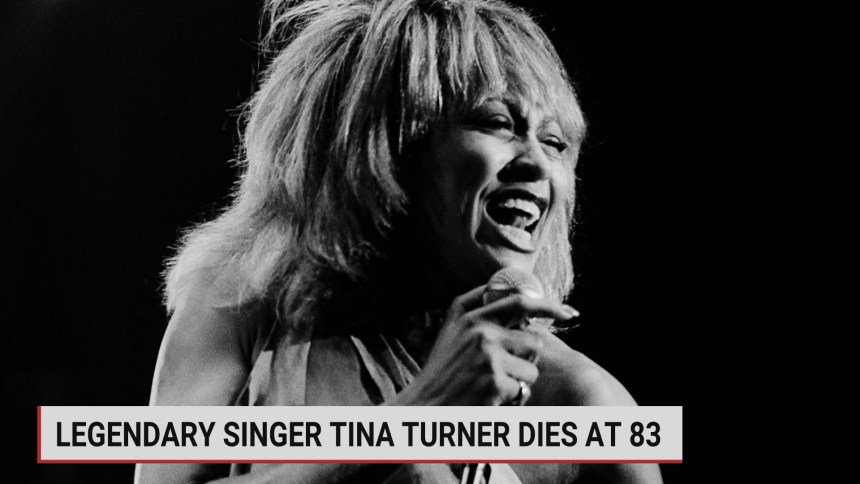
Anna-Mae Bullock was born to sharecroppers in rural Tennessee. Against all odds, she grew up to be inducted into the Rock & Roll Hall of Fame (twice) as Tina Turner, a name foisted on her by a man who captivated her until she felt like his captive. Her story is irresistible; a rags-to-riches arc complete with a triumphant happy ending and fairy-tale wedding to her longtime boyfriend, Erwin Bach, in 2013. It delivers what the public wants from victim narratives, but there’s another lesson here about the way we face abuse and fight back personally and collectively, and about the ways radical truth-telling can fundamentally alter the legacies of trauma in individuals’ lives.
Her story is irresistible; a rags-to-riches arc complete with a triumphant happy.
The singer, who died this week at the age of 83, met her first husband, Ike Turner, in 1956. Their personal and professional relationship would last for close to two decades. In public, they were a showstopping dynamic duo, but the singer said a horror show unfolded behind closed doors. Ike, who died in 2007, always deflected and refuted his ex-wife’s allegations, but Tina Turner spent the second half of her life and career detailing the staggering abuse — physical, sexual, verbal and financial — she said she endured before clawing her way out of the relationship.
During one candid interview with the BBC in 2018, Turner described a desperate suicide attempt just four years into their marriage. She said she couldn’t see it then, but that the way to leave was through the front door. And that’s eventually what she did, with very little money or a career of her own.
From that low point, the middle-aged Turner would launch one of the most impressive comebacks in the entertainment industry, becoming the first Black female solo act to pack stadiums. Eventually, Rolling Stone magazine included her as one of its “100 Greatest Artists of All Time,” alongside the likes of Bob Dylan and Diana Ross and The Supremes.
As a Black woman from humble beginnings in an industry as sexist as it was racist, Tina’s honesty was a revelation. She fought back publicly, again and again. She named names and provided details. She managed this without the backing of a sympathetic social movement, and decades before #MeToo’s wave of personal testimonials would spark a global reckoning. Eventually, Turner’s story would be turned into an HBO documentary and even a musical in London and on Broadway.
She helped clear a space for personal abuse accounts to be publicized — and be taken seriously.


Because the #MeToo social awakening did not happen spontaneously. It was made possible by women like Tina, who told the world about the men who intimidated, manipulated and menaced them.

The persistent sharing of individual stories helps us connect the dots and make systemic and institutional violence more visible. This consciousness-raising is required for any social movement to gain momentum. Research suggests talking about one’s abuse is a way of containing or controlling it, by giving a name and a narrative to a host of otherwise chaotic emotions, memories and feelings. Sharing a story can help the individual as much as it can help ignite a movement.
But no one should be required to go through this. No one should be forced to relive some of the darkest chapters of their lives in congressional hearings, memoirs, talk shows, trials or even truth commissions. To face that scrutiny and even ridicule can compound trauma, especially for Black survivors of abuse who are less likely to be believed in the first place. And celebrity does not inoculate a person. Just look at what happened when Megan Thee Stallion came forward about being shot by fellow rapper Tory Lanez.
Tina Turner told her story — even as some tried to turn it into a punchline — and she kept telling it. She understood that it was a fact of her life that she had every right to sing and talk about, even as she refused to be defined by it.
Tina Turner was a victim and a survivor too. But ultimately she was much bigger than those labels: She was simply the best.

Robyn Autry
Robyn Autry is a sociology professor and director of the Center for the Study of Public Life at Wesleyan University. She is the author of “Desegregating the Past: The Public Life of Memory in the U.S. and South Africa.”