





President Donald Trump’s proposal to reopen and expand the notorious Alcatraz prison for incarcerating “America’s most ruthless and violent offenders” has all the hallmarks of his cruel and reactionary political style. It would be inefficient and impractical, and its primary purpose would be to build a horrifying spectacle out of degrading people whom he deems worthless.
Alcatraz, a 22-acre island in San Francisco Bay, was the site of a 19th century military fortress and then a federal penitentiary from 1934 to 1963. As NBC News reports, “According to a National Park Service study, it was initially deemed unfit to serve as a federal institution because of its small size, isolated location and lack of fresh water. However, Sanford Bates, the director of the Bureau of Prisons in 1933, later found it ‘an ideal place of confinement for about 200 of the most desperate or irredeemable types.’ It was formally opened as a federal penitentiary the next year.”
Alcatraz has an iconic status as a site of subjugation and isolation in the popular American imagination — and that’s exactly why Trump is interested in it.
The people sent to Alcatraz prison were considered violent and dangerous or escape risks, or they were inmates who proved themselves noncompliant at other prisons. It housed infamous gangsters, including Al Capone and George “Machine-Gun” Kelly. According to the Federal Bureau of Prisons’ website, Alcatraz prisoners “had four rights: food, clothing, shelter, and medical care. Everything else was a privilege that had to be earned.” It was meant to be impossible to escape from, and despite numerous storied attempts, no official successful escapes have been documented (although five prisoners were listed “missing and presumed drowned.”) The Bureau of Prisons’ website summarized the penitentiary as “designed to be a prison system’s prison.” Since it was shuttered, it has become a national park and a tourist destination.
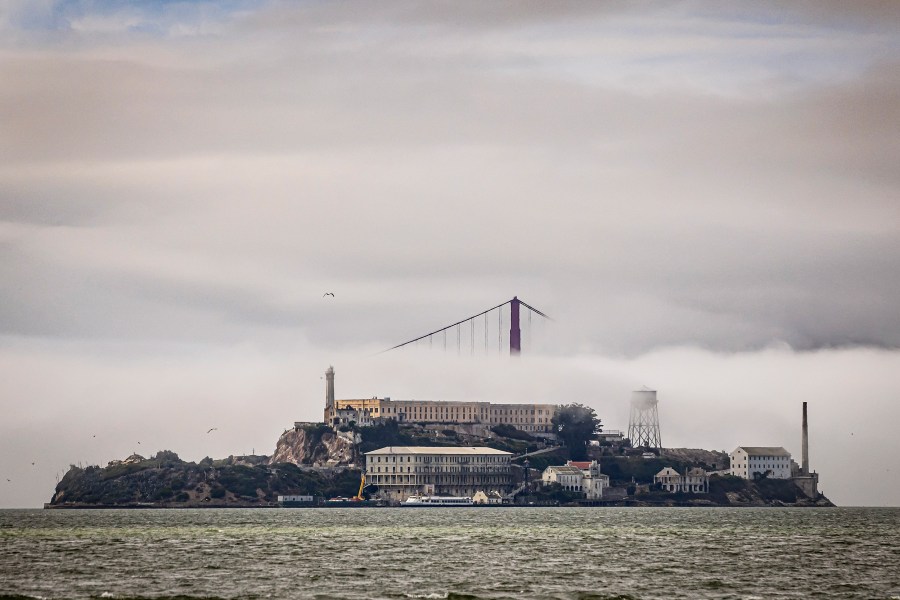
Alcatraz has an iconic status as a site of subjugation and isolation in the popular American imagination — and that’s exactly why Trump is interested in it. “It sort of represents something that’s both horrible and beautiful and strong and miserable, weak,” Trump told reporters in a stretch of speech that sounded more like literary analysis than policy appraisal. “It’s got a lot of qualities that are interesting.” In his statement announcing the move on Truth Social, Trump also focused on symbolism and presented a reopening of Alcatraz as a way to revive traditions of carceral brutality. “When we were a more serious nation, in times past, we did not hesitate to lock up the most dangerous criminals, and keep them far away from anyone they could harm,” he wrote. “That’s the way it’s supposed to be.”


It wasn’t clear from his announcement what kind of population he envisions locking up there, but in his Truth Social post he pledged “we will no longer be held hostage to criminals, thugs, and judges that are afraid to do their job and allow us to remove criminals, who came into our country illegally.” He also later told reporters it was “just an idea” he had.

This interest in Alcatraz is peak Trump in that its symbolic power far outweighs its literal capacity to significantly change anything about American law and order. Alcatraz’s average prison population was less than 300 inmates when it was in service; even an expanded facility couldn’t fit that many more people onto the remote island.
Given the costs of renovating and operating the place, reopening Alcatraz would also fly in the face of Trump’s purported “efficiency” agenda. Alcatraz was shut down as a prison precisely because it cost too much to maintain — the facilities cost triple the money of other federal prisons, and estimated restoration fees were prohibitively expensive back when it was running. And subsequent attempts to revive it were shot down in part because its practicality and value as a tourist site outweighed its capacity to serve as a prison, as USA Today explains: “In 1981, Alcatraz Island was one of 14 sites evaluated as the Reagan Administration searched for a location to hold 10,000 to 20,000 Cuban detainees during the Mariel Boatlift. However, the site was rejected because of its lack of utilities, historic nature and popularity as a tourist destination.”
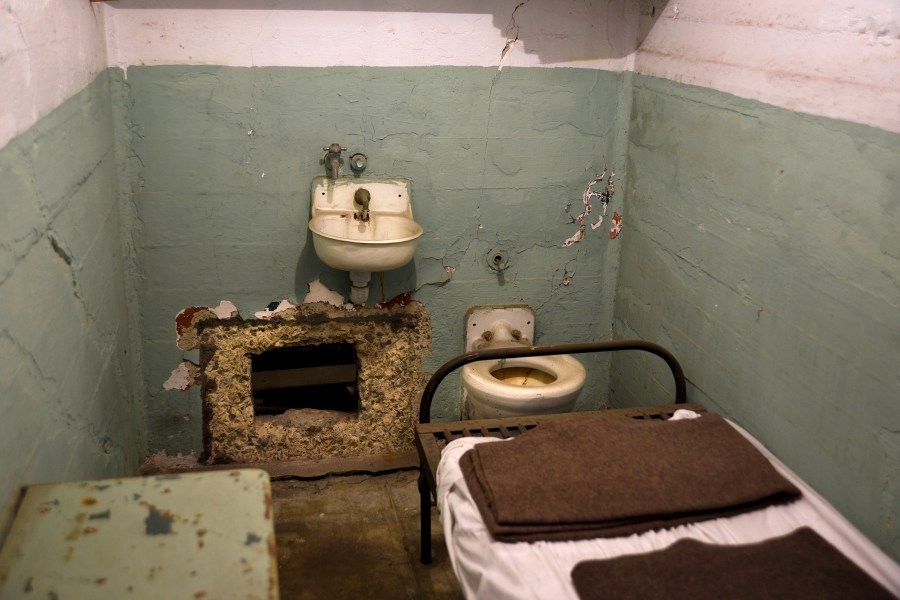
The impracticality of Alcatraz is beside the point for our reality television star president. Like sending undocumented migrants to a vicious mega-prison in El Salvador, the point is the optics of dominating people deemed to be deviants. Mass incarceration and dangerously powerful police forces aren’t sufficient for Trump. He wants to do something spectacular and dramatic to induce an atmosphere of even more fear and cruelty.

Zeeshan Aleem is a writer and editor for MS NOW. He primarily writes about politics and foreign policy.