




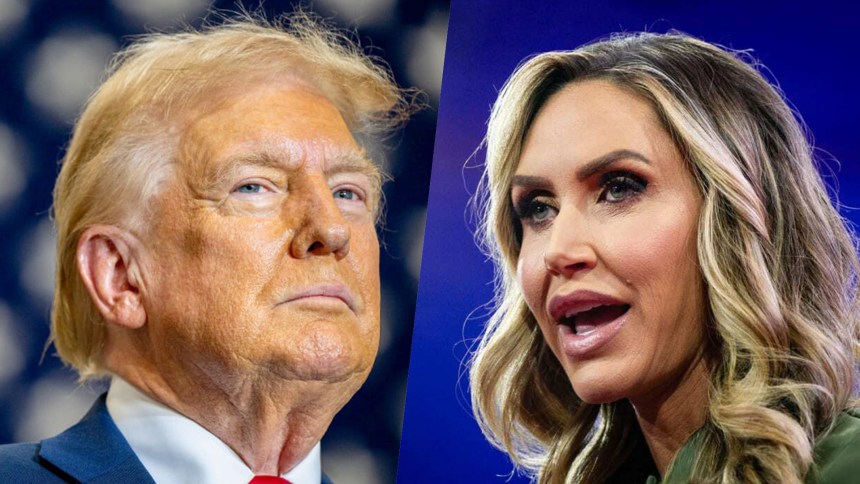
Authoritarian leaders do not lack negative character traits — most of them are insecure, obsessed with revenge, vain and brutal. But many are family men, in their own fashion. Relatives often figure prominently in their inner circles, alongside trusted cronies and sycophants. The leader’s children may run the official family business, as with former Italian Prime Minister Silvio Berlusconi and President-elect Donald Trump, or the unofficial family business of smuggling arms, diamonds and other precious goods, as with former Congolese dictator Mobutu Sese Seko’s son Kongulu Mobutu.
Trump’s record is squarely in this tradition. During his first term, his daughter Ivanka Trump and son-in-law Jared Kushner served as “presidential advisers.” An investigation by Citizens for Responsibility and Ethics in Washington reported that the pair amassed up to $640 million in outside income while serving in the White House. His daughter-in-law, Lara Trump, has been co-chair of the Republican National Committee since May, overseeing a purge of RNC staffers and essentially merging the committee with her father-in-law’s campaign. Lara Trump likely fulfilled Donald Trump’s expectations of “complete, unabashed and, perhaps, a blind loyalty to the candidate,” in the words of former RNC Chair Marc Racicot.
We need only look at the fates of sons-in-law in authoritarian history to understand the value of family members in the inner circle.
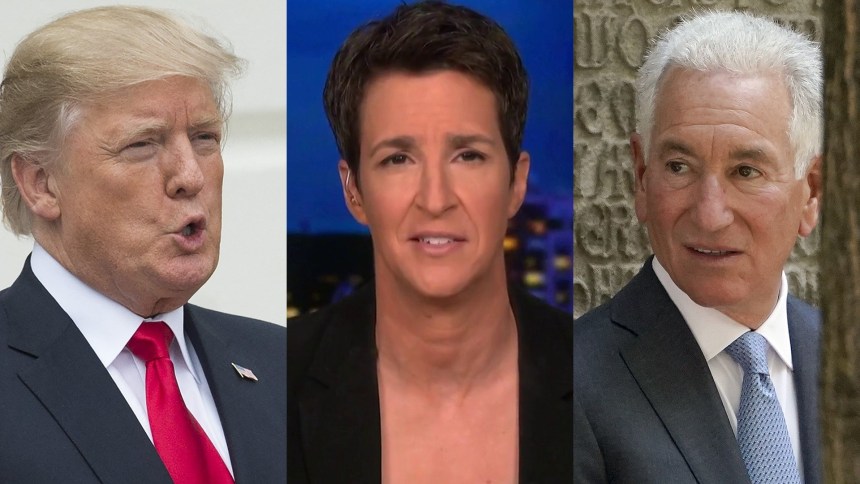
So, it’s not surprising to find additional Trump in-laws among those appointed to positions in his second administration. Representing the Kushner family now is real estate executive Charles Kushner, Jared’s father, who served two years in prison starting in 2005 after being convicted of tax evasion and witness tampering. Donald Trump pardoned him in 2020, and last month chose him for the post of U.S. ambassador to France — a gift that comes with a palatial residence in Paris.
Then there is Lebanese businessman Massad Boulos, the father-in-law of Trump’s daughter Tiffany and the president-elect’s new senior adviser for Arab and Middle Eastern affairs. During the campaign, Boulos served Trump by leading outreach efforts in Michigan and elsewhere to Muslim and Arab American voters. Boulos, who comes from a prominent Lebanese political family, once backed a presidential candidate also supported by Hezbollah, which has been fighting in Lebanon against Israeli incursions. That might make for an awkward situation in some families — Kushner senior and junior are fervent supporters of Israel and its leader, Benjamin Netanyahu — but not in the transactional world of the strongman, who has room for everyone in his tent as long as they show devotion and loyalty to him.
We need only look at the fates of sons-in-law in authoritarian history to understand the value of family members in the inner circle.
Authoritarians on both the left and the right have given in-law economic policy and management positions that have a high potential to enrich the family. When Chile became a laboratory of neoliberal policies during the military dictatorship of leader Augusto Pinochet, he appointed son-in-law Julio Ponce Lerou to lead multiple state-run companies and eventually the government agency in charge of privatizing those companies. Another son-in-law, Jorge Aravena, got a large insurance agency. In Cuba, President Raúl Castro appointed his son-in-law, Gen. Luis Alberto Rodriguez López-Calleja, as head of the armed forces’ Business Administration Group, an entity with large powers over Cuba’s economy.
The son-in-law can also be a proxy for the dictator. That was the case with Benito Mussolini’s son-in-law Galeazzo Ciano, who was widely hated by Italians for trying to be a “mini-Duce,” even imitating Mussolini’s habit of thrusting his jaw forward when speaking. This outward adulation likely helped Ciano to become foreign minister in 1936. Yet when Ciano voted in July 1943 to remove Mussolini from power for incompetency, along with the majority of the Fascist Grand Council, his father-in-law took revenge. When Mussolini returned to power as head of a Nazi puppet state, he had Ciano executed.


It’s not surprising then that Pierre Janssen, Mobutu’s son-in-law, waited until the dictator was terminally ill before publishing a book about the family’s corruption. “If you want to steal, steal a little in a nice way. If you steal too much too quickly, you’ll be caught,” was Mobutu’s philosophy. Mobutu did not know that Janssen was carefully recording each deviation of state resources into family bank accounts abroad.
What would be a danger in well-functioning governments is, for the authoritarian, a necessary change.
Today’s strongmen continue to count on in-laws for loyalty, whether they are officially part of the government or members of the inner circle. Hungarian Prime Minister Viktor Orbán’s son-in-law, businessman István Tiborcz, is one of Hungary’s richest men, likely due in part to Orbán’s government awarding Tiborcz’s company large contracts without real competition. Unsurprisingly, Orbán made sure that corruption probes initiated by the European Union against his son-in-law were dropped inside Hungary.
In Turkey, one of President Recep Tayyip Erdogan’s sons-in-law, Selchuk Bayraktar, is chief technology officer of a firm that is the country’s major producer of military drones. The other son-in-law, Berat Albayrak, was accused by multiple foreign governments of illegal activities while serving as energy minister. When communist activists allegedly hacked Albayrak’s personal email account and released correspondence that suggested misconduct, the Turkish government arrested six journalists on charges of propaganda for covering the hack.
Rather than remove Albayrak from government service, Erdogan gave his son-in-law a new job as the county’s finance minister. After two years, with the Turkish economy in a downward spiral, Albayrak resigned from that position, only to leave his allies in control of his fiefdom. In 2022 he published a memoir that defended his economic programs — but never mentioned his father-in-law by name.
Last year, The Economist warned that Erdogan’s relatives “are becoming increasingly powerful” as he prizes “family and loyalty over expertise.” But what would be a danger in well-functioning governments is, for the authoritarian, a necessary change. Janssen observed in his book that while Mobutu stole from the Congolese people, everyone around him was stealing from Mobutu, including his children. That sums up the bleak world of the strongman, who purports to be a family man but uses everyone around him and is plagued by a fear of betrayal. Trump is no exception. Look for more family members to have influence on governance and policy, whether they have official appointments or not.

Ruth Ben-Ghiat
Ruth Ben-Ghiat is a historian and commentator on authoritarianism and propaganda. She is a professor of history and Italian studies at New York University, the recipient of Guggenheim, Fulbright and other fellowships and an adviser to Protect Democracy. She is a regular contributor to MSNBC, CNN and other media outlets. She publishes Lucid, a newsletter about threats to democracy. Her latest book, "Strongmen: Mussolini to the Present" (2020), looks at how illiberal leaders use propaganda, corruption, violence and machismo and how they can be defeated.