




Last week, a federal judge, James E. Boasberg, ordered former Vice President Mike Pence to appear before a federal grand jury investigating Donald Trump’s efforts to interfere in the 2020 presidential election.
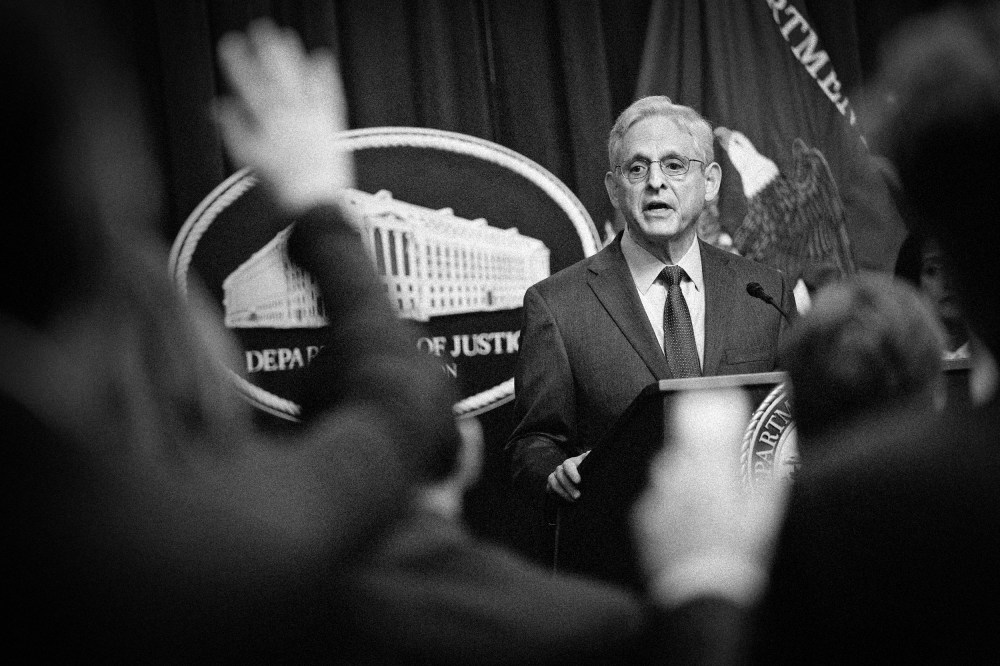
It was yet another major legal victory for Attorney General Merrick Garland and the Justice Department in its ongoing investigations of Donald Trump.
Trump arraignment: Follow our live blog beginning at 10 a.m. ET on Tuesday for the latest updates and analysis on Trump’s arrest in New York.
Yet to listen to critics of Garland, who have pilloried him for more than two years, he has not been aggressive enough in going after Trump. With the former president now indicted in New York, and state and federal investigations of Trump underway in Atlanta and Washington, many of Garland’s detractors want to know: where are the indictments of the former president?
“The real reason Trump hasn’t been indicted for his major crimes,” wrote one critic last month in The American Prospect, “is that the people in charge of that decision — Attorney General Merrick Garland, above all — are all part of the culture of elite impunity that produced Trump in the first place.”
Perhaps that is true. Perhaps there will be no federal indictments of Trump. Perhaps a man who has eluded the long arm of the law his entire life will, once again, escape accountability. But Garland’s critics need to wrestle with two inconvenient facts — the Justice Department is hardly holding back in its investigation of Trump, and an indictment of a former president is not for the faint of heart.
To the former point, Boasberg’s ruling on Pence comes after another federal judge, Beryl Howell, rejected claims of executive privilege and ordered former White House chief of staff Mark Meadows and more than a half dozen other former Trump officials to testify to the same grand jury. Federal prosecutors also convinced Howell to pierce attorney-client privilege and require Trump’s attorney Evan Corcoran to answer questions regarding the hoarding of classified documents at Trump’s Florida home and also to turn over his notes detailing their conversations.
The only thing rarer than prosecutors asking judges to use the crime-fraud exception to inviolate attorney-client privilege are judges consenting to such requests. But these latest moves come at the behest of special prosecutor Jack Smith, who is, by all accounts, a prosecutor’s prosecutor. As one defense lawyer and former prosecutor who has worked on federal cases said to me, “Anyone who criticizes Jack Smith as not being aggressive enough is nuts.”
While it’s dangerous to draw too many conclusions from Garland’s selection of Smith — and it doesn’t mean an indictment of Trump is forthcoming — if the attorney general wanted to soft-pedal the Trump investigations he made a dubious choice.
If one wants to go back even further, Garland’s decision last summer to approve an FBI search warrant of Trump’s Mar-a-Lago home in search of classified documents was, as Jeffrey Toobin, former CNN legal analyst, pointed out to me, “an incredibly aggressive investigatory step taken against a former president. It was unprecedented,” said Toobin, and “Garland doesn’t get nearly enough credit for approving it.”
To be fair, much of the criticism of Garland comes from a somewhat understandable place — Trump looks guilty as hell. But as Toobin argued, “It really is premature to say that Garland has done a good or bad job, or whether he’s been courageous or cowardly in his investigation [of Trump]. We haven’t seen the documents,” nor do we know the particulars of the crimes Trump is accused of committing. Moreover, “this is a complex investigation,” noted Toobin, “and it hasn’t taken a long time by the standard of complex federal investigations.” Getting documents from and litigating reluctant witnesses takes time. So too, does overcoming privilege challenges. And to get to Trump and other high-ranking officials, “you have to work your way up the chain,” said Toobin. Then there’s the uncomfortable reality that Trump’s criminal liability is far from clear-cut, and a guilty verdict is not certain. “The only thing worse than not indicting a president” who broke the law, said Jonathan Zasloff, a law professor at UCLA, “is indicting a president and him being acquitted.” A not-guilty verdict for Trump would not only empower the former president but would, in effect, validate his behavior. Garland’s critics are understandably outraged at Trump’s consistent ability to break the law without consequence. But prosecuting a former president is a fraught exercise. Prosecuting one who is likely to be the 2024 Republican presidential nominee and face off against the current president (who is also Garland’s boss) is incredibly fraught, no matter how justified the indictment. So all the more reason for Garland to dot every “i” and cross every “t” before going down that road. The last thing that Garland or the country can afford is for a presidential prosecution to even have the appearance of a political investigation — even if that is precisely how Trump and his lackeys in the GOP will portray it. Indeed, calls to prosecute Trump without knowing all the evidence against him, the applicability to criminal statutes and the likelihood of conviction have a strong odor of demands for a political prosecution — or at the very least, one not firmly grounded in the law. If Garland demurs and fails to indict Trump, then the attorney general’s critics are welcome to bring out the long knives and hold him accountable. I may sharpen my pitchfork and join them. But until then, they should perhaps put aside their desire for a Trump reckoning and instead make sure Garland gets it right.
Michael Cohen is an MS NOW columnist. He is also the publisher of the newsletter Truth and Consequences and hosts the weekly podcast That ‘70s Movie Podcast. 

