





Parents picked up their children early from two elementary schools in Springfield, Ohio on Friday, in response to information received from local police. The closures followed another early closure the day before, Fulton Elementary School, after it was named in a bomb threat inspired by social media rumors about the Haitian immigrants residing in Springfield. It was just one of many torments the city’s residents have faced since they became the unwilling subjects of a racist moral panic. This is not the first time serious threats have spawned out of the online media ecosystem surrounding former President Donald Trump and the broader MAGA movement, and it certainly won’t be the last.
Right-wing social media influencers spent the days before the bomb threats working to legitimize and spread baseless claims that Haitian immigrants in Springfield were stealing and eating other residents’ pets. Leading conservative media and Republican Party figures echoed the claims verbatim. With relentless efficiency, GOP leaders and online influencers escorted a set of bigoted falsehoods from a dubious Facebook post to the presidential debate stage, where Trump repeated the claims about Springfield to the event’s 67 million viewers on Tuesday.
Less than 48 hours later, Springfield police officers responded to a bomb threat against six of the city’s buildings, including Fulton Elementary. Springfield Mayor Rob Rue said the bomb threat “used hateful language towards immigrants and Haitians in our community.”
Conservative influencers have consistently found success in peddling moral panics to their audiences.
These threats were an entirely predictable byproduct of the forced outrage that MAGA movement influencers work overtime to generate. Conservative influencers have consistently found success in peddling moral panics to their audiences. Media-fueled scare campaigns vilifying antifascist activists, critical race theory, LGBTQ education, DEI programs and immigrants have catapulted countless conservative influencers’ careers. Many such moral panic campaigns, like the one that alleged Haitian immigrants were eating cats and dogs, rely on sensationalized, distorted, and sometimes outright falsified information.
When influencers pair those falsehoods with extreme rhetoric, their lies can become dangerous. Right-wing influencers popularize paranoid and existential fears among their audiences, feeding them a steady diet of hateful content that consistently elicits abuse, threats and violent attacks against the people they vilify. And for their part, right-wing social media starlets have been totally unrepentant for those consequences.


Instead of facing ostracization for perpetuating these hateful panics, pro-Trump social media audiences have rewarded many influencers with social media engagement and financial support. The GOP establishment has made media darlings of a handful of these influencers, hosting glowing interviews with them and writing news articles about their posts. Institutional Republican Party powers have even welcomed some influencers to mingle in the halls of power, apparently recognizing the utility in having a perpetually terrified voter base that is ready to attack the party’s enemies.
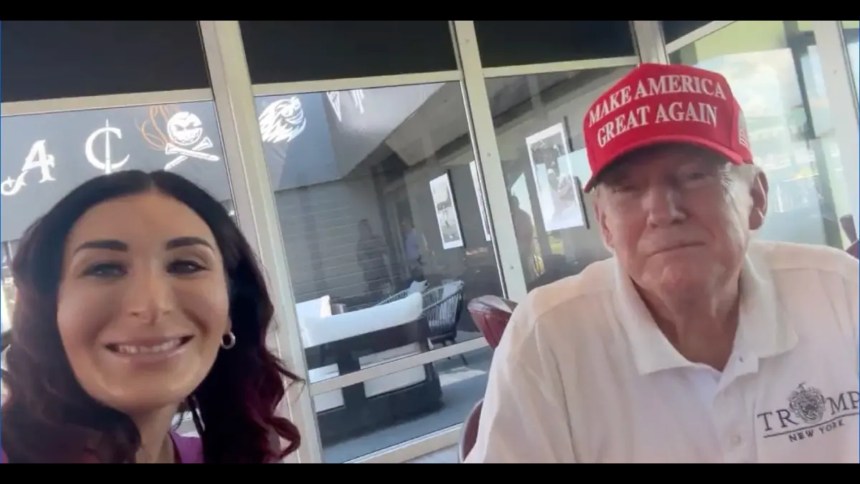
Just this week, influencers who perpetuated myths about Haitian immigrants eating animals brushed shoulders with GOP elites. Self-described “pro-white nationalism” influencer Laura Loomer flew with Trump to the presidential debate in Philadelphia and cheered him on as he posted memes referencing the racist internet rumors “from the plane.” Turning Point USA influencer Benny Johnson, who took a huge payday from a multimillion dollar Russian influence operation, was granted an interview with Republican National Committee co-chair Lara Trump one day after sharing the rumors.
Some political elites also sought to get into the game for themselves. Several members of Congress shared the animal-eating rumors on their own social media profiles, including New York Reps. Marc Molinaro and Nancy Mace and Texas Sen. Ted Cruz. And few Republicans have doubled down on the lies as much as Trump’s running mate Sen. JD Vance — even though the people evacuating buildings are his own constituents.
The GOP has embraced the worst tendencies of its digital pulpit and accepted its ugliest repercussions.
In the internet era, Republicans have dissolved whatever imagined lines existed between the conservative movement’s intellectual thought-leaders and seedy digital mudslingers. The GOP has embraced the worst tendencies of its digital pulpit and accepted its ugliest repercussions. In many ways, what Springfield has gone through in recent days was an inevitable consequence of the media genre that conservatives have chosen to bolster.
After the rumors about Haitian immigrants were dispelled by news outlets, vice presidential candidate Vance wrote on X that his followers should not be put off by “the crybabies in the media” and should instead “keep the cat memes flowing.” The memes have indeed continued to flow. And when they stop, a new moral panic will be ready to take their place, eager to terrorize a fresh set of targets.

Jared Holt
Jared Holt is a reporter and researcher who studies hate and extremist movements in the United States and their relationships to the internet.