




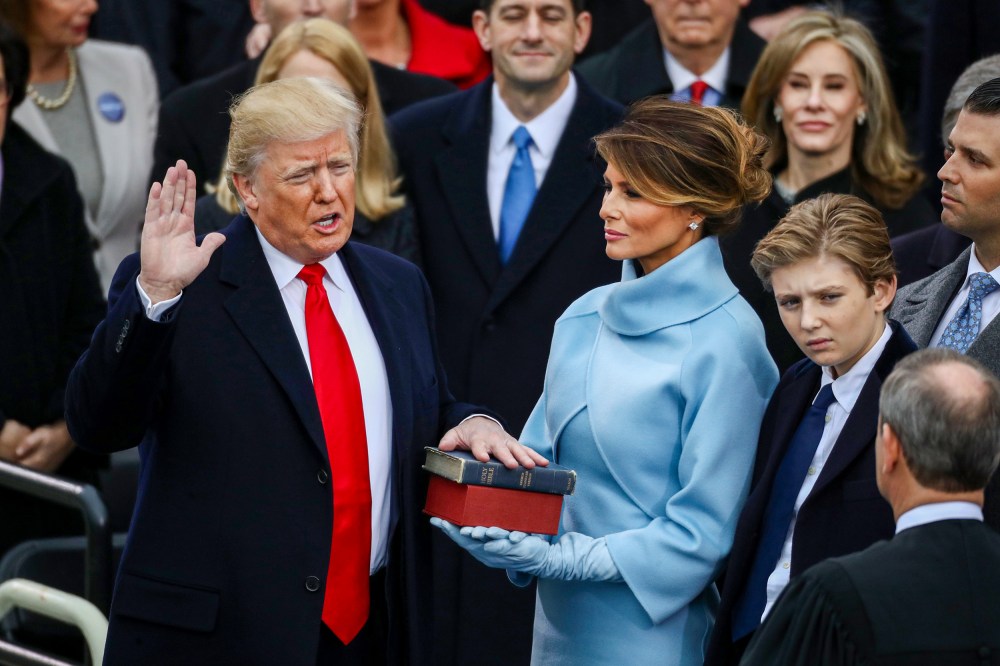
In a contest against high-minded ideals, conservative culture romped and former President Donald Trump is returning to power riding a wave of discontent with the political left in America.
Many find themselves stunned, wondering how this could have happened, but no one should be surprised. The signs were there for months.
Donald Trump is returning to power riding a wave of discontent with the political left in America.
While the polls showed the race a dead heat, something else was going on just below the surface: For the first time in decades, more Americans were identifying as Republicans than as Democrats. Just as the leader of the Republican Party was convicted of 34 felony counts, was found liable for sexual abuse and frequently descended into seeming incoherence on the stump, Americans were consistently, and in record numbers, self-identifying more with his party. In places like Pennsylvania, long-held Democratic voter registration advantages eroded significantly.
Follow MSNBC’s live blog for the latest updates and expert analysis on the 2024 election.
It’s hard to argue that the GOP has suddenly become more appealing. Indeed, the favorability levels for both parties remain relatively low. And Trump did not offer the country a compelling or serious plan to address his party’s problems. Instead, he offered them an opportunity to reject the perceived leftward shift of progressivism and to stake a claim for conservative culture.
In this way, it’s perhaps the most asymmetrical campaign of our lifetimes.
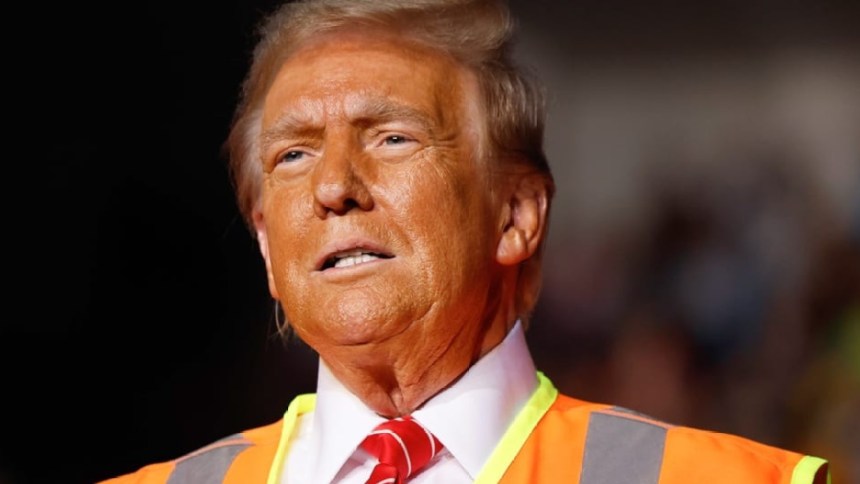
The defeated Democratic candidate, Vice President Kamala Harris, ran a traditional politics playbook: shore up the base and then appeal to the swing voters. There were few obvious mistakes. Her debut provided a jolt of energy. The campaign orchestrated a flawless convention. She slayed her opponent in their only debate. And she tacked to the center long abandoned by Trump. It wasn’t good enough.
Any loss, of course, falls to some degree on the candidate. Though much improved since her short-lived 2019 run for president, Harris is still not an extraordinary political talent, and her interviews and the unscripted moments left something to be desired. And perhaps voters didn’t buy her appeal to the political middle after years of standing as an unapologetic progressive. It wasn’t a natural fit.
By contrast, there was no question of who Trump is and where he stands. He once again rejected our conventions of how to assemble a majority coalition and created a new one by turning out new voters, often young and male, who find him entertaining and Democrats to be a nagging bore. His campaign was a rejection of the traditional playbook, run instead on grievance and cultural appeals. A man full of lies, he remained true to who he is throughout.
Yet it is important to appreciate that Trump’s win should not be viewed as a broad affirmation of him or his platform. Millions of people who voted for Trump don’t particularly like him. It’s no secret to many Trump supporters that he lacks the character and discipline to be president. Trump has his adoring fans, to be sure, but a vote for Trump was as much a message rejecting the perceived leftward shift across American institutions — not just our politics, but media, entertainment and universities.
Millions of people who voted for Trump don’t particularly like him. A vote for Trump was not just one for border security, but also a vote against limitless multiculturalism. It was a vote against journalists furious that their paper didn’t endorse Harris. It was a vote against encampments on college campuses. It was a vote against what they see as boys in girls sports, no matter how inflated the issue. It was a vote against anti-Trump Republicans who they see as enabling the left. In response, Democrats charged Trump with being a fascist. To little surprise, after nearly a decade of similar charges, this rhetoric failed to move persuadable voters. Warnings against authoritarianism and speaking in defense of democracy are noble, but they were not a winning message. Voters care more about how your plans will tangibly improve their lives. They also care about their way of life, as Trump understood. The late conservative firebrand Andrew Breitbart famously said politics is downstream of culture. It’s an ethos embodied by Trump’s campaign. I loathe culture war politics. But particularly in times of national division and turmoil, it’s a formula that works — and Trump has proved it yet again. With an election this close and a nation this evenly divided, it’s foolish to declare the war won. Democrats might easily overlook the lessons from this loss, choosing to lash out at Trump voters rather than seriously reflect on the party’s damaged brand. But that would be to miss where their weakness lies. Trump or no Trump, the Democratic Party is suffering from a problem that goes beyond any one candidate. Culture matters as much as policy, and they would be wise to acknowledge it now if they hope to stem the rush of people calling the Republican Party — even this one — home.
Brendan Buck
Brendan Buck is an NBC News and MSNBC political analyst. He was previously counselor to former House Speaker Paul Ryan and press secretary to former House Speaker John Boehner. 

