




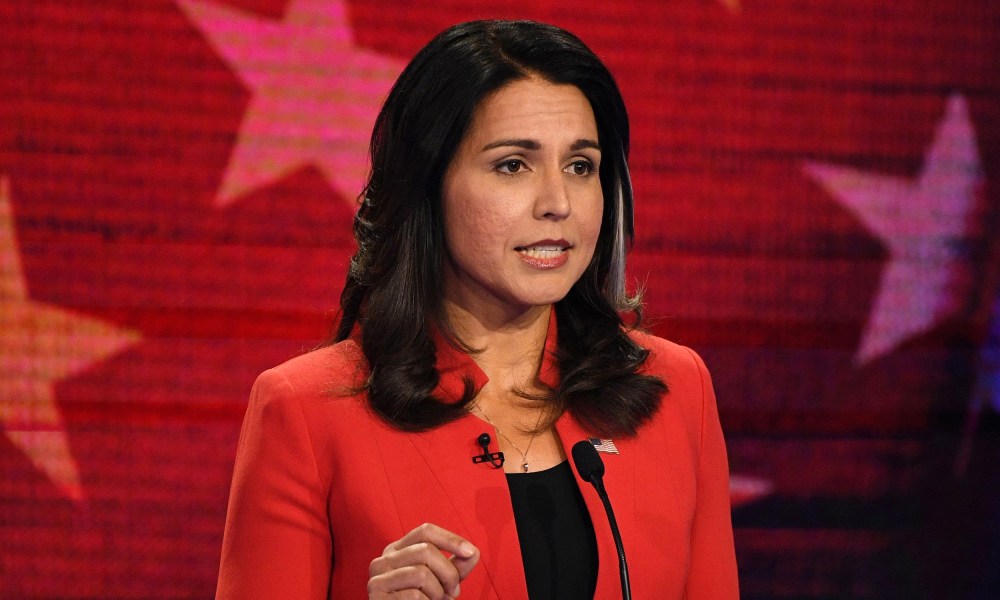
Former Democratic congresswoman Tulsi Gabbard was once a rising star in progressive politics. But after years of clashing with various parts of the left on a number of issues and becoming a guest host on Fox News, she officially bid the Democratic Party farewell on Tuesday.
Gabbard’s political identity has always been idiosyncratic. But her trajectory underscores how her specific brand of antiwar politics was always a better fit for the nationalist right than the left.
Up until a few years ago, Gabbard, who represented Hawaii in Congress between 2013 and 2021, was embedded fairly firmly on the progressive side of Democratic politics. While in Congress, she received the support of Sen. Bernie Sanders of Vermont, organized labor, Planned Parenthood and environmental groups like the Sierra Club. During the 2016 Democratic presidential primaries, she resigned from her position in the Democratic National committee and backed Sanders over Hillary Clinton for president. Her 2020 presidential platform included support for “Medicare for all,” free college, major criminal justice reform and a $15 federal minimum wage.
Gabbard’s antiwar activism isn’t driven by anti-imperialism — it’s closer to America First realism.
But Gabbard was not without some unusual positions that alienated many on the left. Particularly on foreign policy, she held some views that placed her outside of the mainstream of American progressives, leftists and the Democratic Party. She opposed U.S. interventionism and regime change, but she also called herself a “hawk” on terrorism. So while she opposed the U.S.’s forever wars in places like Afghanistan and Iraq, she felt comfortable supporting brutal authoritarian repression in places like Egypt in the name of counter-terrorism. The combination of these views led her to arguably her most controversial act — meeting personally with Syrian President Bashar al-Assad while defending his authoritarianism and vicious use of force against rebels and civilians. (She also praised Russian President Vladimir Putin’s support for al-Assad over former president Barack Obama’s stance on Syria.) And she wasn’t a dove when it came to the Iran nuclear deal, which she opposed, and sovereignty-violating drone warfare, which she supported.
Al-Qaeda attacked us on 9/11 and must be defeated. Obama won’t bomb them in Syria. Putin did. #neverforget911
— Tulsi Gabbard 🌺 (@TulsiGabbard) October 1, 2015
This combination of positions put Gabbard in an odd position. She was too hawkish for the Sanders wing of the party, too dovish for the belligerent wing of the Democratic Party, and too comfortable with repressive authoritarians for either of them.
Gabbard’s foreign policy worldview has been a source of constant friction with the left because foreign policy is a top tier issue for her. She served two combat tours in the Middle East, she’s a current Army Reserve officer, and her focus on war has consistently been at the center of her political project as an elected official and a commentator. She also cites it as the biggest reason she has left the Democratic Party and effectively joined the right-wing populist media scene. In her exit announcement, she said that “above all” it was Democrats’ tolerance for a potential nuclear standoff with Russia, due to their Ukraine strategy, that was her biggest problem with what she perceived as a changed party.
If opposition to arming Ukraine is one’s animating motive, Gabbard is correct that there’s no home for her in the Democratic Party at the moment. (It is surprising that there haven’t been more vocal calls for caution in arming Ukraine from the democratic socialists in Congress, for what it’s worth.) By contrast, in the GOP, the Trump wing of the party has criticized the flow of weapons to Ukraine according to a right-wing nationalist logic: They hardly take objection to Putin accumulating more power on the world stage, and they’d rather focus coldly on U.S. interests and invest in security at home.


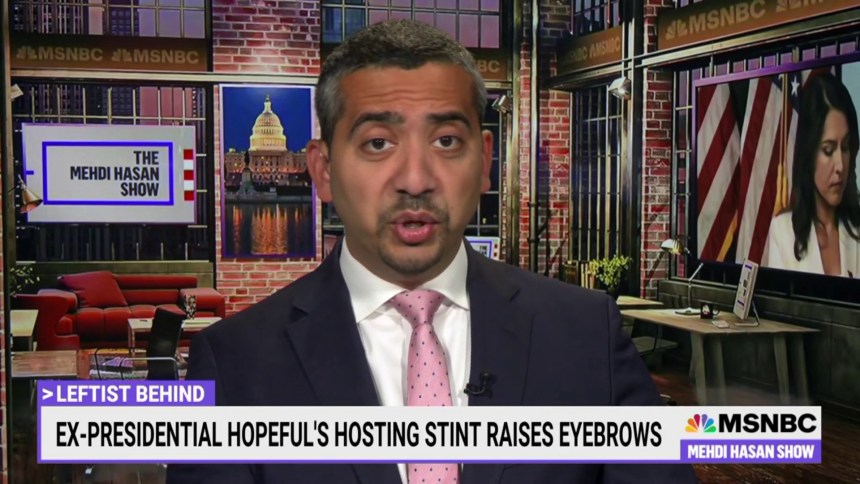
It makes sense that that outlook would resonate with Gabbard. Her antiwar activism isn’t driven by anti-imperialism — it’s closer to America First realism. As Branko Marcetic wrote in Jacobin in 2017, Gabbard’s rhetoric about war has focused almost exclusively on the fate of U.S. service members, and neglected to consider the cost of the war for the countries the U.S. has attacked. She dresses up “nationalism in antiwar garb, reinforcing instead of undercutting the toxic rhetoric that treats foreigners as less deserving of dignity than Americans,” he wrote.
In the last couple of years, though, Gabbard’s clashes with the left have expanded beyond foreign policy. Gabbard has taken pointedly right-wing positions on issues like gay rights, trans rights and abortion rights. Strikingly, she also pivoted to the right on economic issues, describing President Joe Biden’s social safety net spending agenda as fostering a “cradle-to-grave mentality of government dependence.” Along the way, she showed up more and more on right-wing shows, including the aforementioned guest hosting on Fox News. In her recent statement, she offered standard right-wing culture war positions on law and order, and deemed “woke” politics “anti-white racism.”
There are a number of factors that could be fueling Gabbard’s full rightward shift. Her foreign policy views have remained relatively consistent, and it’s possible that after burning so many bridges with the left over foreign policy, she decided that she could more easily advocate for the views she prizes most by joining the right. It’s also possible she finds that her ideas are more likely to provide her with more money and influence as a pundit on the right. (Her announcement that she was exiting the Democratic Party was on the day she launched a new self-titled YouTube show.)
Additionally it’s worth noting that some of her new reactionary views on social issues are closer to ones she held before she ran for U.S. Congress and possibly shed because she wanted to be a viable Democrat. Whatever the reason, the upshot is that she’s swiftly traveled from a left-leaning populism to a right-leaning populism.
In the past before her full-fledged pivot to the right, Gabbard was often viewed among progressives as someone with reasonable domestic political views but oddball and sometimes deeply unsavory foreign policy views. The reality all along may have been that she was a nationalist looking to articulate an America First worldview, and she decided that the only place to advance it is in the MAGA scene.

Zeeshan Aleem is a writer and editor for MS NOW. He primarily writes about politics and foreign policy.