





The new movie “Twisters” finally provides an answer to the age-old joke about how everyone talks about the weather but nobody ever does anything about it.
While the storm chasers of the 1996 original drove after tornadoes in order to study them, the reboot ups the stakes: stronger storms — including one filled with columns of fire — and heroes who have a so-crazy-it-just-might-work plan to stop them.
It makes for a fun two hours, but it leaves us a little worse off when we leave the theater.
It makes for a fun two hours, but it leaves us a little worse off when we leave the theater.
The first problem starts with those stronger storms, which one character laments are “getting worse every year” and an actual Oklahoma TV meteorologist describes in a cameo as a “once-in-a-generation tornado outbreak.” That’s a phrase that may already need to be retired, as we have seen “once-in-a-generation” winter storms, hurricanes, wildfires, droughts and windstorms in recent years amid signs that these won’t be one-off events.
The most likely cause is two words you won’t hear in the movie: climate change.
Now, to be clear, scientists remain uncertain of the links between climate change and tornadoes. As climate scientists Hope Jahren and Kerry Emanuel explained to me, we know that large outbreaks of tornadoes and off-season tornadoes are increasing but not why, and there is much less certainty than there is with the links between climate change and hurricanes, for example. That’s how science works.
But in the real world, one of these characters might, you know, mention it as a possibility? Especially when the mother of one of the heroes says storms and floods are becoming more common and wheat and seed are getting more expensive. Not to be a backseat screenwriter here, but maybe two characters could argue about it briefly? And then kiss? I dunno. This summer movie stuff doesn’t seem that hard.
Director Lee Isaac Chung has made clear that it was a deliberate choice not to mention climate change.
In case you think I’m imagining things, director Lee Isaac Chung has made it clear that it was a deliberate choice not to mention climate change.
“I wanted to make sure that we are never creating a feeling that we’re preaching a message, because that’s certainly not what I think cinema should be about,” he told CNN. “I think it should be a reflection of the world.”
Look, if I’d just been handed $200 million to make a summer movie, I’d be pretty cautious about not offending anyone, too, and no one likes a preachy blockbuster, especially on a subject that so many politicians insist isn’t a real problem. We’re not expecting Hollywood to make a fictionalized version of “An Inconvenient Truth” here. Tornadoes bad; pickup trucks good. We get it. But a moment of introspection wouldn’t kill the movie, either.
Even if viewers make the connection themselves, the movie fails in a second and more crucial way. (Spoiler ahead, but I promise it’s not about any part of the movie you’ll care about.)


The film’s heroine, played by Daisy Edgar-Jones, is a scientist who has developed a Mark Rober-like machine that can shrink tornadoes by filling them with tiny balls of superabsorbent polymer. Her plan fails, and she retreats to the relative safety of New York City until she gets a second chance with a tornado-chasing social media influencer, played by Glen Powell, and uses rockets filled with silver iodide to precipitate the moisture first and save the day.
You’ve seen this plot point before: Check the alluvial dampers! Reverse the polarity of the neutron flow! Cross the proton streams! Scan the quantum fissure using a subspace differential pulse!
Again, I get it. You’ve written the heroes of your $200 million summer blockbuster into a corner, and you need some kind of deus ex machina to save the day. They can’t just drive their pickup next to a supercell tornado and post YouTube videos about it while innocent Oklahomans die all around them.
The problem is that this kind of magical thinking has infected how we approach climate change in the real world, too.
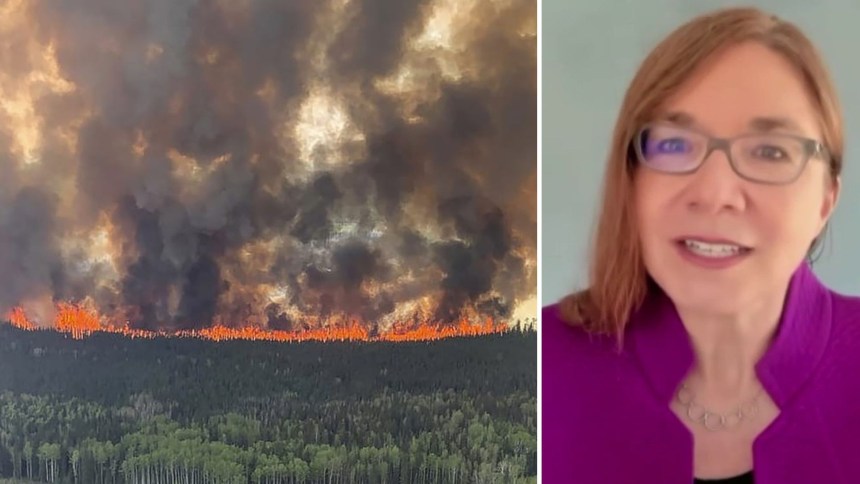
Sure, we could reduce greenhouse gases by building more solar and wind power, subsidizing electric cars and e-bikes, improving mass transit, stopping deforestation and planting more trees, improving agricultural techniques or adding a price to carbon and letting the market sort it out.
But what if, instead, some people suggest, we put a giant solar shade in outer space? Or dump tons of iron dust into the ocean? Or build a machine that vacuums carbon out of the atmosphere? Or paint all the rooftops white? Or even an entire mountain? Or spray sulfur dioxide particles into the stratosphere? Or throw a bunch of tiny glass beads on the ice caps? Or just build machines to create more ice?
I’m not saying these ideas wouldn’t work or that we shouldn’t study them. But too often they seem to be proposed as a shortcut to doing the hard work to slow climate change, an Ozempic for the Earth.
And that’s ultimately the problem with “Twisters,” a movie that says tornadoes are getting worse without ever naming a possible cause and presents as its only solution a bunch of technobabble. Maybe we were better off when all the movie characters did was talk about the weather.

Ryan Teague Beckwith is a newsletter editor for MS NOW. He has previously worked for such outlets as Time magazine and Bloomberg News. He teaches journalism at Georgetown University’s School of Continuing Studies and is the creator of Your First Byline.