




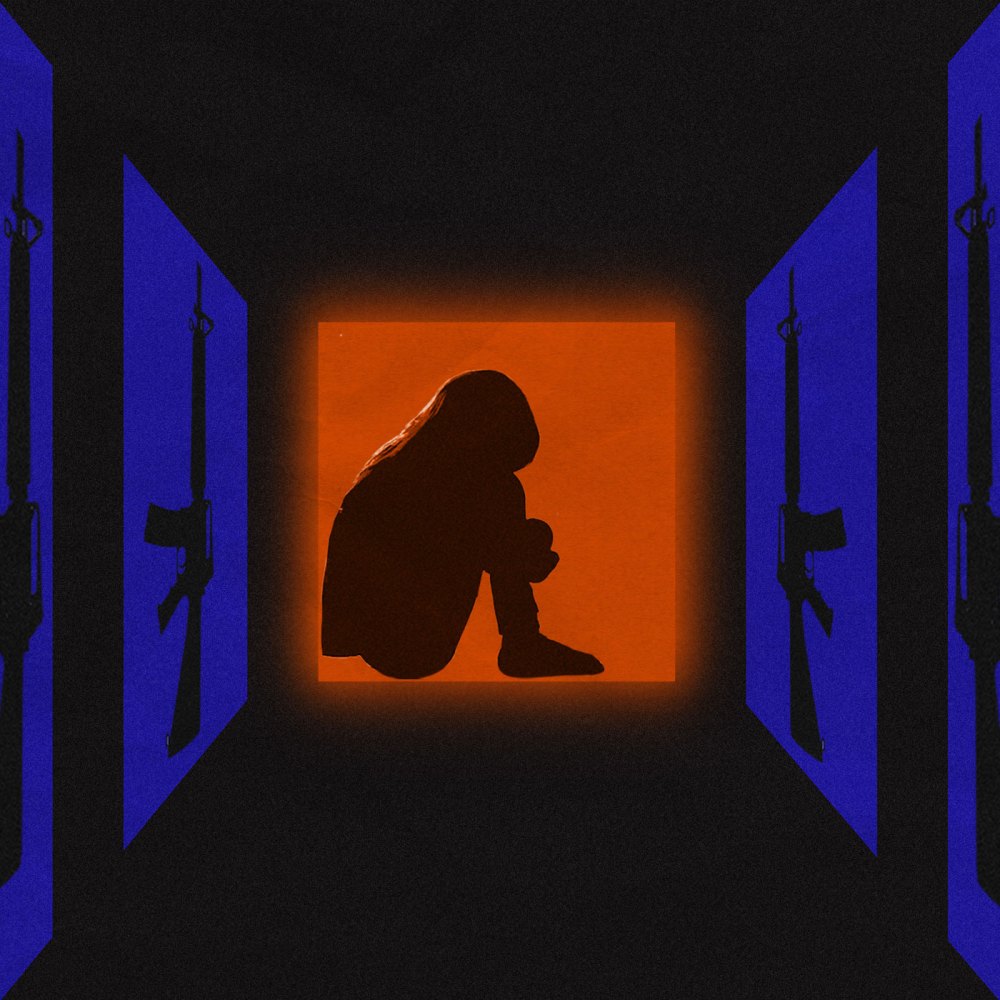
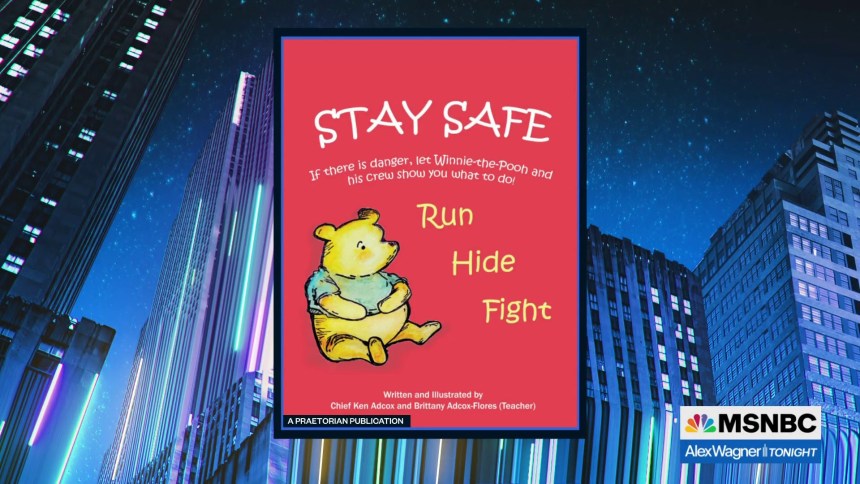
Last year, my daughter’s fourth grade class was shown a video about what they should do if a gunman intruded upon their school. The video included scenes of children texting their parents, “I love you.” My daughter’s school does not permit students to have mobile phones. Her takeaway, then, was that if a gunman did blast into her school, she’d have no way to tell me and her mom goodbye.
Around the country, students are being subjected to such psychological torment by adults who insist they’re doing these things to keep them safe.
Not long ago, her fifth grade class was put through a lockdown drill — but wasn’t told it was a drill. Trembling, she hunkered down next to a friend, squeezed her hand and quietly recited Psalm 23. She’s 10, but when she got home, she told us she thought that day would be her “last day on Earth.”
Around the country, students are being subjected to such psychological torment by adults who insist they’re doing these things to keep them safe. While not all students are being so blithely traumatized, almost all are being made to prepare for some kind of situation that warrants a lockdown. Even as far back as the 2015-2016 school year, according to the National Center for Education Statistics, “About 95 percent of schools had drilled students on a lockdown procedure.”
Franci Crepeau-Hobson, the chair of the National Association of School Psychologists School Safety and Crisis Committee, told me Tuesday that as well intentioned as school officials undoubtedly are, “a lot of it is sadly driven by, you know, a fear of litigation and lawsuits. You know, ‘If we don’t practice this, and then something happens, we’re held accountable.’”
No parent wants to get the call that parents at Robb Elementary School in Uvalde, Texas, got a year ago. Or the call received by parents at Oxford High School in Michigan, Marjory Stoneman Douglas High School in Florida, Sandy Hook Elementary School in Connecticut, and so many other schools whose names we don’t remember. Similarly, no school district official, or school-specific official, wants to be accused of not having prepared for an attack from a gunman intent on slaughtering innocents.
But school officials’ good intentions — their need to demonstrate that they’re doing something in response to such tragedies — don’t justify their putting students through the stress of believing someone may soon burst into their classroom and kill them.
“Any drill, it should be really clear that this is a drill,” Crepeau-Hobson said. “Drills are intended to build muscle memory: so I know what to do when there is a real emergency. And if you’ve got a kid who thinks they’re gonna die, that’s not helpful. They’re not going to remember what to do.”
Since last year’s massacre in Uvalde, when an 18-year-old armed with an AR-15-style rifle killed 19 fourth graders and two teachers, state lawmakers across the country have taken different, sometimes conflicting, positions on lockdown drills.
Citing what happened in Uvalde, an Alabama lawmaker has proposed taking discretion away from school boards and mandating that all school districts “require the participation of school resource officers and law enforcement agencies in regularly scheduled lockdown drills; and to designate the days on which lockdown drills are conducted as school safety and awareness days.”
At the same time, two New York lawmakers have proposed decreasing the number of lockdown drills per school year from four to one and giving parents enough advance notice for them to keep their children from participating in such drills if they choose. According to the “justification” for that legislation, “Parents report stories of their children texting them goodbye messages or writing out their wills, imagining the drills are real, or having nightmares for weeks afterward. One study on the aftereffects of the drills shows that they led to a 39% spike in depression, a 42% increase in stress and anxiety, and a 23% increase in overall physiological health problems.” A study published in the journal Humanities and Social Sciences Communications in December 2021 includes the figures about depression and stress and anxiety.


Not all drills are the same. Some prompt students to be quiet and get in the safest position they can. Others include simulations of an actual attack.
A social worker whose children attend a school in Freeport, Maine, told WMTW, a local television station, that she was told she couldn’t keep her 6- and 7-year-old children from participating in a lockdown drill and that that’s why she recently testified in support of legislation there that would let parents opt out.
Not all drills are the same. Some prompt students to be quiet and get in the safest position they can. Others, which may not be acknowledged in advance as drills, include simulations of an actual attack, up to and including the fake sound of gunfire and the use of fake blood. Sandy Hook Promise, a nonprofit formed after that awful 2012 massacre, is stridently opposed to simulations and in January called such drills out as “a dangerous new trend that is impacting our students’ safety and their mental health.”
In the legislative session that just ended, Minnesota lawmakers voted to effectively ban active shooter simulations on its public school campuses. Even for less traumatic lockdown drills, the legislation calls for families to be given a warning 24 hours in advance, and teachers are required to have a talk with students afterward that gives them time and space to decompress.

Given that another class of fifth graders at my daughter’s school was informed that the last lockdown drill was just that — a drill — it doesn’t appear that her school was carrying out a simulation. It appears that there was a communication breakdown (to me, an unforgivable one) that left the kids in her class needlessly afraid. Before I reached out to the school psychologists association, I was convinced that lockdown drills, in and of themselves, are the problem. Now I’m convinced that to the extent that they’re problematic, they’re problematic because of poor or nonexistent communication and poor execution.
“It’s incredibly frustrating to those of us who work in the area of school safety,” Crepeau-Hobson said, “because these things that, for example, your child’s school is doing run counter to best practices and aren’t helpful and don’t keep kids safer.” Drills by their very nature, she pointed out, are supposed to leave the people who go through them feeling more secure and confident, not more rattled and afraid.
Whenever I’m feeling worried about our precious daughter, I remind myself that the chance of her being shot to death at school is reportedly about 10 million to 1. Obviously, that’s still too high. But the truth is she’s far less likely to be physically harmed by a school shooter than she is to be psychologically scarred by school officials who are ostensibly protecting her.

Jarvis DeBerry is an opinion editor for MS NOW Daily. He was previously editor-in-chief at the Louisiana Illuminator and a columnist and deputy opinion editor at The Times-Picayune.