





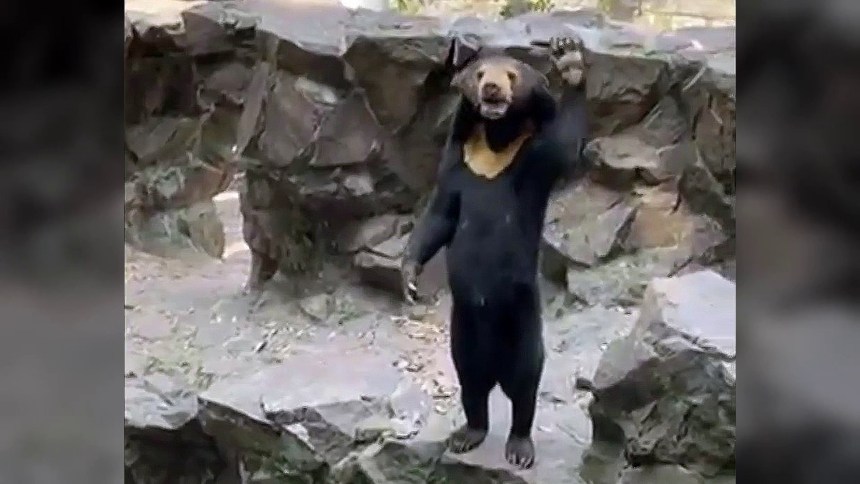
Angela, a Malayan sun bear at a zoo in Hangzhou, capital of Zhejiang province, has become a “superstar” in China. A short video on Douyin, the Chinese version of TikTok, showed Angela standing upright and seemingly interacting with visitors.
While most people were fascinated by this adorable animal capable of standing like humans, others questioned if Angela was a human clothed in a bear outfit. In response, the zoo management confirmed that Angela is indeed a sun bear, and is even dating a male sun bear. Since the video went viral, visits to the zoo have increased by 30%. But hopefully the attention on Angela will be extended to the welfare challenges facing other zoo animals in China.
Some zoos have been caught displaying dogs as wolves, livestock as exotic animals and donkeys as zebras.
The public questioning of the bear’s true identity is both thought-provoking and understandable, given the Chinese zoo industry’s record. After all, some zoos have been caught displaying dogs as wolves, livestock as exotic animals and donkeys as zebras.
The lack of public trust is also a result of other ethically questionable conducts perpetrated by the zoo industry. Not too long ago, live feeding was a “popular” program practiced by many zoos. Live goats, ducks, chicken, rabbits and even cattle were thrown to the pack of hungry lions or tigers to be torn apart alive. The practice terrorized not only the prey, but also visitors, particularly young children.
Other zoos have held photo ops with animals that are no less a scene of animal cruelty. In the name of “intimate interaction with animals,” lion cubs are snatched from their mothers; ponies stand for hours under the blazing sun without water and rest; and tethered, detoothed, and drugged tigers are beaten if they do not sit still.
Finally, there are the hugely controversial animal performances, such as tiger shows. Forcing animals to act unnaturally sends wrong messages to visitors, many of whom are young children. These shows have little education or conservation values. They normalize acts of coercion, foster indifference and validate injustice to animal victims.


There are voices in China against animal performance. Since 2004, the volunteer group China Zoo Watch has advocated for an end to cruelty in Chinese zoos. But it has fought an uphill battle. The introduction of the killer whale shows in particular has made the group’s campaign a more daunting task. China has the largest number of ocean parks in the world. Some 300 aquariums have animal shows attracting 200 million visitors a year. And to the consternation of animal activists, animal performance is protected under the country’s recently revised wildlife protection law.
Zoos are not going away in the near future, but efforts must be made to improve the lives of their animals. No captive wildlife institutions in the world can replicate natural habitats. Reforms are more important than ever as, in the last three decades, China has opened and renovated hundreds of zoos, wildlife parks, aquariums and ocean parks. One new zoo built in the provincial capital of a southeast province was an architectural marvel with winding roads, traditional pavilions, small bridges, gift stores and ice-cream stands for visitors who typically spend no more than five hours on each visit. But the enclosures and housing were small and barren for the animals who will spend their entire lives in the zoo.
Zoos that do not care about animal welfare affect human and animal behavior alike.
Zoos that do not care about animal welfare affect human and animal behavior alike. In China, one chimpanzee was reportedly addicted to smoking. Another chimpanzee would reportedly spit at visitors when provoked. A most common behavior among zoo animals is begging. Begging bears are quite a scene, especially if they are housed in pit enclosures, a relic of 19th century zoos. Unsurprisingly, zoos with welfare problems can bring forth some of the most unseemly visitor behaviors, such as shouting at, throwing trash or spitting munched food at the animals. A young man caused a public outcry when he was photographed hitting an old and blind lion with snowballs.
It seems that zoo visitors worry least about their manners. In 2021, two families got physical inside a Beijing zoo. The fighting happened in front of not only the young children of both families, but also in plain view of startled chimpanzees — who reportedly engaged in their first group fight that evening. Other reported acts of cruelty by visitors include an acid attack on three bears and the killing of a kangaroo.
Public attention on Angela sends a message to the zoo industry. China may lag behind other countries in legal protections for animals. But society has higher expectations. Not only is a fake animal unacceptable, but acts or programs of cruelty are also indefensible. The general public will always be watching — and judging.

Peter Li
Peter Li is an associate professor at the University of Houston-Downtown, specializing in animal policy and law in China. He is also a China Policy Specialist for the Humane Society International.