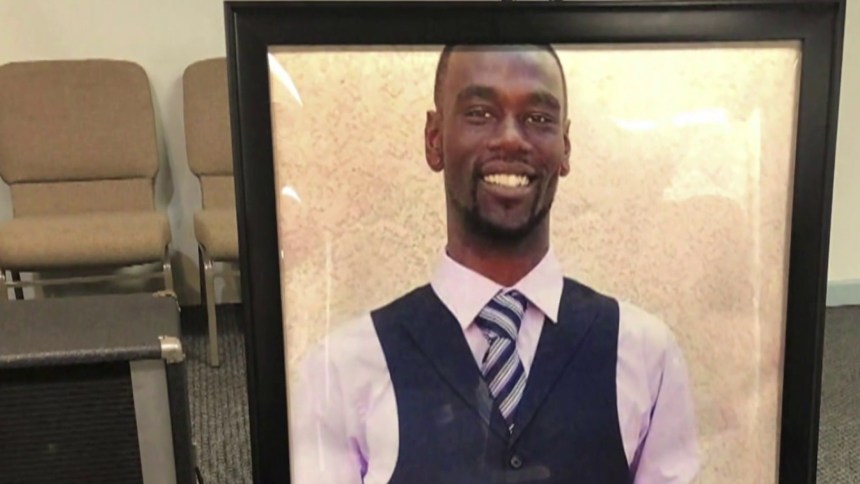
On Thursday, Shelby County District Attorney Steve Mulroy announced that the grand jury had indicted five former Memphis police officers in the death of Tyre Nichols, who died three days after he was severely beaten during a traffic stop. The charges include second-degree murder, aggravated assault and aggravated kidnapping. Nichols died Jan. 10. The indictment came surprisingly quickly.
Contemplating what the officers must have done to cause such serious injury is shocking and appalling.
Or, perhaps, not. Because the beating, which resulted in the prompt firing of all the officers involved, was captured on body camera footage. Preliminary findings from an autopsy released by the Nichols family show the 29-year-old suffered “extensive bleeding caused by a severe beating” before his death. Contemplating what the officers must have done to cause such serious injury is shocking and appalling.
The family and the community are bracing to relive the attack, because at least some of the body camera footage will be released Friday. We are likely to see all of it if there is a trial.
Americans have already seen far too many of these videos. They are unspeakably painful to watch. But they are essential, because they stand as testimony to the excessive force used by some police officers, who do not deserve to wear the badge.

The lead charge in the state’s case is second-degree murder, which carries a sentence of 15 to 60 years in custody. But a state murder charge does not vindicate federal civil rights interests, and federal charges can include a sentence up to life imprisonment or imposition of the death penalty. (Remember that the federal government brought charges after the state convictions of George Floyd’s killers in Minnesota and Ahmaud Arbery’s killers in Georgia.)
And indeed on Wednesday, the U.S. attorney in Memphis, Kevin Ritz, announced a federal investigation into Nichols’ death. In a vitally important press conference, the Justice Department made clear its own commitment to investigate the circumstances surrounding the horrific death. Ritz noted that an experienced investigator and an experienced lawyer from the Justice Department’s Civil Rights Division would be part of that team. But his statement went beyond that, sharing that he had met with the family and talked about Nichols as a person, acknowledging his appreciation that they shared personal details, and confirming he understood the humanity that can get overwhelmed during the deliberations of an investigative process.
The Justice Department is often accused, sometimes fairly so, of not being transparent with the public. It has a long-standing policy of declining to publicly discuss ongoing criminal investigations for entirely appropriate reasons. It needs to protect the integrity of the investigation, ensure witness safety and avoid smearing people who are investigated but ultimately not charged. But that necessary secrecy comes with a quandary. Transparency is necessary for public trust. So, how is the Justice Department supposed to make sure the public can have confidence it is protecting their rights and enforcing the law fairly when, as Attorney General Merrick Garland has said, echoing his predecessors, it speaks only in court and in its court filings?
The Justice Department is often accused, sometimes fairly so, of not being transparent with the public.
We got a lesson in how to do that from Ritz, He didn’t discuss the facts in detail or the progress the investigation is making. But he did something the Justice Department does have the latitude to do, although it doesn’t always take advantage of the opportunity. Ritz laid out the process for the investigation and what the community can expect. That may sound simple, even obvious. It may even sound insufficient in the face of what we know about this case. But when prosecutors cannot discuss the progress of a criminal inquiry, providing the information that they can about process can help a community prepare for what is coming and demonstrate a commitment to seeing justice done.
Ritz committed to the pursuit of the civil rights investigation — something that’s important for a community to hear, and a promise to which the Justice Department can be held accountable. Perhaps most importantly, he modeled expectations for the investigation, explaining it would be “methodical” and that it would “continue until we gather all the relevant facts.” These investigations can take longer than a mourning, outraged public wants them to. Because federal civil rights crimes typically require proof of motive, they are more complicated to investigate than parallel state cases charging homicide, which do not. Explaining how and why these investigations unfold matters. It was not a lengthy statement. But it was an appropriate one. Police brutality is all too often unaddressed, at least in a meaningful way that leads to accountability, by the criminal justice system. There are lengthy delays before investigations are even opened. This week’s twin announcements, that the county DA indicted the officers involved in the stop and that the Justice Department will conduct its own civil rights investigation, should be reassuring to the family and the community. It sends a strong message to state and local law enforcement in Tennessee and elsewhere about the nature of the Justice Department’s commitment on these issues. And if the problems in Memphis are found to be more widespread, the Justice Department can open a civil pattern and practice investigation to address departmentwide issues. We learned today that additional officers in the department are under investigation. In his announcement, the U.S. attorney also did something very simple that doesn’t happen nearly often enough — he made it personal. Assuring the community that while he would be guided by the principles of justice in the course of the investigation — that’s something we always want people in the criminal justice system to do — he said that he “grew up in this city and care(s) deeply about it. I want this city to be a place where justice is done.” We need to hear that from the Justice Department and then we need to see the follow through. It’s not enough to remind people there are good cops when so many bad ones act in a manner inconsistent with protecting their communities; when they assault and kill. The facts here demand justice for a young man who was senselessly murdered. And both the state and the Justice Department have the ability to act, not only to bring justice for Nichols and his family, but also to send a message that police officers are not above the law. There are only so many times we can criticize police officers for individual incidents of excessive force; only so many times we can watch brutal, grainy video footage; only so many times we can protest in the streets, without people losing all faith in the criminal justice system. And that system cannot work unless people have confidence in its integrity. Perhaps what’s happening in Memphis are baby steps in that direction. But for now, there is an indictment from the state and a promise from the U.S. attorney to treat Nichols’ death like the civil rights matter that it is. That’s a start.