




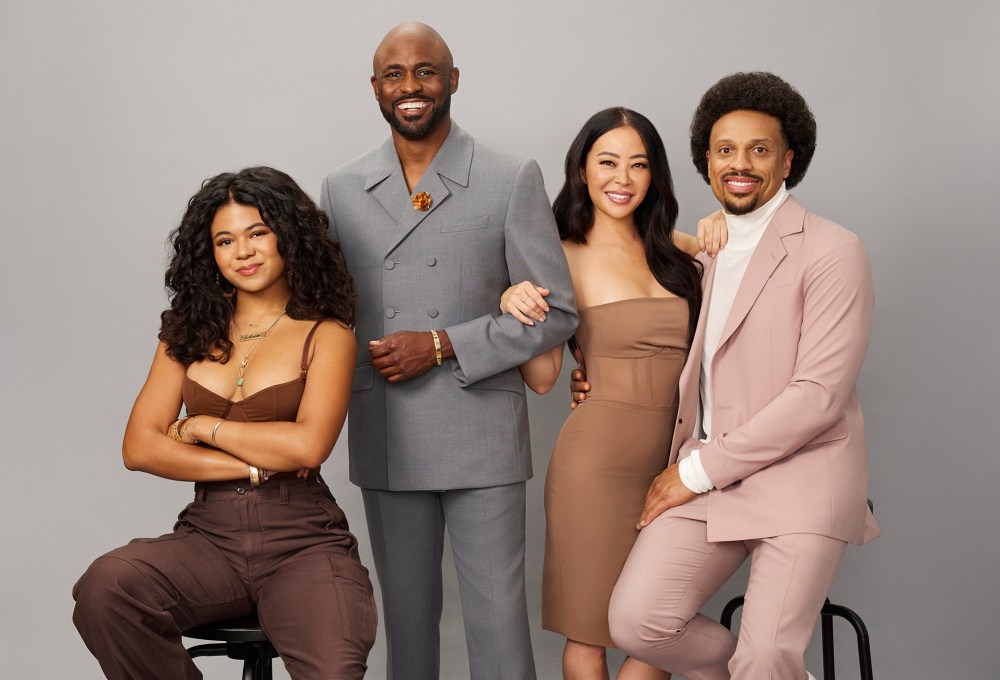
“Wayne Brady: The Family Remix,” a reality show documenting the lives of comedian Wayne Brady and his blended family — the second episode of which drops Wednesday — subverts mainstream representations of masculinity by centering expressions of male vulnerability and sexual fluidity. The Freeform series will explore, among other things, Brady’s journey of coming out as pansexual and how this forces him to confront and challenge his own internalized oppressive ideas of what it means to be a Black man.
The viewer is offered a version of masculinity — specifically, Black masculinity — which both normalizes and embraces vulnerability.
I want to say up front, I am not a cisgender man nor am I Black. So my reflections on these themes are only relevant insofar as I have my own lived experience as a pansexual/queer man of color. I know what it’s like to be situated in a space of racial alterity and the many ways that complicates my relationship to my masculinity and sexuality, but pansexual/queer men of color are not a monolith. While I do not know what it’s like to be a Black cis man (which itself includes a near infinite range of lived experiences), I can offer reflections only as someone who’s read exhaustively about and has personally navigated some of the themes this show foregrounds.
The first episode was largely framed around Brady coming out to his friends Joe Nickson and Vincent Bragg, co-founders of the elite advertising agency ConCreates. Nickson and Bragg, who both identify as straight, were formerly incarcerated (primarily employing currently or formerly incarcerated people at their agency) — and Brady describes how coming out to them feels like a litmus test for how people within his circle might respond to the news.
Brady invites the duo over to his house for a meal with his family. Immediately, the viewer is offered a version of masculinity — specifically, Black masculinity — which both normalizes and embraces vulnerability.
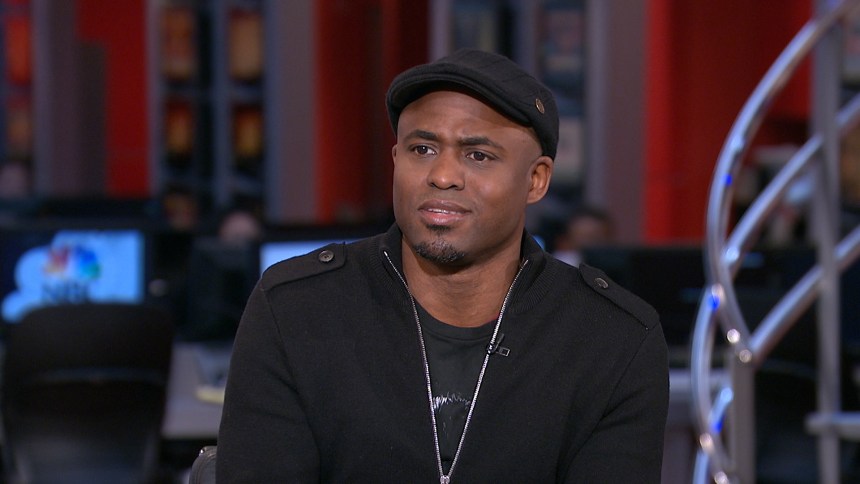
“Honesty is me telling you what you ask me … Vulnerability is me volunteering that information,” Bragg says to the group. “I go to therapy twice a week, I’ve been to prison — that’s me volunteering information that you would not be able to see on me in a regular conversation. That’s me being vulnerable ‘cause now you can judge me. Vulnerability and masculinity — those two things go together, actually.”
Brady connects this to his experience of fatherhood. “We are not taught ‘my vulnerability can be an asset.’ I know that I wasn’t taught that because my dad wasn’t around to be able to teach me. So I’m now tryna play catch up at 51 years. So, vulnerability is definitely something you have to learn and embrace.”
Nickson shares that his experience with fatherhood, and co-parenting specifically, has demanded he interrogate a lot of the same notions — and that observing Brady’s now convivial relationship with the partner (Jason Michael Fordham) of his ex-wife (Mandie Taketa) prompted him to ask: “What is masculinity and when do I divorce my ego?”
Journalist, public health advocate, therapist and political commentator Araya Baker, whose work focuses on anti-oppressive frameworks, has written about Black toxic masculinity as a deeply embedded and necessary survival mechanism that leaves little room for vulnerability. “Beginning with slavery, America’s sociopolitical structures and institutions have upheld a racially stratified, patriarchal class system that, to varying degrees, has oppressed everyone except wealthy white men,” Baker wrote in The Mighty. “This reality, coupled with a desperation to escape racialized poverty, left Black men with no other choice but to attempt assimilating into the dominant culture.”


Men with less privilege and who are subjected to greater levels of oppression experience this kind of cultural violence to greater degrees.
While I subscribe more to bell hooks’ analyses of patriarchal masculinity as a violence enacted against all men — something I’ve written about before — it is unquestionable that men with less privilege and who are subjected to greater levels of oppression experience this kind of cultural violence to greater degrees. I’ve witnessed, first hand, Pakistani men in my family internalize deeply harmful expressions of white supremacist and patriarchal masculinity for the sake of assimilation or, in their case, survival. And this is precisely what makes the show’s representation of masculinity, inextricably bound with vulnerability, so exigent and perhaps even profound.
“I’m still struggling with this s—,” Brady says later, as he comes out to Nickson and Bragg. “Because of talking about the issues of, oh, how people see you and masculinity and all that stuff. Everybody has f—— s— to say. But I’m not going to be unhappy ’cause I’m not living my truth, and there’s been a lot of shame around it.”
Bragg responds to Brady’s news by describing how he started his business after getting out of prison — by leaning into his experience as someone who was incarcerated, rather than obscuring it, and by only concerning himself with the people with whom he had authentic connections and mutual support. “So, there’s 8 billion people on the earth,” he says. “I don’t need 8 billion people to f— with me. … In order for me to get where I’m goin’, I just need my people.”
Bragg’s response both defies Brady’s anxieties and offers a type of instantaneous receptiveness, which is rare.
Reality television, whether we love it or hate it and whether or not we want to admit it, has cultural significance in terms of how it reifies gender roles — most often promoting regressive representations of gender. “[T]aking reality TV seriously also means holding it accountable for its frequent awfulness,” Judy Berman, TIME’s TV critic wrote in 2022. “Shows are still edited to reinforce stereotypes, from the vapid blonde to the angry Black person to the sassy gay man.” This is to say nothing of the “gender essentialism” propagated by ubiquitous (hetero) dating shows, she adds.
Given this, I am prone to taking reality TV and its reductive narrative and character constructions with a grain of salt. And, at the same time, I don’t discount it when this genre of television — with its significant cultural impact (le sigh) — offers us something with a little more nuance and a little more humanity, just as “The Family Remix” seeks to do.

Noor Noman is a writer focused on culture, race and LGBTQ issues.