




UPDATE (Sept. 21, 2022, 8:30 p.m. E.T.): The Department of Justice will now be allowed to resume its review of classified documents seized from Mar-a-Lago following a federal appeals court order on Wednesday evening.
In former President Donald Trump’s latest struggle against the Justice Department, his lawyers are acting less like lawyers and more like philosophers at a symposium, each trying to pose the most infuriating paradox to stymie the government’s investigators.
Riddle me this, they ask: How can you prove that a document is classified if nobody determining a document’s classification is allowed to view classified documents? And when is a classified document considered declassified — and how can that be proved without admitting whether or not said document is still classified today?
But the problem for them is that their questions aren’t that deep. There are procedures and protocols for declassifying documents, with paper trails to that effect. And none of that is really all that important when you consider the broader set of legal problems Trump is facing.
The problem for them is that their questions aren’t that deep.
Yes, this quagmire of conflicting arguments was enough to get one Trumpist judge on board. It seems less likely, though, that this smokescreen will linger for as long as Trump and his team hoped. Rather than gum up the works for months, or years, Trump’s lawyers may have bought him a few weeks’ reprieve — at most.
In effect, Trump’s team is now fighting a war on two fronts. On one hand, the Justice Department is working to shape the Trump-requested special master’s review of the documents seized from Mar-a-Lago that U.S. District Judge Aileen Cannon granted in her order this month. On the other, the Justice Department is appealing the part of the decision that halted its review of those documents, putting the FBI’s investigation on hiatus.
Among the key parts of the former president’s arguments in both arenas: Trump may or may not have declassified some or all of the documents that were seized, any documents that Trump scribbled on may fall under executive privilege, and he had a right to the personal records that were seized, not presidential records. Therefore, a special master has to go through the documents to figure out what the FBI can actually look at.
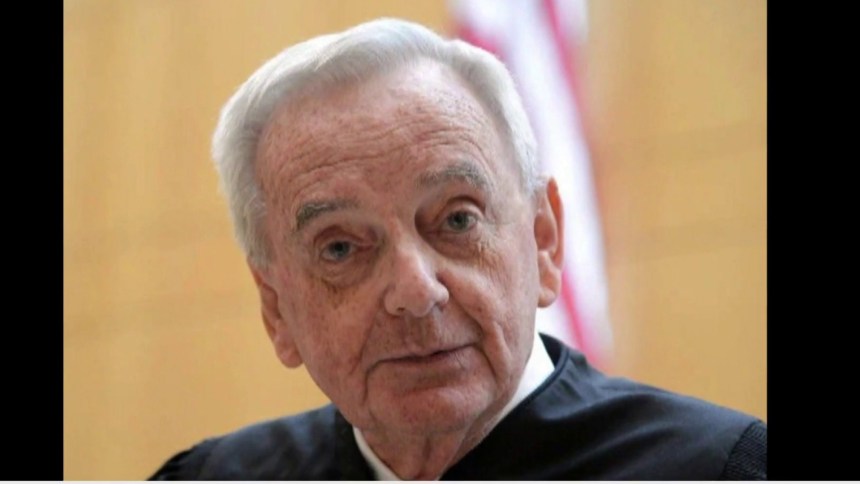
Those arguments don’t make sense legally, according to even most conservative legal experts. But that inconvenience doesn’t matter when it’s argued before a judge who cares more about outcomes than precedent or, you know, laws — as happened with Cannon. Trump’s team surely hoped for the same when it got one of its choices, Senior U.S. District Judge Raymond Dearie, assigned as the special master. But Dearie isn’t playing along to the same degree as Cannon, and he is asking tougher questions than Trump’s lawyers clearly expected. Number one being: “Can you prove that any of these documents are actually declassified?”
Their response brings us back to the opening salvo of questions: Why would you make us tell you, Trump’s lawyers argued, whether these documents are declassified when that would make up the bulk of any defense should Trump be indicted?


Dearie wasn’t impressed with this line of argument, especially since this is a civil case, not a criminal one. “You can’t have your cake and eat it,” he informed the plaintiffs. The judge had indicated earlier that he was inclined to side with the government’s assertion that if a document is marked “classified,” then it should be treated as still classified.
Equally troubling to Trump’s lawyers is the speed at which Dearie wants to conduct his review. He has ordered the former president’s team to pick a third party to handle the documents that the Justice Department provides by Thursday — in line with the Justice Department’s preference to begin that process as soon as possible. Dearie also said he wants to wrap up the whole process by Oct. 7, potentially making any need to appeal his appointment moot. That’s way sooner than Trump’s team would like — it tried to argue that he should take his time until at least the Nov. 30 deadline Cannon set. Dearie was less than amused by the suggestion that he was exceeding Cannon’s order: “I think I’m doing what I was told.”
Why would you make us tell you, Trump’s lawyers argued, whether these documents are declassified when that would make up the bulk of any defense should Trump be indicted?
Speaking of the appeal, Trump’s representative — including the high-paid attorney Chris Kise — argued to the 11th U.S. Circuit Court of Appeals that the Justice Department is trying to appeal Cannon’s entire order, which isn’t the case. (The Justice Department wants the 11th Circuit to lift Cannon’s stay on even a limited review of the classified documents that were taken from Mar-a-Lago.)
But here’s where the two battles between Trump and the Justice Department overlap: In Dearie’s courtroom, Trump’s lawyers refuse to provide evidence of any declassification, while in their argument to the 11th Circuit, they claim that the government “has not yet proven that the documents are classified.” In other words, they’re arguing the Justice Department hasn’t shown that the documents seized are classified — and that Trump’s team can’t be forced to show that they were declassified.
This Catch-22 for the ages also ignores the point that the battle over whether documents are classified or not is secondary in many ways to the fact that Trump had the documents in his possession at all, after having lied to the Justice Department and the National Archives and Records Administration repeatedly. Whether the documents were classified or not, the FBI’s obstruction of justice investigation will continue, either after the 11th Circuit lifts Cannon’s stay or once Dearie finishes his review.
It’s difficult to see Trump admitting defeat in court instead of simply filing a fallacious new suit in another friendly court. But this particular gambit looks to be failing at its primary task: delaying the investigation — at least until after the midterms. And you can be sure that, once investigators can comb through the files again, they’ll be chomping at the bit to make up for lost time.

Hayes Brown is a writer and editor for MS NOW. He focuses on politics and policymaking at the federal level, including Congress and the White House.