




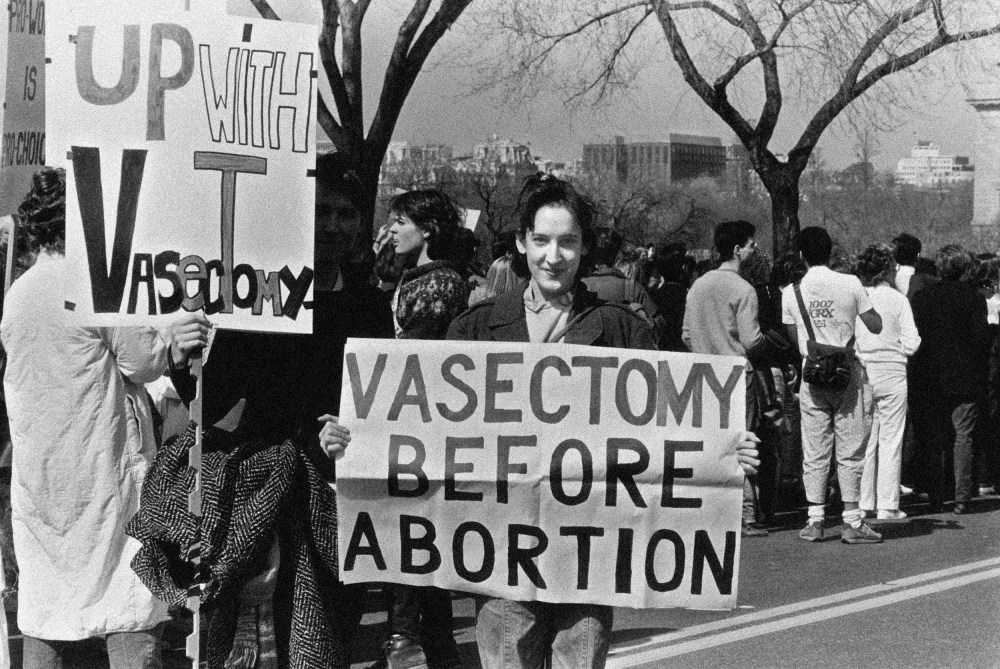
According to Google Trends data analyzed by Innerbody Research, a digital health and wellness company, the interest in vasectomies has boomed since last Monday, when Politico published a leaked draft opinion to overturn Roe v. Wade. Data shows daily searches related to vasectomies are up 99 percent and searches for the term “how much is a vasectomy” are up 250 percent.
Michigan, one of the 13 states with a trigger law that would automatically ban or severely restrict abortion if the Supreme Court were to go ahead with its leaked decision, leads in the number of searches for “vasectomy near me,” closely followed by Kentucky, Indiana, Ohio and Florida.
My friend is making the appointment for her husband as kind of an early Father’s Day present.
— Kristen Parisi☕️ (@Kris10Parisi) May 12, 2022
Thank god she’s not on twitter. She’d kill me for outing her
In many cases, men aren’t just asking more questions about vasectomies, some are trying to get them as soon as possible. Manuel Benavides, who is 45 and lives in Cedar Park, Texas, has two young boys and says that a vasectomy has been something he and his wife were thinking about but “recent events made it more of an urgent move.” He sees family planning as part of his role as a partner, so when the news of the draft opinion broke, getting a vasectomy felt like the smartest choice.
Women are the ones who are twice as likely to get sterilized despite the fact that vasectomies are safer, more effective and six times cheaper than female sterilization.
“My wife has had a negative reaction to the pill,” he said, “and I don’t think that the responsibility of whether we become pregnant or not should fall on my partner.”
While Benavides had already been considering going through with the procedure, the catalyst that prompted him to act was “the moment Abbott passed his abortion ban in Texas,” he said, referring to SB-8, a law that deputizes citizens to sue each other for involvement in an abortion.
“We had a few pregnancy scares and we also know that six weeks is a ridiculous time frame,” Benavides said. “Knowing that the Supreme Court was considering a challenge to Roe and looking at the makeup of the court, we knew this decision was imminent.”
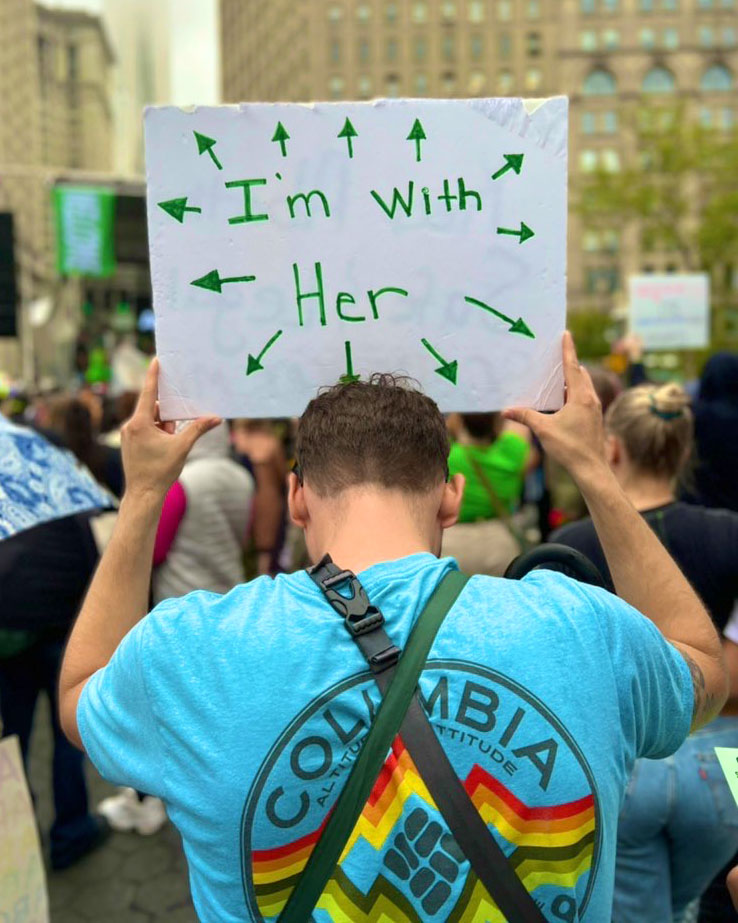
Even men in states where abortion rights seem safeguarded are making the decision to shift the responsibility of family planning onto their bodies. The presence of men at the various national protests held across the country, highlighted by the hashtag #MenAtTheMarch, reflects Pew Research Center data showing that men tend to be just as supportive as women when it comes to abortion rights.
At Sunday’s protest in Foley Square in New York City, 56-year-old Maynard Kent marched in support of women’s reproductive rights. “Do men in America believe in freedom?” he said. “Do they want to live in a free country where people can make their own decisions?”
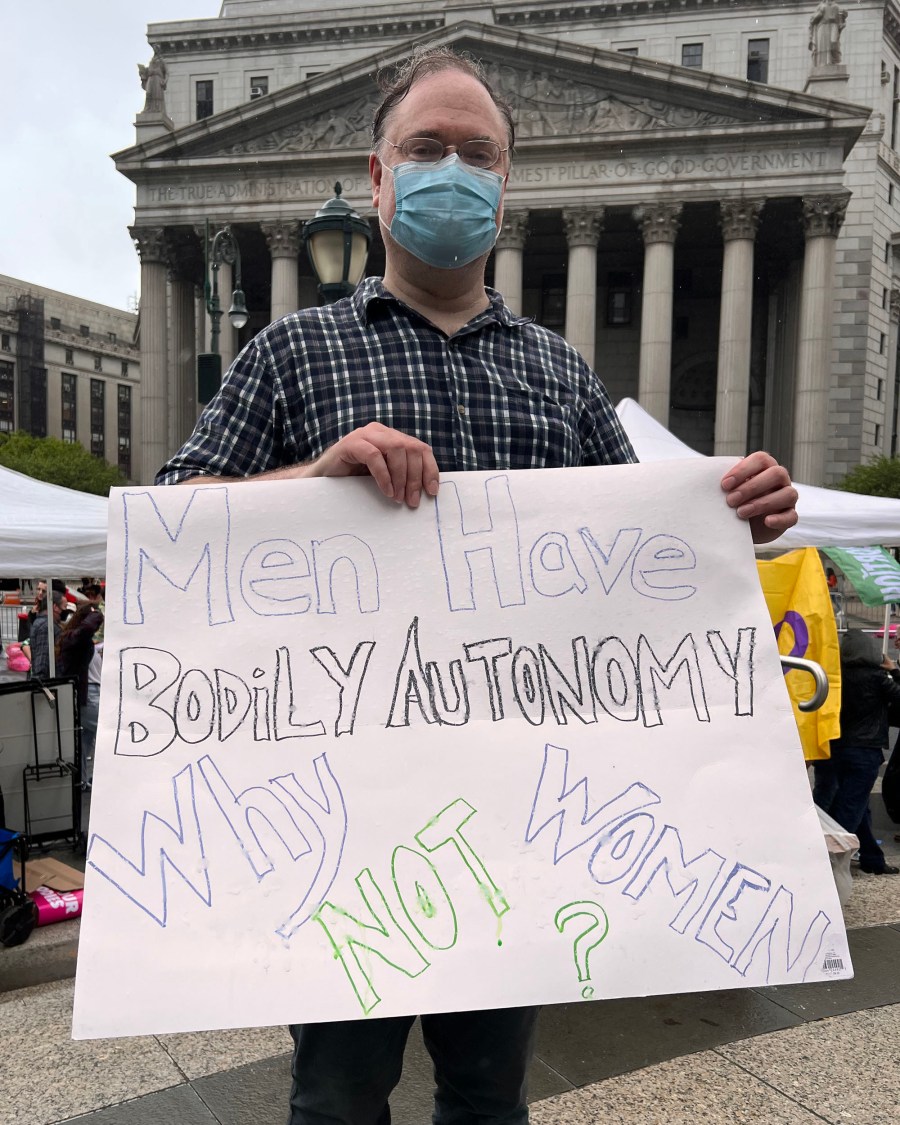
I also spoke to Matthew, who is 36 years old and lives in Amesbury, Massachusetts, via email. He told me that he and his wife booked an appointment for a vasectomy last week. “It really is difficult to emphasize how much the SCOTUS leak changed our trajectory on this,” he said. “We had joked about scheduling it around a major sporting event, now we just want to get it done as soon as possible.”
Even though Massachusetts feels less hostile when it comes to reproductive rights, Matthew had to be put on a waiting list. “They are booking a month out and the receptionist who told me this seemed surprised by it,” he said.
For other men, getting a vasectomy is a way to reclaim their freedom in a country that’s become more and more oppressive, especially for men with intersecting identities. Mickey Rowe is autistic and already feels like his reproductive rights are under threat.

“One thing that made the idea of getting a vasectomy a little scary for me was the inherited trauma of knowing how many other folx who have developmental disabilities like myself have had sterilization forced upon them in the past,” he said to me in an email. “This is because of another Supreme Court decision, Buck v. Bell, which has still never been overturned.” That 1927 decision that’s still on the books allows the state to sterilize people with disabilities for the “health of the patient and the welfare of society.” It led to an increase in sterilization across the country when passed, and though some states have passed laws explicitly banning it, sterilizing disabled people is still legal in a majority of states.


American men are well behind the rest of the industrialized world when it comes to vasectomies.
“Many parents also choose to sterilize their children with developmental disabilities without their consent. But since my vasectomy was consensual, it was something I was choosing for myself, it felt empowering, and allowed my wife to stop her long term birth control which gave her many side effects.”
While much of media attention has been trained on the women who fear a future without federally protected abortion rights, all the men I spoke with described their own visceral fears about a future without Roe, and told me other men in their lives shared the same feelings.
“Having a law that forces an unwanted pregnancy is scary,” Benavides said. “I am 45 and I am at a point [where] having another child is terrifying.” He said he isn’t an outlier. “I have two friends that are considering scheduling their vasectomy,” he said. “I think data will continue to show the number of vasectomies increasing. I myself advocate for more men to do this. We are seeing states push for legislation to make access to contraception illegal (Plan B, IUDs). It is a necessary step.”
In the past, campaigns like World Vasectomy Day have attempted to encourage men to dip their toes in family planning, but efforts like these, though well-intentioned, haven’t made a lasting impact on men, especially in the United States.
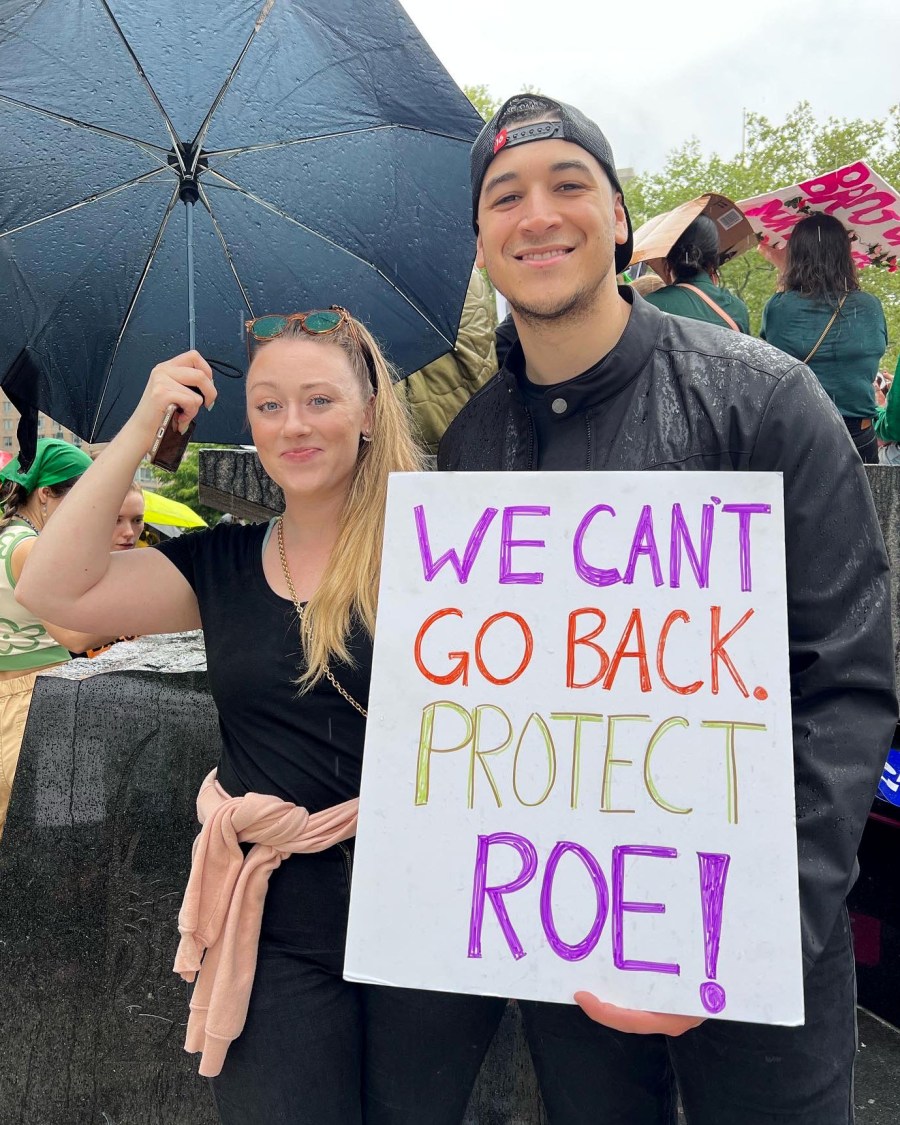
American men are well behind the rest of the industrialized world when it comes to vasectomies. For instance, men in Canada and the U.K. are twice as likely to get vasectomies compared to their female partners getting sterilized, but in America the figures are reversed. Women are the ones who are twice as likely to get sterilized despite the fact that vasectomies are safer, more effective and six times cheaper than female sterilization. As journalist Jill Fillipovich wrote in The Guardian last year, “While close to 100 percent of American women take steps, at some point in their lives, to prevent pregnancy, the vast majority of them shoulder that burden alone.” Where gently encouraging men to get vasectomies hasn’t exactly worked, maybe an extreme right-wing minority rule government encoding forced birth into law will.
“It is our job as men to start taking responsibility for our own birth control solutions. For far too long we have ignored our half of the responsibility and made birth control into a ‘women’s issue,” Rowe said. Matthew shared a similar reflection: “Why would my wife put her body through anything beyond what she already has when I can have this straightforward procedure that is also reversible?”
It’s unclear whether this surge in men’s interest in family planning will last, but given that many states have only become more rabidly dystopian in their anti-abortion rights endeavors, it’s at least plausible this is more than just a passing trend. “While the spike in search interest for vasectomies and related terms is at an all-time high, I do think we’ll continue to see more interest in birth control options for men as the year goes on,” Eric Rodriguez, the CEO and co-founder of Innerbody Research told me.
“As current events continue to ensue, it’s likely that we will continue to see similar searches continue to rise. The spikes in searches might be short-term, but long term the number of men searching for these things is likely to remain at a higher rate,” he said. While some ultra-conservatives may have believed banning abortion would lead to more babies, their radical stance may have just encouraged men to go to greater lengths to do the exact opposite.
Whether this is the beginning of a new radical era of feminist enlightenment for men is too soon to say. But in a world where women don’t have a guaranteed constitutional right to access abortion and men don’t have any laws regulating their bodies, the burden of family planning will have to fall on them. If that scares the men who haven’t been showing up to the fight for reproductive justice, they’ll need to put up a bigger fight.

Liz Plank
Liz Plank is an award-winning journalist and author, was the host of "Positive Spin." Her book, "For the Love of Men: A New Vision for Mindful Masculinity," was published in 2019.