




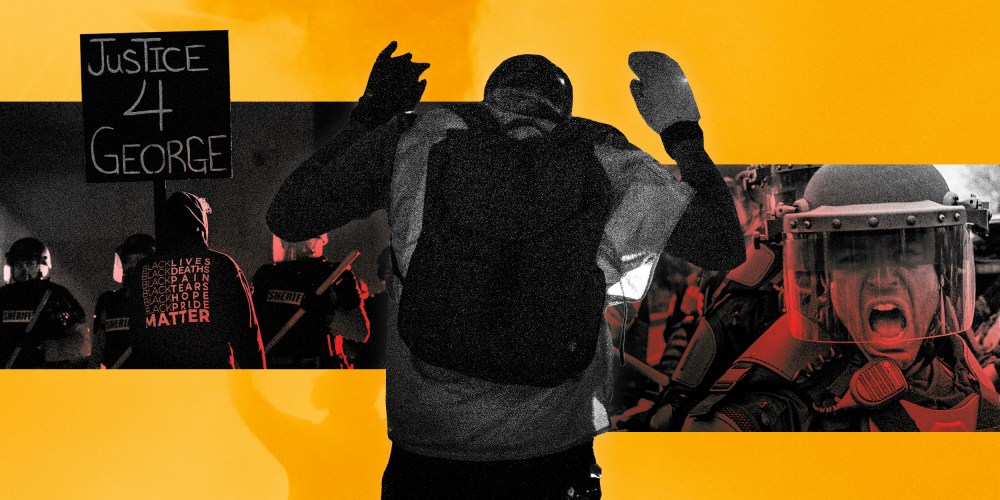
It’s Monday afternoon. I’m watching the latest news from Minnesota. Daunte Wright is dead. Brooklyn Center police released the body camera video from the shooting Sunday at a news conference. It was a speedy decision, even if local media were barred from viewing the video.
The eyes of the world tune in now when the police shoot an unarmed Black man; the city knew it had to look good on camera.
So many cycles were broken over the last year, disrupting many of the rhythms and patterns woven into American life. So tell me why I’m sitting here at my computer, staring into a screen, somehow not screaming as we learn the details of how the police have killed yet another young Black man. “How is this the pattern that’s persisted?” I ask no one, the answer built into the question.
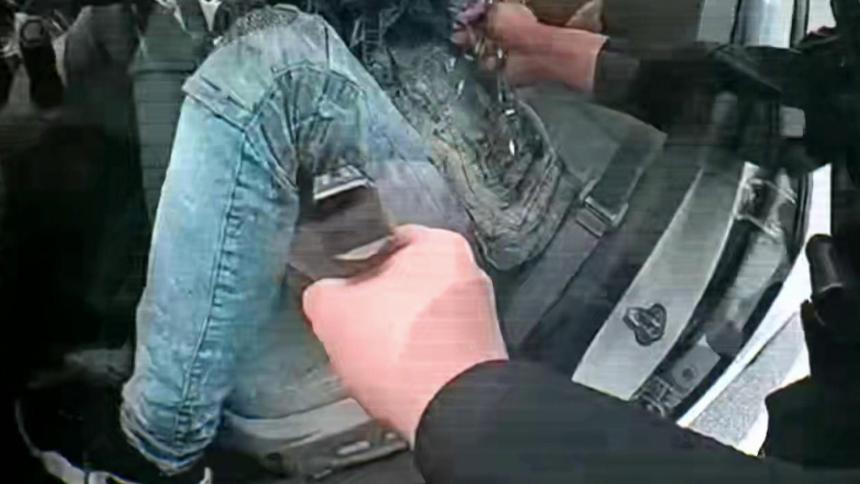
The next few days will unfold as expected. We’ll talk about air fresheners, like the ones hanging from Wright’s mirror that he assumed got him pulled over, as an excuse for traffic stops. We’ll ask why officers who conduct traffic stops are armed in the first place. We’ll search for meaning in the gray, an element of humanity to draw from tragedy. We’ll ask ourselves why it still hurts so much. Some will march for justice; others will refuse to see the injustice at work.
It’s a dance that has become ritualized: the incident; shock as it floods over us; sidestep and pivot to the justification for violence; anger, sadness, pleas and thank you for your attention; disorder on the streets, less palatable than our disordered society; a life’s final moments chronicled and repeated ad nauseam on Twitter, with the accompanying content warnings and please don’t look away and scrolling past suffering to not let the sorrow seep through the cracks in the mental walls that have been erected.
Somehow, of all the things we’ve had disrupted as Covid-19 has inundated our psyches, of all the experiences that we’ve missed, all the moments taken from us, these moments remain. This feeling remains.
I saw Wright’s picture, smiling in a red Chicago ball cap at his son’s first birthday, before I learned he was dead. I still knew. Black men don’t have their names and pictures, frozen in random moments of happiness, go viral like that while they’re alive.
He’d been on the phone with his mother, Katie Wright, minutes beforehand as he let her know he was being pulled over. She learned he’d been shot when her son’s girlfriend called her back. She spent most of the afternoon trying to get the police to remove her son’s body from the pavement.


I can’t tell anymore whether I’m numb with sadness or just numb at times like this. How macabre is it that we have “times like this,” that we carry around benchmarks for grief that a life that had never intersected with our own is no more? Is this sinking in the gut worse than when you learned about Trayvon Martin’s death — or about the same? What about Philando Castile? He also died during a traffic stop — where does this latest horror show rank in comparison?
And through it all, when the fog lifts, the question that white people expect us to answer still looms: How do you reform your way out of a system that leaves Black Americans facing down the potential for death or harm in the most routine of moments? No shield has been able to stop it so far: not age, Tamir Rice and Adam Toledo remind us; not military service, the pepper-spray-induced tears dripping down 2nd Lt. Caron Nazario’s Army uniform reaffirm. There is no amount of education or number of drops of white blood running through your veins that can serve as protection.
Black men die during traffic stops. Black men die in police custody. Black men die when nonlethal force is available. Black men die in the face of negligence. Black men die.
They die, and we who remain are asked to find the solution to keep the next of us from dying, too. Meanwhile, the Brooklyn Center Police Department flew a “thin blue line” flag Monday. The Minnesota GOP took exception to Democratic Gov. Tim Walz’s mourning Wright’s death and accused him of “fanning the flames.” It makes me doubt whether any answer we provide will ever be enough to stop the police from adding to the pile of bodies that is crushing us under its weight.
Minnesota GOP takes exception to Gov. Tim Walz’s (D) tweet mourning “another life of a Black man taken by law enforcement.”
— Aaron Blake (@AaronBlake) April 12, 2021
State GOP calls it “fanning the flames”:
“We call on Governor Tim Walz to censure himself.” pic.twitter.com/8BmyMdGNa7
The largest mass protest movement in decades swept through America 10 months ago, kicked off by George Floyd’s death just miles from where Wright’s body spent hours on the sidewalk. The man accused of killing Floyd, former Minneapolis police Officer Derek Chauvin, has spent the last two weeks on trial. He could still walk free when the jury reads its verdict. A bill named in Floyd’s honor sits waiting in the U.S. Senate. It may die there, too, choked off all too soon.
The officer who could be heard saying “oh s— I shot him” has been placed on administrative leave. Wright’s parents mourn a son. His son will know his father only through photographs. These are not the same.

Hayes Brown is a writer and editor for MS NOW. He focuses on politics and policymaking at the federal level, including Congress and the White House.