




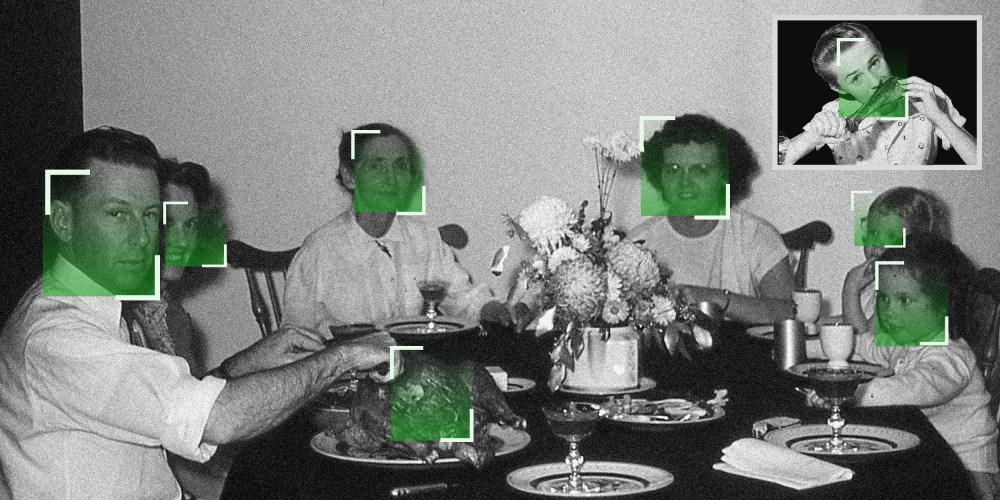
This holiday season will be unique. For many of us, it will also be uniquely lonely. We have lost so many people to Covid-19 and to the wide-ranging effects of the pandemic, among them a growing mental health crisis in America.
If nothing else, holidays give us a reason to gather with family and friends. This year, that is the one thing we can’t do — at least not safely. In accordance with the recommendations of the Centers for Disease Control and Prevention, many people are choosing not to travel for the holidays, meaning many of us will have empty places at the table this Thanksgiving. In lieu of big celebrations, more Americans are opting for small dinners or even solo affairs of heated-up frozen turkey dinners for one.
In this time of physical distancing, travel restrictions and quarantine lockdowns, our apps and devices are the only way many of us can get close to that sense of holiday togetherness.
Luckily, we have technology to see us through the holidays. In this time of physical distancing, travel restrictions and quarantine lockdowns, our apps and devices are the only way many of us can get close to that sense of holiday togetherness.
But in our pandemic-accelerated shift to living online, we’re also facing some heightened potential drawbacks when it comes to the technologies so many of us rely on. Some are tangible — for example, many of us now live, work and play in the same rooms, eroding the divide between public and private spaces, whereas previously we had different expectations of privacy in each space. We’re also more exposed and vulnerable online, because of the sheer amount of time and information we’re entrusting to tech platforms and devices. The pandemic has also accelerated a social divide, laying bare the social inequality between people in communities who have access to internet and devices and those who don’t.
By now, most of us are well-versed in using technology to connect with one another. Many of us work remotely, go to school remotely, socialize remotely, worship remotely, mourn remotely and celebrate remotely. We have shifted significant parts of our lives online and to connected spaces. Even if you can’t sit down and eat with your family on Thanksgiving, you can still use Zoom or Hangouts or FaceTime to video chat and share the day together. Thanks to technology, many of us don’t have to be truly alone.
But we have also had to give up a significant part of our private selves. While colleagues could previously walk into your office, they wouldn’t necessarily see your living room, at least without an invitation. Now, your co-workers see your home, and you see theirs. Your children see the previously private homes of all of their classmates — and their teachers’, too.
This goes beyond an interpersonal breach of privacy. Because of our reliance on remote connected technologies, we’re also making ourselves more vulnerable online. The more we use technology to power our lives, the more data we feed into the corporate platforms and products we use. While some people may have been slower to adopt new technologies in the past, the pressures of the pandemic are likely to have caused them to turn to data-intensive technologies like Facebook Portal and Amazon Echo devices — many of which haven’t been strictly regulated and some of which are riddled with privacy and cybersecurity vulnerabilities.
People who would normally have been more privacy-conscious in the past may now be willing to overlook the privacy risks to get the benefits of connected technologies.
We shouldn’t be too hard on ourselves, though. At this point, the opportunity to foster connection through technology often feels worth some of the costs to our privacy.


With the internet, social media, remote communication platforms and connected technologies, we now have more ways than ever to be together, even when we are apart. This can be a beautiful thing. But not everyone has been able to benefit from this technological connection. The Federal Communications Commission estimated that more than 21 million Americans lack reliable internet access. An independent study estimated that the real number may be 42 million. America faces a stark digital divide, with many people lacking access to steady internet, working computers and mobile devices.
As in most crises, low-income, rural, Black and Latinx communities are suffering the most from the digital divide. A Pew study last year found that one-third of people surveyed in rural communities didn’t have broadband internet access. Another study last year found that only 58 percent of Black respondents and 57 percent of Latinx respondents had access to home desktops or laptop devices, compared to 82 percent of white respondents. Access to technology is even more limited for families without housing.
This disparity in access to technology has even worse effects in this time of pandemic. Having a computer and reliable internet at home are prerequisites for going to school, for many jobs and for the sort of social connection technology can bring us. Not having a computer or internet can mean the difference between a holiday with at least some online meeting of friends and family and a holiday spent truly alone.
Not having a computer or internet can mean the difference between a holiday with at least some online meeting of friends and family and a holiday spent truly alone.
It is normal to mourn the loss of the Thanksgiving of your dreams. It is normal to miss being with the people who matter to you, especially with the emotional weight of holiday memories and expectations. Sure, the day will pass, as any other Thursday does. But most of us won’t be able to enjoy all the comforting traditions and the company of family and friends we hold so dear. More than the turkey (which, let’s face it, is usually dry) or the mashed potatoes, what we’ll truly miss are the people who make the holiday meaningful and special.
For those who do have access to technology to help connect with communities and family members, we can appreciate the ever-increasing importance of technology in our lives. With this growing importance come growing risks — risks to privacy and cybersecurity, in addition to digital inequality. These are all serious problems that Congress and the Biden administration must tackle next year to ensure that future Thanksgivings are safer and more connected for all of us, no matter what happens.
In the meantime, we can all do our best to reach out to our loved ones and those in our communities, particularly people in more vulnerable communities. And if you find yourself in the giving spirit, take the money you saved from not traveling and hosting large parties this winter and donate to charities that help people who are suffering the worst of the effects of this pandemic, including lack of access to the technologies many of us are using to make the most of this unique holiday season.

Tiffany C. Li
Tiffany C. Li is a technology lawyer and legal scholar. She is an assistant professor of law at the University of New Hampshire School of Law and a fellow at Yale Law School's Information Society Project.