




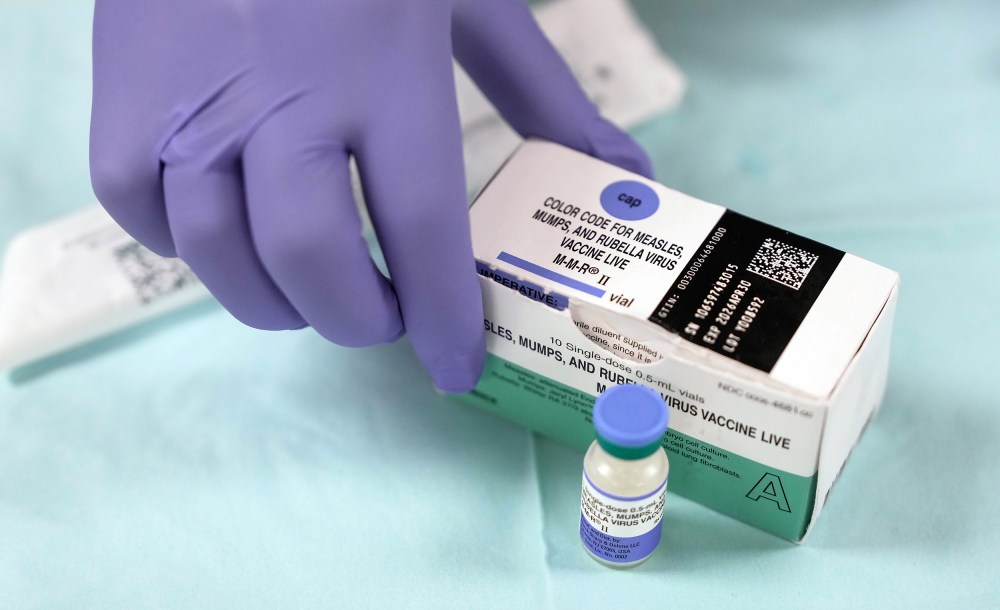
As a worrisome outbreak of measles spreads across the country, headlines have included the story of a Texas father who has stood by his decision not to vaccinate his daughter, who died from measles. The mother of a boy hospitalized with brain swelling after a measles infection reported the same conviction. Social media has convicted both as irresponsible, if not foolish, parents.
But I want to know why the first thing the public knew about these children was that they weren’t vaccinated, and it grieves me that much of the public’s first response has been, “Don’t you regret your choices?”
It grieves me that much of the public’s first response has been, “Don’t you regret your choices?”
That question, and my grief, might seem odd coming from me, a person who heads a vaccine advocacy organization. People might expect me to denounce the parents, the anti-vaccine movement and the misinformation that’s been spread about vaccines. I do denounce the last two. I won’t denounce these parents, though.
It’s true that unvaccinated people pose a risk to others in their community, including the unlucky 3% of people for whom a measles vaccine won’t take. It’s unfair that one parent’s choice to prevent illness can be supplanted by the fear and skepticism of others. It’s also unfair for children who are never asked if they want to contract measles to be left vulnerable. At their core, infectious diseases are unfair, and vaccines are the safest and most effective tool we have to even the scales.
Increasing acceptance of vaccines is as urgent as it’s ever been. As of last week, the United States had counted more than 1,100 measles cases this year, with almost 1,000 of them in South Carolina.
But opening a conversation with, “Are you sorry now that your child wasn’t vaccinated?” or publicly blasting parents whose unvaccinated children got sick or died will never change people’s reluctance to vaccinate. At Voices for Vaccines, our years of work with formerly hesitant families have shown us that empathy works — meaning not judging people who have refused vaccination.
Every parent has a wish list of mulligans that they know they’ll never actually get to do over. Sometimes, the things on that list are life-altering — like wishing they hadn’t waited so long to get special education services, wishing they hadn’t signed a child up for a sport that left them injured or wishing they hadn’t categorized warning signs about friend challenges as just a phase. But we deal with those regrets in private and may frame our past decisions in a way to assuage our guilt. “My child developed resilience before getting her special education services.” Or: “At least my child learned about teamwork before he injured his shoulder.” Or: “There were no signs that my child was lonely.” We keep our regrets and rationalizations inside the family. They aren’t published for all to see.


What finally changed my mind was having people reach out, listen to my fears, and talk to me. The thousands of mean comments didn’t change my mind.”
heather simpson, a self described former anti-vaxxer
The work I do has shown me that people do change their minds about vaccination, and they sometimes change their minds after experiencing a vaccine-preventable disease — even if they don’t like talking about it. Ultimately, people can help their family and friends overcome vaccine fears when they listen fully to them. Heather Simpson, a self-described former anti-vaxxer, told us, “What finally changed my mind was having people reach out, listen to my fears, and talk to me. The thousands of mean comments didn’t change my mind.” During the height of the COVID-19 pandemic, the country deployed dozens of trusted messenger programs into communities to have real conversations about vaccination with people who weren’t inclined to get the shots.
Dr. Angela Shen, who researched trusted messengers programs in Philadelphia, found that caring was fundamental. She told me, “What we heard from leaders of organizations serving our most vulnerable neighbors was clear: Trust is built through empathy, safe spaces, and delivering on promises. When trust exists, it can extend beyond one messenger to an entire network of credible voices.”
Public health blends personal decisions and community needs. Because we cannot make one choice without affecting others around us, we feel the right to ask about other people’s choices. We might feel like we have a right to know why a child wasn’t vaccinated and whether the parent has regrets. But demanding these answers of distressed or grieving parents won’t increase vaccine acceptance. Because demanding that people justify their past decisions and vow to do differently is not the way to build community.

And to be sure, building community and supplying information from trusted people can make vaccination achievable for those with doubts. Community is our group that knows and cares about us, and the more we pull away from community, the fewer people in the community can make the personal choices that support the community’s good.
The second common factor in changing minds about vaccination is time. How much time does it take to make sense of a child who has been hospitalized or killed because of measles? If we think about such parents as people trying to make sense of something this awful, our perspective might change. We might learn more about building community with people who are different from us so that we can find ways to protect that community together.
Our communities need to stand up and support one another. And the way to do that is not by asking about regrets, but by first and foremost expressing compassion for what they and their families are going through. The only way to increase vaccine acceptance is to engage one another as people and to earn the trust of people making such important personal decisions.

Karen Ernst is the director of Voices of Vaccines. She is a nationally recognized expert in vaccine confidence, with over a decade of experience in grassroots organizing around this issue. Her background in writing and literature has translated into new ways of communicating the science of vaccines that have transformed the work on hesitancy across the country.