




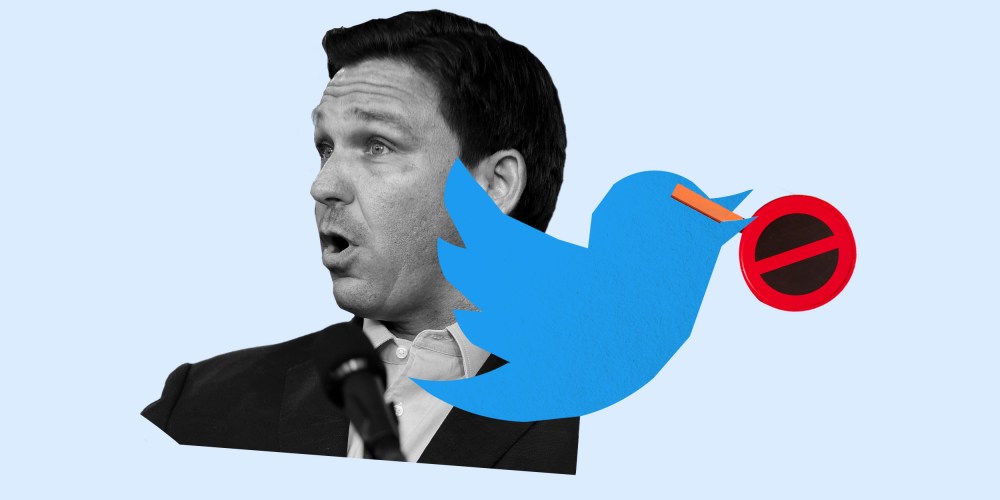
There are legitimate disagreements on the best way for governments to regulate social media platforms. However, most probably agree that an ideal law governing companies like Facebook, Twitter and YouTube shouldn’t also include a random exception tailor-made for Walt Disney World. Unfortunately, Florida’s new social media law does exactly that — but the laughable theme park carveout is the least of the law’s problems.
The law that Republican Gov. Ron DeSantis signed Monday is a brazen act of political showmanship focused on the governor and Republican state legislators winning a few points for attacking Big Tech. In practice, much of the law’s range of restrictions and requirements focus on regulating how companies choose to ban or “deplatform” user accounts linked to political candidates.
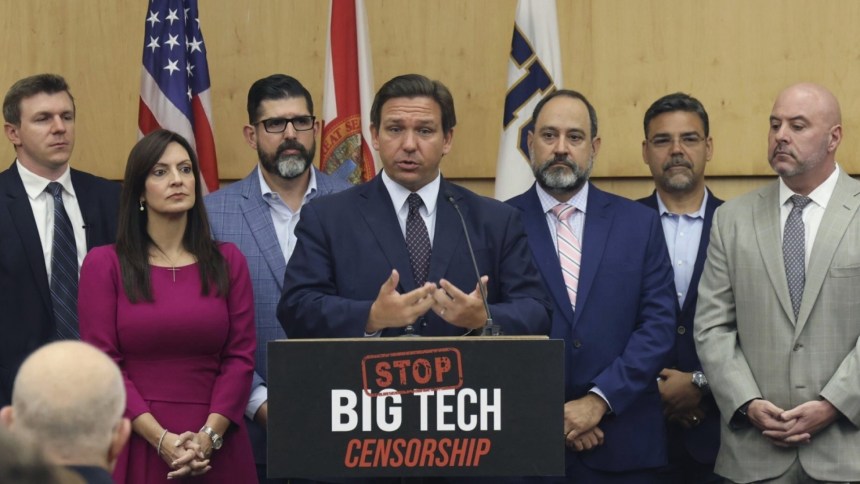
While there are very real problems with the technology industry, and with social media platforms in particular, laws like this one muddle the debate without moving the conversation toward effective policy. What’s more, despite its purported anti-censorship goals, this social media law likely violates federal law — including the First Amendment.
Under the terms of the new law, Florida can fine large social media companies $250,000 a day for deplatforming political candidates running for statewide office and $25,000 a day for deplatforming candidates running for local office. The law defines deplatforming as deleting or banning a user, either permanently or for at least 14 days.
While banning a high-profile national leader like Trump was novel and controversial, deplatforming is not new on social media.
It’s not hard to guess the inspiration behind this law — it comes on the heels of Facebook’s Oversight Board upholding former President Donald Trump’s permanent ban from Facebook. Facebook, Twitter and other social media platforms took actions to restrict accounts related to Trump in the last seven months, many of them finally blocking altogether the former president after he arguably incited an attempted insurrection on Jan. 6.
While banning a high-profile national leader like Trump was novel and controversial, deplatforming is not new on social media. These platforms often ban or restrict accounts that engage in harmful behavior online. This sometimes means the platforms will block political celebrities, including conservative ones, if they engage in harmful online behavior. For example, high-profile right-wing agitators like Milo Yiannopoulos, Laura Loomer and Alex Jones have all had accounts blocked on different social media platforms — often due to reported violations of social media company policies on hate speech, harassment and other forms of online speech.
The law DeSantis just signed attempts to fix the anti-conservative bias online that he and other politicians claim is built into social media platforms. The only problem is that studies have shown no such bias exists. So what the law actually does is censor social media companies, allowing the state to restrict social media companies’ ability to decide for themselves which users they want on their platforms and what content they want to host.
The First Amendment, a foundational tenet that underpins many of the democratic values we hold dear, protects your right to free speech. And it does the same for private corporations like Facebook and Google, safeguarding them against compelled speech. In short, the government cannot compel private actors to express speech against their will.


While some would prefer social media companies act as public telecommunications utilities, with legal obligations to carry or host all communications, that’s just not the case today. Florida’s new law effectively prevents these companies from choosing which speech they wish to express through editorial decisions on their platforms.
Not only is the Florida law probably unconstitutional, but there’s another reason it wouldn’t pass muster in court: Section 230. The controversial law that Trump spent much of his last years in office railing against provides immunity to social media companies against being held liable for some user-generated content. As a federal law, Section 230 pre-empts state laws attempting to govern on the same matters. Effectively, this means Section 230 may wind up negating Florida’s state law in a potential court case.
What’s most worrying isn’t that the law is bad (and it is bad) but that this is a clear example of how easy it is use, and abuse, the law as a political tool.
All of this adds up to a badly written law — and that’s not even getting to the part where a late amendment added a specific exception that prevents it from being applied to companies that also own theme parks. What’s most worrying isn’t that the law is bad (and it is bad) but that this is a clear example of how easy it is use, and abuse, the law as a political tool.
DeSantis and the state legislators who backed this bill likely all know this could lead to a big court battle. They might even already predict they’ll lose. However, they’re willing to engage in bad faith, drafting and approving a law that restricts fundamental First Amendment rights — all to give the illusion of taking action on an issue their base cares about.
Our free speech rights are worth more than that. Private individuals and companies deserve the rights to free expression enshrined in the First Amendment, and we deserve leaders who will respect the Constitution and our democratic rights.

Tiffany C. Li
Tiffany C. Li is a technology lawyer and legal scholar. She is an assistant professor of law at the University of New Hampshire School of Law and a fellow at Yale Law School's Information Society Project.