





It’s been quite an unexpected journey for Chief Justice John Roberts, who joined a rightward-shifting Supreme Court in 2005 on the promise — however questionable it may be — of calling “balls and strikes” as a judge.
In the Trump era, Roberts continued to walk this conservative institutionalist tightrope, seeking to keep the Court solidly on the right.
In some ways, the court has become what he wanted: a conservative institution that, among other things, has made the law more hospitable to corporations and less hospitable to many people. On a few key issues where society has moved, like marriage equality, the court — even with Roberts in opposition — moved with it.
Essentially, Roberts advanced a conservative institutionalism that kept the court moving to the right while allowing it to bend to more progressive results when necessary to help keep the court’s institutional integrity intact.

In the Trump era, Roberts continued to walk this conservative institutionalist tightrope, seeking to keep the court solidly on the right, but pushing back at points on some of former President Donald Trump’s most overreaching efforts, usually on technical grounds.
But then, with Trump’s bid for re-election less than two months away, Justice Ruth Bader Ginsburg died and then-Senate Majority Leader Mitch McConnell, with Trump’s help, quickly filled the seat. Now Roberts may be losing control of his creation.
Now Roberts may be losing control of his creation.
In a series of cases challenging Covid-19-related restrictions applied to religious conduct, Roberts has found himself at points defending himself and his three more liberal colleagues against attacks from the very conservatives he counts as allies on most cases. In the most recent decision, issued late in the evening April 9 and halting enforcement of certain California Covid-19 restrictions, Roberts’ loss of control over his court, at least as to this issue, was signaled in the way he handled the loss: Unlike the opinions issued by the majority or the three more liberal justices, Roberts’ vote was announced with a single sentence: “The chief justice would deny the application.”
This changed reality inside the court — in which five justices who seem ready, willing, and able to go further to the right than the chief justice himself — has also changed the reality outside the Supreme Court.
This past week, Reps. Jerry Nadler, Hank Johnson and Mondaire Jones and Sen. Ed Markey introduced legislation to expand the size of the Supreme Court from nine to 13 justices. The bill is short — less than two full pages — but it marks a big change in at least some Democrats’ approach to the federal judiciary.
Nadler is chair of the House Judiciary Committee, and Johnson is the chair of the subcommittee that oversees the courts. In other words, they are sponsors who matter, institutionally.
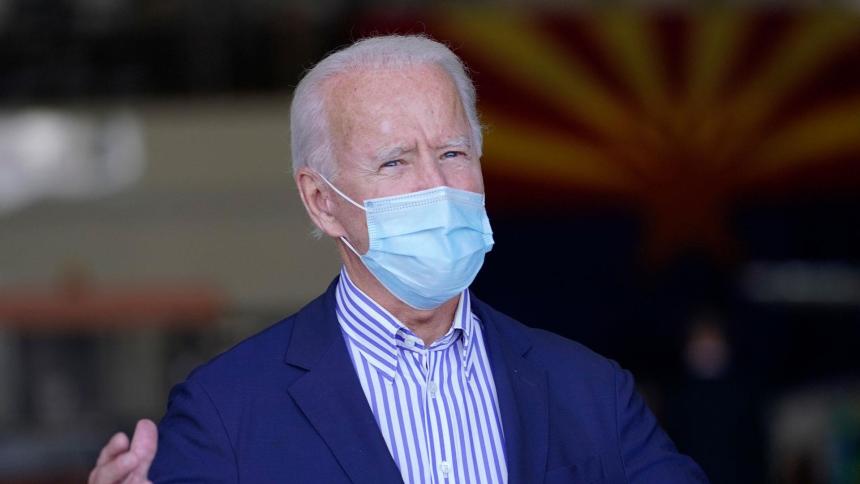
Now, the bill isn’t on its way to President Joe Biden’s desk anytime soon. House Speaker Nancy Pelosi has said she has “no plans to bring it to the floor,” regardless of what happens in Nadler’s committee. And that doesn’t even get to the questions of how the bill would get through the Senate and whether Biden would support it.
This, for Roberts, is the worst of all worlds.
Nonetheless, the bill matters because it shows how far the Roberts court has fallen off the tightrope he’s been leading his colleagues on for the past 15 years.


It’s important that discussion of expanding the court has moved from a small group of writers and academics and activists to elected officials. The introduction of a bill in both chambers makes expansion tangible in a way that it wasn’t, even last fall. While the introduction might encourage opposition arguments as well, the debate will have moved.
After decades of judicial wars being fought on conservatives’ ground and terms, there is now at least a part of this fight being held on progressives’ ground and terms (a moment that has, itself, benefited from the work of advocates during the Trump era and before to change this long-term imbalance). That change, in turn, has consequences for the other branches of government.

The timing of this bill’s introduction — and of the choice of sponsors — was notable for its potential not just to wrest some control from conservatives, but also for its potential to serve as a way of wrestling some control from Biden. Nadler and his allies introduced the bill less than a week after Biden announced his Supreme Court commission. The commission, which was criticized nearly immediately by court reform supporters both for its mission and membership, is unlikely — as things stand now — to do much to change the landscape for any significant court reforms.
Nadler and Johnson, however, will be able to use their chairmanships to ensure that the court expansion bill gets a hearing that highlights their cause in a way that Biden’s commission might not. That, in turn, could make it more likely that Biden’s commission will need to treat court expansion more seriously than it otherwise might have done.
Finally, and to return to the court itself, the court expansion bill further pressures Roberts to find ways to prevent his five conservative colleagues from going off alone in even more fundamentally disruptive ways. (Think, for example, about abortion cases.)
As debates over court expansion continue, they will, inevitably, include discussions of the legitimacy of the court itself. This, for Roberts, is the worst of all worlds. Had liberals moved on such a front years ago, it likely would have backfired in a way that reinforced — or even solidified — Roberts’ conservative institutionalism. Now, however, with Roberts himself even acknowledging that his conservative colleagues are at times going too far, progressives’ arguments have an unexpected, if incomplete, boost from a very unexpected corner.
If Roberts himself is acknowledging that his court has lost its way, Nadler and others can argue, why should Congress not take this sort of a step, as aggressive as it is, to bring the Supreme Court back into alignment with its purpose — and with the nation?

Chris Geidner
Chris Geidner is a journalist and MSNBC columnist whose Law Dork newsletter covers the Supreme Court, law and politics. His more than two decades in journalism include widely recognized coverage of LGBTQ issues, the criminal legal system and other complex legal and political questions. Geidner also contributes to Grid and Bolts and previously worked as the Supreme Court correspondent and legal editor at BuzzFeed News, as well as for The Appeal and Metro Weekly.