




UPDATE (April. 25, 2021, 10:30 p.m. ET): This piece has been updated throughout to reflect Mia Neal and Jamika Wilson’s Oscar wins.
Hairstylists Mia Neal and Jamika Wilson won best makeup and hairstyling at tonight’s Academy Awards, making them the first Black people to win (or even be nominated) in the 40-year-old category.
It’s 2021 and Black people in America are still becoming “the first.”
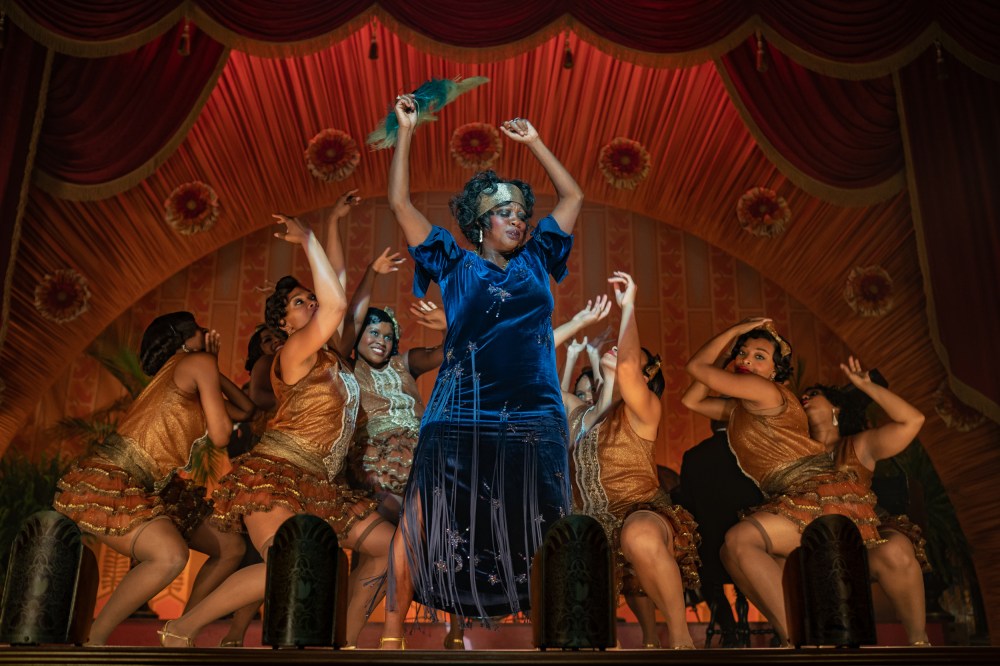
Both are being recognized for their work on “Ma Rainey’s Black Bottom,” a Netflix film about a fictionalized recording session of the real-life trailblazing blues singer Ma Rainey, played by Viola Davis (the late Chadwick Boseman also co-stars in his final role), and Rainey’s band in 1920s Chicago. Neal was the head of the hair department and Wilson, as Davis’ personal hairstylist, styled her client for the titular role.
It’s 2021 and Black people in America are still becoming “the first.” The first vice president of the United States. Thefirst to hold a Ph.D. in survey methodology. Thefirst to lead a major broadcast news network. Thefirst Black mayor of Boston. The first Black “Bachelor.”
Race does not and cannot inhibit a person’s skillset, talents, or capabilities, and yet American history pretends otherwise. But it’s a one-way delusion, given the extensive history of successfulwhite rappers, (blue-eyed) soul singers, blues and jazz musicians, soul food chefs, and any number of other instances of white people doing things originated and dominated by Black folks.

But having recently sat for hours as a young Black woman from Brooklyn untangled, washed, conditioned, blew out, and slightly pressed my tightly coiled and shrunken Afro before plaiting a fresh set of neat, intricate, knotless braid extensions, this particular first in the worlds of Hollywood and cosmetology hits different.
Because Black hairstylists move hair culture forward by introducing the unique, innovative hairstyles and methods born from their communities, and yet continue to face ongoing individual and institutional discrimination, bias, and exclusion within the cosmetology industry and from adjacent ones, like Hollywood and fashion.
A recent Vulture article about “Ma Rainey’s” hair and makeup team details how Neal, a graduate of the Juilliard School of Professional Internship for Wigs and Makeup, magicianed specially imported British horsehair bundles, which arrived encrusted with inactive lice eggs and manure, into a custom wig for Davis’s character to resurrect a piece authentic to what the real Rainey wore.
The education and exposure of the wide spectrum of our hair texture is not encouraged or acknowledged by most cosmetology schools and license boards.
Sis pulled threadlike strands of hair through teensy tiny holes and secured them with knots, one by one. (Meanwhile, I don’t even have the patience to properly explain the details of single-strand ventilation.)
That’s not to say that only Black hairstylists know and dominate this wig-making method in Hollywood. They’re actually underrepresented in the Make-Up Artists & Hair Stylists Guild, IATSE Local 706, the union that permits beauty professionals to work on film and television sets (roughly 200 of its 1,700 members are Black, a union representative recently told NBC News.)
But there are just too many instances of Black actors speaking out about the negligence, inattention, and discrimination they face from mostly white hairstylists and makeup artists on set to justify this Oscars erasure.
Even my own experiences touch on this discrepancy: As a high school student attending a predominantly white boarding school in a predominantly white town in Connecticut, I remember trying to figure out the least awkward way to ask the woman who had picked up the phone at the JCPenny hair salon at the closest mall if they knew how to do Black hair. (This was before Youtube hair tutorials arrived to help Black girls in a pinch.)

I remember the white woman hairstylist I was paired with being nervous. She seemed scared, and as someone who was already nervous about an unknown white woman washing and styling my hair, that just made me more scared. She and I formed a ball of unspoken fear. But she was the adult, she was the trained professional — and she was getting paid to provide me with a service.
But I was already there and I wanted my hair washed and pressed for whatever event I was preparing for. So against my better judgement, and seeing no alternative options in the almost empty salon, I held out hope.
Her fingers skittered around my head as she pulled a wide-tooth comb through my hair, slowly and weakly, like my limp strands were about to bite her. My hair was relaxed, by the way; already chemically straightened for exact situations like this, because as a girl away from home for the first time, I had no idea how to do my own hair and was overwhelmed with my 4C afro. So no, there was no excuse for this trained and licensed hairstylist. All Black hairstylists can do white person’s hair (and basically any person’s hair,) but most white hairstylists cannot do Black people’s hair. Eventually, the only other stylist there that day, a Black woman who had been trying to walk my stylist through doing my hair as she attended to her own (white) client’s hair, finally took over because it seemed like my stylist was about to implode. The experience highlighted something else I’ve come to learn throughout my life: All Black hairstylists can do a white person’s hair (and basically any person’s hair,) but most white hairstylists cannot do Black people’s hair. And yet white hairstylists run the cosmetology world. I don’t believe that all Black hairstylists can style all hair textures common to Black people well. Many aren’t that knowledgeable about or comfortable working with 4A and 4C hair. But it’s not that our hair is more difficult to care for or style; the education and exposure of the wide spectrum of our hair texture is not encouraged or acknowledged by most cosmetology schools and license boards. But with the amount of education available through technology and external educational sources, this is no longer an excuse. If you can learn how to balayage and fishtail braid, you can learn how to work with all kinds of textures. I don’t care how well a hairstylist who is not Black can style the hair of a person who is not Black if they cannot care for or style a Black person’s hair just as well. And I have a strong feeling that most of the hairstylists who’ve been nominated for and won Oscars since the makeup and hairstylist category was introduced in 1981 fall into that bucket. As the Oscar winners received their awards at the 93rd Academy Awards ceremony tonight, I was rooting for Neal and Wilson to be called up on stage. Their work on “Ma Rainey’s Black Bottom” and throughout their careers in theater, film and television is undeniably impressive and worthy of the recognition, respect, and pay bump that an Academy Award all but guarantees. At the same time, I can’t help but wonder how many others were passed over in previous years or have contributed to Oscar-winning looks behind the scenes and never received recognition. What it essentially comes down to for me is that Hollywood doesn’t deserve Black hair stylists. But it definitely needs them.
Patrice Peck
Patrice Peck is an MSNBC columnist; a journalist covering the intersection of race, identity and popular culture; and the creator of the Coronavirus News for Black Folks newsletter. Her bylines have appeared in The New York Times, BuzzFeed, Ebony and other publications. She holds a degree in Black studies from Amherst College and a master's in journalism from New York University. 

