





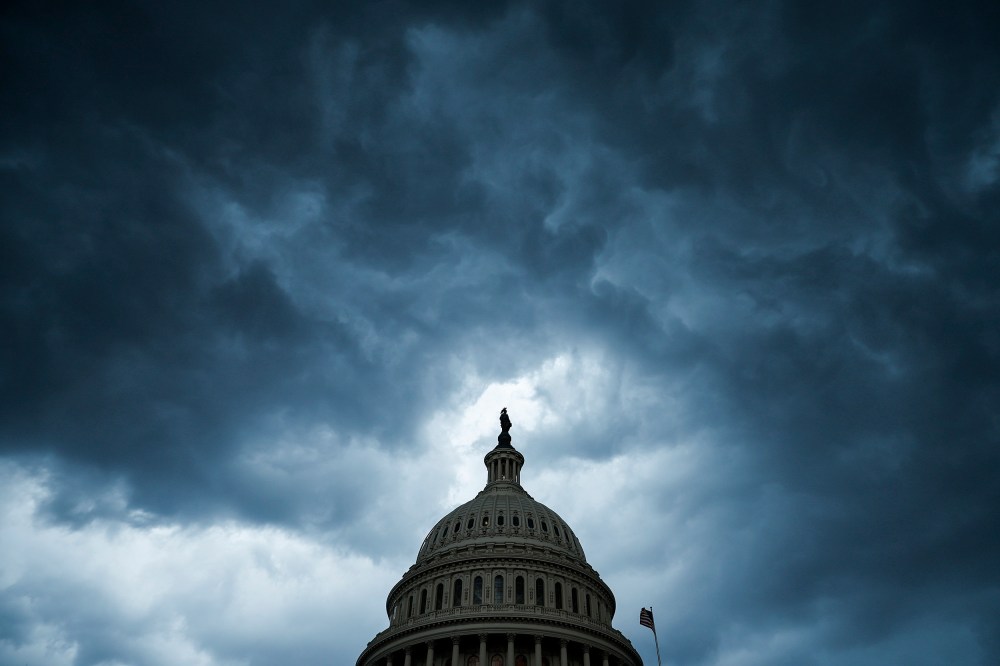

NBC News published a report the morning of Sept. 5 — the day after Labor Day — that I happened to stumble upon this morning, and it’s worth revisiting. The headline alerted readers to the fact that Congress was facing “a chaotic September.”
The divided Congress returns this week after a monthlong summer recess, facing important deadlines and a long to-do list of tasks to keep the federal government functioning.
As September got underway, the to-do list was daunting, and even a competent and capable Congress would’ve found it challenging to get everything done. Lawmakers, facing inflexible deadlines, had to, among other things:
- fund federal operations and prevent a government shutdown;
- approve a new farm bill;
- reauthorize the Federal Aviation Administration (FAA);
- pass additional military aid to our Ukrainian allies;
- approve disaster relief in the wake of Maui fires and Hurricane Idalia;
- prevent steep cuts in pay for wildland firefighters;
- and reauthorize PEPFAR, the United States’ highly effective global HIV/AIDS program.
As September comes to an end, how many of these priorities have check marks next to them? Literally none.
If recent history is any guide, the public will soon see headlines about “Congress” — as in “Congress failed to prevent a shutdown” and “Congress struggles to get work done.”
Those headlines, however, will only tell part of a larger story. Yes, it was up to the legislative branch to complete these tasks, but the fact remains that it’s congressional Republicans, most notably in the House, who are standing in the way of success.
Indeed, it was just a few days ago when the Senate bipartisan leadership — Majority Leader Chuck Schumer and Minority Leader Mitch McConnell — unveiled a compromise stopgap bill that would’ve addressed most of the aforementioned list. It was the same legislation that House Speaker Kevin McCarthy rejected soon after.
As for what to expect, the House’s GOP majority is moving forward with plans to vote on a right-wing stopgap bill of its own — called a “continuing resolution” or “CR” — that’s designed to extend federal funding for a month, while imposing 30% spending cuts across much of the government.
It might not pass — some House Republicans oppose continuing resolutions on principle, others don’t want to be on the hook for having supported such a radically regressive bill — but if it did, it wouldn’t much matter because there’s no way a Democratic-led Senate would approve such legislation.
September’s to-do list, in other words, is poised to become the latest evidence of congressional Republicans’ inability to govern. GOP members began a pointless, evidence-free impeachment inquiry, but they failed to do what they were supposed to do.
Update: About an hour after I published this, the House Republican leadership’s stopgap bill failed in the face of bipartisan opposition. As best as I can tell, the GOP leadership in the chamber doesn’t have a Plan B.
