






Every day, in communities nationwide, police officers do their jobs with a high degree of transparency: The public can see the officers’ faces, badge numbers, rank and, in most instances, even their last names featured on uniforms. Though many cops are forced to deal with threats and violence, there isn’t a police department in the United States that allows officers to wear masks or hide their identities while they carry out day-to-day duties.
Indeed, that’s the American norm across agencies, departments and jurisdictions. State troopers don’t wear masks. Neither do FBI agents. U.S. marshals don’t wear masks; sheriffs don’t wear masks; prosecutors don’t wear masks; and Secret Service agents don’t wear masks.
But Immigration and Customs Enforcement appears to be operating under different standards. Indeed, it’s become rather common in recent months to see ICE agents, acting at Donald Trump’s behest, snatching people off American streets while hiding their identities.
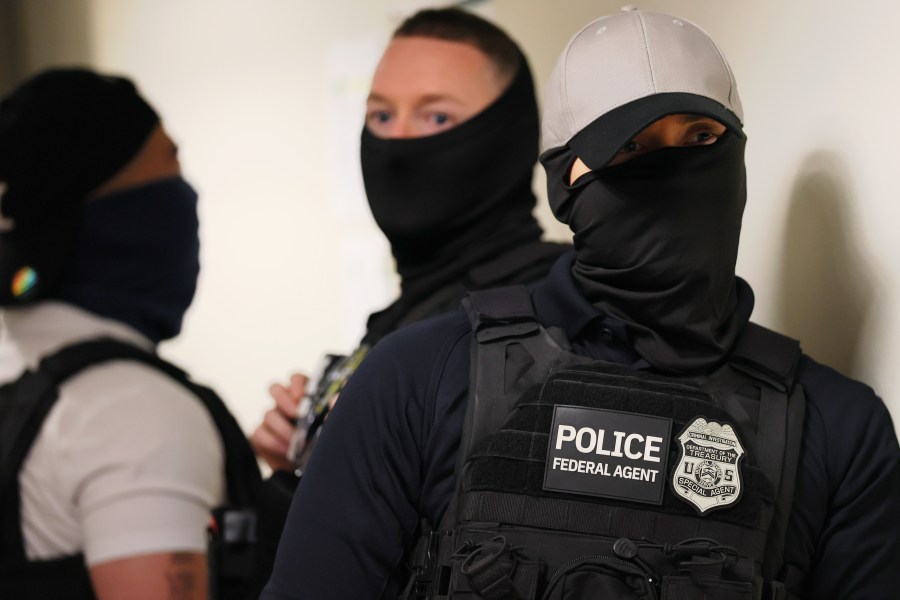
The federal agency has made it clear that it’s aware of the questions surrounding this practice, but it’s also taken steps to defend it. In April, for example, the Department of Homeland Security, which ICE falls under, asserted that assaults against ICE officers have increased 300%. A month later, that figure grew. “ICE officers are now facing a 413% increase in assaults,” DHS claimed in May.
This week, the statistic climbed again, with officials declaring in an online statement, “New data reveals that ICE law enforcement is now facing a 500% increase in assaults while carrying out enforcement officials.” DHS went on to blame unnamed “sanctuary politicians” for contributing to the “vilification and demonization of ICE.”
As a general matter, the idea that ICE has become a highly controversial agency is very easy to believe. It’s also quite plausible to believe that ICE agents, like many who work in law enforcement, are having to deal with increased threats.
But if the idea is that ICE agents should hide their identities while snatching people off public streets as a safety precaution, operating under a unique standard for accountability, it’s probably worth knowing whether ICE’s statistics are legitimate.
With this in mind, The Washington Post’s Philip Bump took a closer look at the publicly available information and found the evidence wanting. Indeed, he made multiple requests to ICE for information about its statistics, and the agency chose not to respond.
What’s more, Bump was able to find some recent incidents in which ICE agents were assaulted, but in these instances, facial coverings wouldn’t have prevented the violence.
“ICE didn’t provide me with any examples of immigration officers being identified, targeted and assaulted outside of the context of an arrest,” Bump added.
After making clear that assaults and threats against law enforcement are always unwarranted and acknowledging that there may very well be unreported assaults, the columnist concluded:
That said, we should not and cannot take ICE’s representations about the need for its officers to obscure their identities at face value. That the organization would not provide evidence for its claims, that it has been eager to level dubious charges against Democratic legislators and that it conflates assaults of officers engaged in official acts with putative threats to them personally all diminishes the extent to which we should grant ICE the benefit of the doubt.
After a variety of Democratic officials made the case that ICE agents should stop shielding their faces, Tom Homan, the Republican administration’s “border czar,” told Fox News he’s asking the Justice Department to investigate the Democrats’ statements in order to “see if there is something we can do.”
In other words, as Homan saw it, merely commenting in support of transparency might somehow have crossed legal lines, warranting DOJ scrutiny.
But in light of Bump’s reporting, questions about ICE practices should generate more questions — not fewer — from policymakers.
