






Former Rep. Adam Kinzinger, one of the Republicans who served on the Jan. 6 committee, was asked on CNN whether he can imagine voting for President Joe Biden in the 2024 general election. Apparently indifferent to party considerations, he didn’t hesitate.
“Over Donald Trump? In a heartbeat,” the former GOP congressman said. “I mean, to me, that’s not even a question I would have to wrestle with. … It is literally a decision, at that moment, between do you believe in a functioning democracy? Or do you not? And I think that’s the only thing on the ballot. I think that is the only thing.”
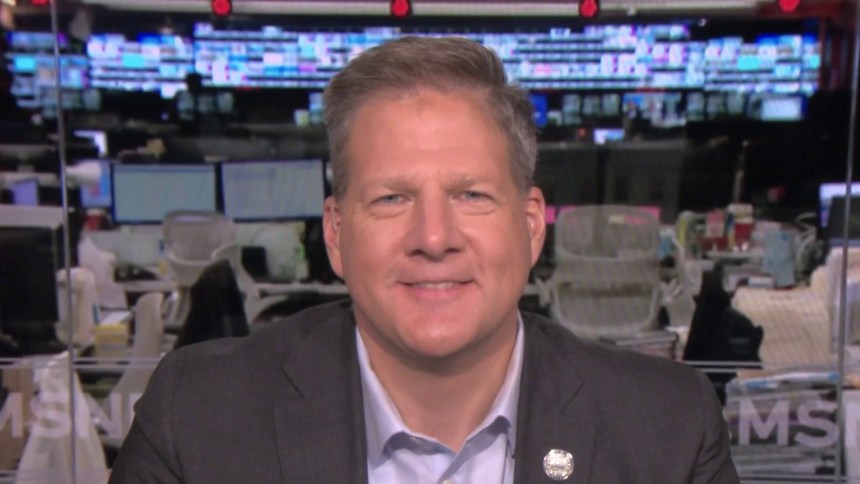
It was a straightforward answer that much of Kinzinger’s party rejects. Take New Hampshire Gov. Chris Sununu, for example. The New York Times reported:
Gov. Chris Sununu of New Hampshire, who has been a vocal critic of former President Donald J. Trump, nonetheless committed on Wednesday to supporting him if he won the Republican nomination, even if he were convicted of a felony.
To be sure, the Republican governor doesn’t currently support Trump. On the contrary, Sununu has endorsed former Ambassador Nikki Haley and is going out of his way to try to help her win the GOP nomination. He even stars in a campaign ad in which he describes Haley as “a new generation of conservative leadership, who can help leave behind the chaos and the drama of the past.”
But the question Sununu received on CNN was whether he was prepared to ultimately support Trump in a general election, even if the former president were convicted of felonies before Election Day.
“Look, I think most of us are all going to support the Republican nominee,” Sununu said. “There’s no question.”
To be sure, the governor doesn’t appear to hold Trump in high regard. In fact, the feeling is mutual: The former president has repeatedly condemned Sununu in recent months.
But for the New Hampshire Republican, there’s “no question” that he’ll have to support his party’s nominee — because that person will be his party’s nominee.
This reminded me of a story from two years ago.
In early 2022, Senate Minority Leader Mitch McConnell sat down with reporter Jonathan Swan, who asked whether there were any “moral red lines” that would lead the Kentucky senator to withhold his support from a Trump-led ticket.
“As a Republican leader of the Senate, it should not be a front-page headline that I will support the Republican nominee for president,” McConnell replied, adding, “I think I have an obligation to support the nominee of my party, and I will.”
When Swan pressed on, asking if there’s anything Trump could possibly do that would be a bridge too far, McConnell appeared visibly frustrated. “I don’t get to pick the Republican nominee for president,” the GOP’s Senate leader replied. “They’re elected by the Republican voters.”
In other words, asked about his “moral red lines,” the Kentuckian conceded that such lines effectively do not exist, at least insofar as electoral politics is concerned.
A year later, after Trump targeted McConnell’s own wife with racist taunts, the Senate minority leader again said he’d support his party’s nominee, “no matter who that may be.”
The senator’s list of concerns starts and ends with the Republican Party’s pursuit of power.
Sununu appears to be in the same boat. The New Hampshire governor is no fool. He’s supporting Haley in part because he doesn’t want Trump to prevail. But when push comes to shove, Sununu shares McConnell’s priorities: On the list of what matters, partisan control is at the top of an otherwise empty list.
For Kinzinger, belief in a functioning democracy is paramount. It’s no wonder he’s found himself persona non grata in GOP circles.
