






It’s not exactly a secret that President Joe Biden sparked a significant controversy when he decided to pardon his son Hunter Biden with many Republicans — and plenty of Democrats — saying the retiring Democrat was wrong to intervene in the case after saying he wouldn’t.
But while much of the pushback is understandable, there’s a related dimension to the story that’s impossible to take seriously. Politico reported:
Almost immediately after the Hunter Biden pardon was announced, Trump hinted that he may cite it as justification for granting broad clemency to Jan. 6 defendants. ‘Does the pardon given by Joe to Hunter include the J-6 Hostages?’ he asked on social media, describing the [Jan. 6] rioters in terms rooted in his efforts to downplay the violence they wrought against police that day.
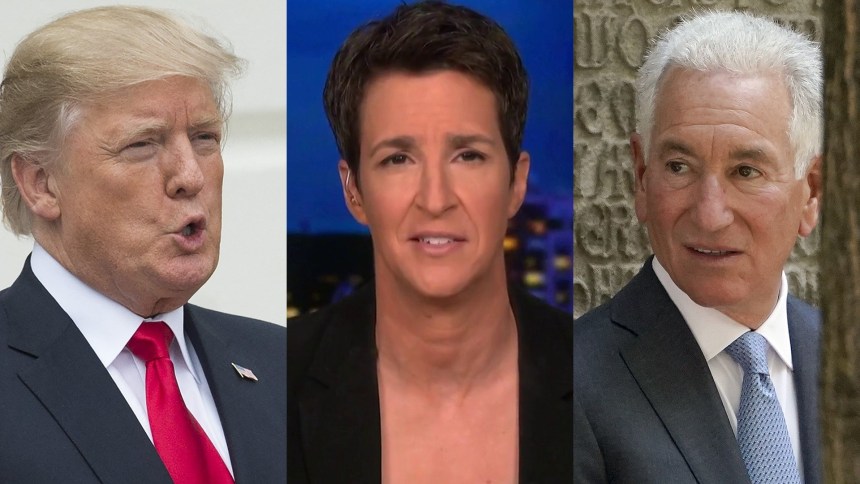
The president-elect wasn’t the only one thinking along these lines. John Solomon’s online outlet, called Just the News, ran a report with a headline that read, “Hunter Biden’s pardon gives Trump the green light on freeing some Jan. 6 defendants.” The same report noted a tweet from Charlie Kirk, a prominent far-right media personality and activist, who also wrote online, “No one in the media better complain when J6ers get their pardons now.”
So, a couple of things.
First, the idea that Trump has somehow been emboldened by the Hunter Biden pardon, opening the door to the Republican handing “get out of jail free” cards to Jan. 6 rioters, is preposterous. The president-elect wasn’t waiting for a “green light”; he drove through the intersection months ago.
In 2022 — more than two years ago, before Hunter Biden was even indicted and before Trump had launched his 2024 candidacy — he repeatedly talked up the idea of issuing presidential pardons to those who faced legal consequences for attacking the U.S. Capitol.
In 2024, this talk became more frequent and more explicit. Eleven months ago at a campaign event in New Hampshire, Trump heard from a supporter who urged him to “free” Jan. 6 criminals. “We will,” he replied.
In March, he issued a statement vowing in writing that one of his first acts, if returned to the White House, would be to “free” those charged and convicted of crimes related to the Jan. 6 assault.
Less than a week later, Trump added additional clarity to his plan: Jan. 6 rioters could expect pardons on “the first day” of his second term.
When Trump sat down with Time magazine’s Eric Cortellessa in April, the reporter reminded him that more than 800 Jan. 6 participants have been sentenced through our judicial system, and most of them pleaded guilty. Others were convicted by juries. “Will you consider pardoning every one of them?” Cortellessa asked.
“I would consider that, yes,” Trump replied.
Apparently surprised, the Time reporter added, “Really?” to which the Republican said, “Yes, absolutely.”
A few months later, during a disastrous appearance before the National Association of Black Journalists, Trump added that he would pardon rioters, even if they assaulted police officers. Though it seemed hard to believe, ABC News anchor Rachel Scott reminded the Republican of the extensive injuries to police officers during the insurrectionist violence, including an officer who lost an eye. She asked whether the rioters who clashed with those officers are “patriots” who “deserve pardons.”
Trump initially responded by ignoring the question and talking about protesters spray-painting limestone at the Capitol the preceding week. So Scott tried again, asking whether he’s prepared to pardon “rioters who assaulted police officers.” The GOP nominee replied, “Oh, absolutely. If they’re innocent, I’d pardon them.”
When Scott noted that they were talking about criminals who’ve already been convicted, Trump added that they were “convicted by a very, very tough system” — as if that somehow left open the possibility that the violent rioters, some of whom pleaded guilty, might still be innocent and deserving of presidential pardons.
This was, as a Politico report noted, “the most explicit promise Trump has made about the range of defendants he might spring from prison if he takes office — a group that now appears to include some of the most notoriously violent actors that day.”
The president-elect wasn’t waiting for an excuse or a “green light.” The Biden pardon came months — by some measures, years — after Trump had left little doubt about his plan to help those who attacked the country’s seat of government in his name.
But just as importantly, the phrase “false equivalence” hangs over the conversation. Some on the right are effectively saying, “If Biden can pardon his son, then Trump can pardon Jan. 6 rioters.”
In reality, however, the former and latter have nothing to do with one another. There’s ample reason to believe that Hunter Biden was subjected to selective prosecution because of his relationship to the president. Jan. 6 rioters, on the other hand, engaged in a violent — and ultimately deadly — assault on their own country’s Capitol in the hope of helping give illegitimate power to a failed president who’d just been voted out of office.
To draw a parallel between the two is to strip reality of its meaning.
This post updates our related earlier coverage.
