






As many voters know, the nation’s major political parties gather every four years for a major national convention, where they formally nominate their respective presidential tickets. The quadrennial events also offer the parties an opportunity to put their best foot forward while they have the national spotlight.
But what if partisans, instead of waiting four years, decided to hold a similar gathering after just two years?
A few weeks ago, Axios reported that Democratic National Committee Chairman Ken Martin envisioned a 2026 convention ahead of next year’s midterm elections. Later that evening, a DNC spokesperson appeared on Fox News and said, “Several options are on the table for next year, including hosting a large-scale gathering before the midterms.”
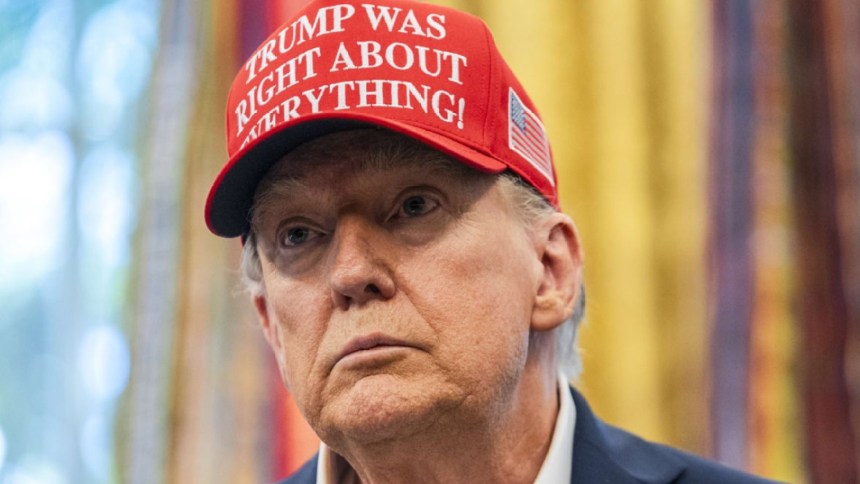
The following morning, Donald Trump published an item to his social media platform that said, after a few odd self-indulgent boasts about how impressed he is with himself, “I am thinking of recommending a National Convention to the Republican Party, just prior to the Midterms. It has never been done before. STAY TUNED!!!”
House Speaker Mike Johnson soon after said the president called him to discuss the idea, and he told Trump, “That’s genius.” (Of course, given their relationship, if Trump called him and offered gibberish in a made-up language, Johnson would also probably say that’s “genius,” too.)
Evidently, the party is moving forward with the plan. NBC News reported:
President Donald Trump announced Tuesday that Republicans will hold a midterm convention next year to showcase his administration’s accomplishments, as the GOP seeks to increase its slim majority in the House through redistricting. The announcement, made on Truth Social, did not specify when or where the convention would be held, saying only that those details were still ‘to be determined.’
It’s important to emphasize that there’s a great deal of uncertainty about this. Trump says all sorts of things, many of which have no relationship to reality, so just because he said there will be a midterm convention does not mean that there will be a midterm convention.
But after weeks of scuttlebutt, both parties appear to be moving in the direction of major national gatherings in 2026.
While the president told the public that this has “never been done before,” he was wrong. In fact, the DNC held midterm conventions in the 1970s and ’80s, before giving up on the practice ahead of the 1986 cycle. (The decision didn’t hurt the party: Democrats gained five U.S. House seats and eight U.S. Senate seats that year.)
The challenge, however, is likely to be financial: Conventions are expensive, and party officials tend to want to conserve resources to help candidates in competitive races and boost state parties in key battlegrounds. Will either or both parties commit many of millions of dollars to what would be a symbolic production? I’m skeptical, but watch this space.
