





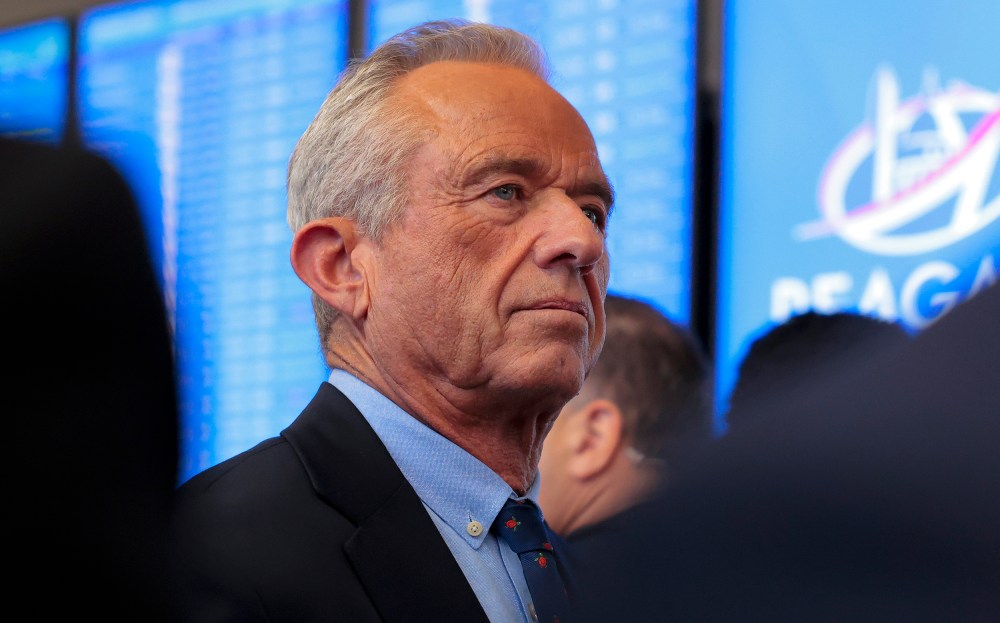

Health Secretary Robert F. Kennedy Jr. appeared on Katie Miller’s podcast this week, and the host asked what kind of advice he’d give a new young mother about what to give a newborn. Kennedy Jr., a longtime anti-vaccine activist, initially responded by acknowledging that he’s not a physician and doesn’t give out medical advice.
And if he’d stopped there, his comments would’ve been wholly unremarkable. The Cabinet secretary, however, did not stop there.
Kennedy Jr. went on to encourage new parents to “do their own research,” then quickly added, “This idea that you should trust the experts — a good mother doesn’t do that.”
The hapless secretary tried to bolster his point by arguing that families do their own research on consumer products all the time (he twice referenced the magazine Consumer Reports by name) and suggested that such poking around is no different from going online to look up information on vaccinations.
This comes months after RFK Jr. appeared on a different podcast, where he also said, “We need to stop trusting the experts.”
It’s worth unpacking this, if for no other reason than to help those who might’ve heard Kennedy Jr.’s comments and now find themselves unsure of what to think.
Right off the bat, it was odd to hear the secretary condemn expertise while simultaneously touting Consumer Reports, which hires experts in product analysis and consumer safety. In other words, Kennedy Jr. was telling the podcast’s audience that a “good mother” doesn’t trust experts, then implied she can turn instead to product reviews in a magazine — written by experts.
Just as notably, the nation’s health secretary is painting an absurd picture by equating consumer products with vaccines. The Washington Post’s Monica Hesse wrote a compelling column on this topic last spring:
It probably goes without saying, but just in case: Researching a vaccine is substantially more complicated than researching a stroller. You research strollers by typing ‘best strollers’ into Wirecutter and buying whichever one has cupholders. You research a vaccine by getting a PhD in immunology or cellular and molecular biology, acquiring a lab in which you can conduct months or years worth of double-blind clinical trials, publishing your findings in a peer-reviewed academic journal, and then patiently navigating the government and industry regulations that are required to make sure your vaccine is safe and effective.
Finally, there’s one question I’d love to ask Kennedy Jr. as a follow-up: If we’re not going to trust experts, who should we trust? Who’s better equipped to offer the public guidance on matters related to science and health?
If Kennedy Jr. and his allies want to single out experts who’ve made mistakes in the past, I’ll concede the point. But it’s also true that those with expertise in their fields have far better track records for accuracy and reliability than anyone else.
I don’t have a background in medicine or scientific research, so I’m not in a position to go online and make competent assessments on matters related to immunology. Instead, I rely on the scientific consensus crafted by knowledgeable and experienced professionals whose work has been subject to extensive scrutiny by other knowledgeable and experienced scientific professionals.
I can’t do my own research, because I’m not qualified to do that research. People who know what they’re talking about can do the research, at which point the scientific canon takes shape.
Kennedy Jr. appears to approach these issues with the assumption that the scientific canon is inherently suspect because it’s crafted by those who reject his conspiratorial and unscientific perspective. When he advises Americans to “do their own research,” it’s a recommendation rooted in the idea that the internet is a reliable source of information where people can poke around until they find sites that give them information that seems true — or that they want to be true.
But that’s not a responsible approach to public health. On the contrary, it’s madness.
As my MS NOW colleague Zeeshan Aleem explained last year, “Laypeople cannot understand more technical information about vaccine ingredients, efficacy reports or safety assessments on their own, since understanding that information requires specialized knowledge and a broader contextual understanding of the diseases they guard against. Instead, people have to rely on expert intermediaries to interpret and explain that information for them.”
That the incumbent U.S. secretary of health and human services understands this fact seems evident in his own disclaimer that he’s not a physician and therefore isn’t qualified to dispense advice. That he seems incapable of extending that logic any further should be a cause of widespread concern.
This post updates our related earlier coverage.
