






When Donald Trump announced an unexpected pardon for Democratic Rep. Henry Cuellar of Texas, the Republican president added to his remarkable list of clemency decisions benefiting politicians (of both parties) accused or convicted of corruption charges.
But the pattern isn’t limited to politicians. The New York Times reported on Trump also pardoning a real estate developer who’d been charged by the president’s own Justice Department after allegedly rigging the bidding process for a sports arena. From the article:
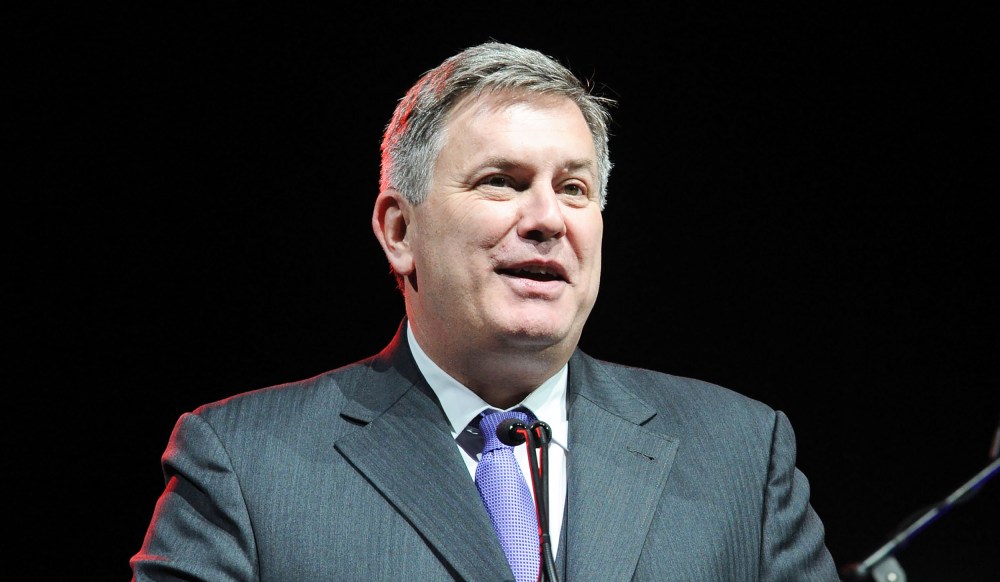
Mr. Trump’s pardon effectively quashed his administration’s effort to convict the developer, Timothy J. Leiweke, a founder and former chief executive of Oak View Group, for allegedly orchestrating a conspiracy to rig the bidding process for the Moody Center Arena at the University of Texas to benefit his own company. The maximum penalty for the charge was 10 years in prison and a $1 million fine.
While the White House often tries to justify controversial pardons by whining about Joe Biden, that wasn’t an option in this case: Leiweke was charged by a federal prosecutor appointed by Attorney General Pam Bondi as part of an investigation led in part by an FBI official appointed by Director Kash Patel.
So why in the world did the president do this? The Times’ report added, “The White House did not immediately respond to a question on Wednesday about why Mr. Trump had pardoned someone who was prosecuted by his own administration.”
At this point, it’s difficult to speculate as to what might have transpired behind the scenes, but the broader pattern is plainly indefensible.
The Times’ Jamelle Bouie noted in his latest column:
In addition to his co-conspirators in the effort to ‘stop the steal,’ Trump has pardoned a number of white-collar criminals. In March he pardoned the founders of a crypto exchange after they had pleaded guilty to money laundering. In April he pardoned a nursing home chief executive, Paul Walczak, whose mother is a major Republican donor, and in October, Trump pardoned Changpeng Zhao, a billionaire with connections to the Trump family’s crypto investments.
There is yet another set of Trump pardons meant for people convicted of fraud and political corruption. In May he commuted the sentence of Lawrence Duran, who had been convicted of Medicare fraud and money laundering. That month Trump also commuted the sentence of Marian Morgan, who had been sentenced to a 35-year prison term for stealing millions of dollars from investors in a Ponzi scheme.
Alas, this is only a partial list. In April, a Trump-appointed prosecutor boasted about the successful prosecution of Joseph Schwartz, a former nursing home magnate who was convicted of defrauding the government of $38 million.
Schwartz then paid $960,000 to two lobbyists who agreed to help him seek a pardon. Trump soon gave Schwartz what he wanted.
The easy observation is that the president, himself a convicted felon, appears to have a soft spot for those accused of corruption, but given the frequency and brazenness of Trump’s abuses, a different kind of concern is coming into focus: Trump made a right turn at abiding corruption and is now, through his pardon abuses, effectively encouraging corruption — making it clear to the public that such crimes will not lead to consequences so long as he’s in the White House.
