





Kevin McCarthy’s legacy
This week, former Speaker of the House Kevin McCarthy gave his final speech on the House floor.
He said in part, “If you come across that question of whether you should do what’s right out of fear of losing your job, do it anyways. Because it’s the right thing to do, and this is what the nation requires. … I would do it all again.”
So as McCarthy prepares to step down at the end of the year, I think it is the perfect time to look back at his legacy … and to examine what he says he would do “all again.”

Remember, at one point, this guy was one of the “young guns” with Paul Ryan and Eric Cantor: the future leaders of the Republican Party.
And why was McCarthy a part of that group? Because his political superpower was raising money. He was one of the best rainmakers for the Republican Party in decades — in part because he could be a political chameleon. He knew how to tell everyone what they wanted to hear.
And that served him well — until Jan. 6, 2021. Then, he tried to have it both ways. He told Liz Cheney (according to her firsthand account in her new book) that Donald Trump “knows it’s over … he needs to go through all the stages of grief.” McCarthy also told Cheney that he had plans to move forward with the vote to certify — which of course was a lie.
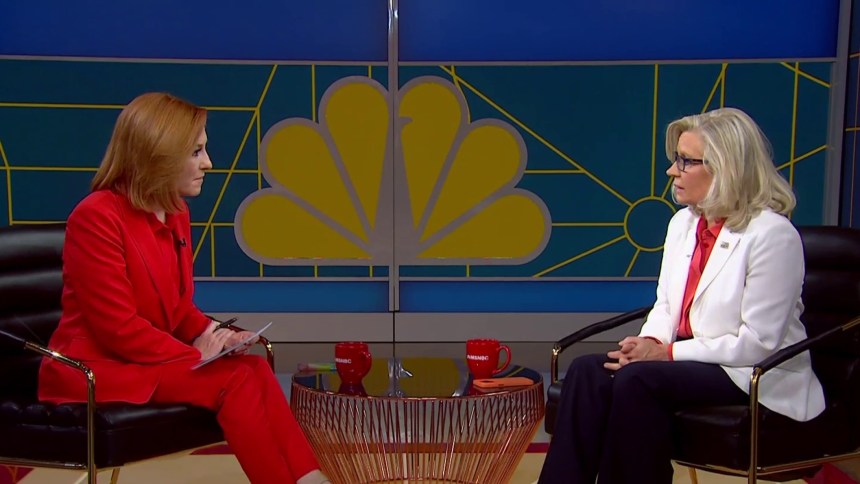
And then, not only did he vote with the objectors, but when a number of private-sector companies said they wouldn’t contribute to lawmakers who had failed to certify, McCarthy decided to double down on a different route to being a rainmaker.
That led to his trip to visit Trump at Mar-a-Lago (according to Cheney’s account) — because if he couldn’t raise money from traditional Republicans, he needed to go full MAGA and raise money that way!
Why was he doing all of this? Well, because he was desperate to hold on to power. He wanted to be the leader of the Republican House, and eventually the speaker.
At the end of all of that, his soul-selling did get him the job. But it took an embarrassing 15 rounds of votes, and he was only able to hold on to it for 269 days.
So, what is the McCarthy imprint on the speakership? Simply put, he made clear it can be bought and paid for, even by people who have played a role in attempting to overturn the very branch of government he is leading.
A story you should be following: The abortion pill at the Supreme Court
The Supreme Court has agreed to review a decision from a lower court that would limit access to mifepristone, one of the most commonly used abortion pills. This all started back in April, when factions of the anti-choice movement went judge shopping and landed on Matthew Kacsmaryk, a onetime anti-abortion activist himself.
The key question is whether the courts have the right to overturn a decision by a federal agency, in this case the Food and Drug Administration, simply because they don’t like it.
This will be the first abortion case the Supreme Court has taken up since Roe v. Wade was overturned last year.
A decision will likely come in June, right at a key point of the campaign cycle, and I’ll be watching closely to see what impact this ruling could have on women’s reproductive rights and on the 2024 election.
Some people to watch: Families of hostages
More than 100 hostages captured by Hamas on Oct. 7 have been released and returned home to their families. But many families are still waiting for any word about their loved ones.
I sat down this week with two couples whose sons are still in captivity, and the great-aunt of a young girl who has been freed. They told me about their meeting with President Joe Biden, and their plea for their relatives to return home.
Ronen and Orna Neutra, whose son Omer was taken hostage shortly after his 22nd birthday, told me: “Our boys are in the dark. It’s holidays of light, both Hanukkah and Christmas. But our boys, our families are in the dark. We need them out.”
Liz Naftali, great-aunt to 4-year-old Abigail Edan, who was held hostage by Hamas after her parents were killed and has since been released, told me: “We are blessed that she did come back after 50 days as a hostage. … No child should be a part of war. No child should be a hostage. They spent 50 days where they weren’t allowed to talk. They spent 50 days where there wasn’t food for them, and they spent 50 days with water that wasn’t drinkable.”
For our full conversation, tune in to “Inside with Jen Psaki” on Sunday at 12 p.m. ET.
Claire McCaskill’s weekend routine:
Former U.S. Sen. Claire McCaskill is an NBC News and MSNBC political analyst and the co-host of MSNBC’s “How to Win 2024” podcast.
What show are you bingeing on right now?
English detective/mysteries. There are so many good ones on Acorn and BritBox. “Vera” is my jam.
What’s the last book you read?
Just finishing up “The Trespasser” by Tana French (part of the “Dublin Murder Squad” series). I read every night … and I mean every night … before bed.
What time do you wake up on the weekends?
I’m usually up by 6:30 a.m., but earlier if I am a guest on “Morning Joe.” Weekends I might sleep till 7-7:30, depending on whether there are grandchildren sleeping over. Sleep is a waste of time, but I understand it is good for me.
How do you take your coffee?
Dash of heavy cream and fake sugar in my stay-warm Ember mug.

Jen Psaki is the host of "The Briefing with Jen Psaki" airing Tuesdays through Fridays at 9 p.m. EST. She is the former White House press secretary for President Joe Biden.