“In my old job, there was a union, and they would protect me,” Meghan, the Duchess of Sussex, told Oprah Winfrey of her struggles with depression and bullying before she and Prince Harry decamped for the United States. Without that protection, Buckingham Palace’s HR department told her there was nothing it could do to help her.
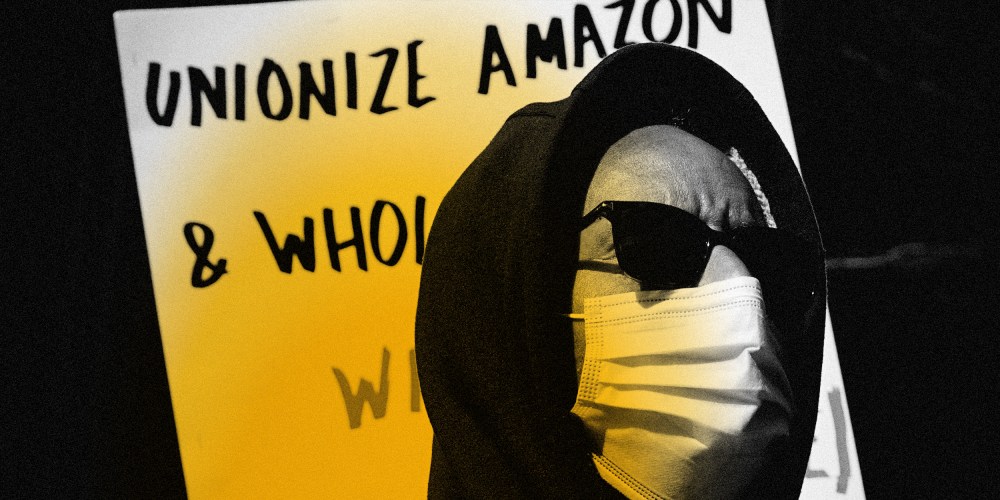
It was a welcome shoutout to how vital unions are when facing down abuse from the powerful. On that front, it’s not a secret that Amazon — one of the largest, most profitable and ubiquitous American companies — is a nightmare for many of its employees. In Bessemer, Alabama, activists are hoping to make the warehouse there the first Amazon facility to unionize. It’s a move that couldn’t come sooner: America’s workers can’t go on as they are now without the protection unions grant and which corporations have eroded.

We’ve known about the stress, injuries and dehumanization that workers face in the company’s warehouses for almost a decade now. We’ve known how the pace that Amazon demands breaks its workers and how the company refuses to care for those whose bodies are depleted through their labor. We’ve known about the constant surveillance of its workers to meet their quotas, which are unwaveringly enforced. We’ve known about the extra hardships that the coronavirus pandemic has inflicted on warehouse workers.
So it’s not a surprise that the vote in Alabama has drawn national attention as a potential bellwether for the labor movement’s hopes around the country. Also unsurprising are Amazon’s efforts to kill off the movement in hopes of preventing more of its facilities from unionizing.
The Washington Post reported on Tuesday that the company is pulling out all the oldest anti-union tricks in the book to get workers to vote against joining the Retail, Wholesale and Department Store Union:
Many of the 5,805 employees in Bessemer who are in the middle of a seven-week mail-in voting period to decide whether they want the RWDSU to represent them receive four or five emails a day from the company to discourage unionization. The vote ends March 29. The company has pressed its anti-union case with banners at the warehouse and even fliers posted inside bathroom stalls. The RWDSU has recently cited a mailbox popping up on company property that could signal to workers that it has a role in the running of the election, as well as a financial offer luring unhappy workers to quit as questionable tactics by a company hellbent on crushing the union. The company opposes unionization, noting that it often pays more than its peers, and offers health care, vision and dental benefits, a retirement plan, and opportunities for advancement, Amazon spokeswoman Heather Knox said.
It’s truly classic stuff, right down to duplicitously asking employees what boils down to “Why would you want a union? We know you and will look out for you better than a union could.” For the record, that’s one my fellow journalists and I have heard before ourselves — it’s almost always a lie. Good thing the reporters at The Washington Post, which Amazon founder Jeff Bezos purchased in 2013, had their union already in place.
Honestly, all that’s missing are the Pinkerton company’s boys to provide a little extra disincentive to vote for the union. (Though Motherboard did report in November that the company was using Pinkerton’s detectives to “spy on warehouse workers and the extensive monitoring of labor unions, environmental activists, and other social movements” overseas.)
In The Washington Post’s article, former Amazon executives anonymously state that the company “sees unionization as a threat to its ability to bring technical innovations to its warehouses that reduce reliance on workers, such as robots” and “worries that organized labor could scuttle expansion plans, forcing the company to negotiate the terms of hiring, laying off staff, as well as the number of temporary workers it could take on.”
To which I say, too bad. If you’re going to want to bring in robots to replace workers, then provide for the workers that remain. If you want to make decisions that affect the labor force like laying workers off or bringing on temporary staff, who often struggle to receive the benefits that Amazon touts, the labor force needs to be on equal footing.
Honestly, I don’t want to hear another word about corporate “flexibility” as a reason to not engage with workers’ demands. What they call flexibility or “nimbleness” or “freedom to innovate” is all too often a cloak of buzzwords used to hide a callous disregard for the health, safety and economic security of workers. It’s equating inconvenience for a company with survival for its employees. Especially after Amazon saw its profits jump by 70 percent through the first three quarters of 2020 — not gross revenue, profits — in the middle of a pandemic.
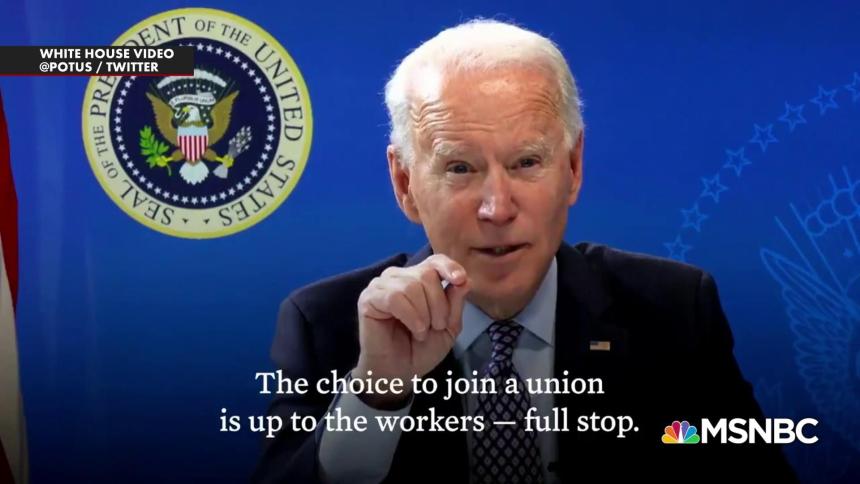
National politicians are looking to the unionization campaign in Alabama as a potential inroad to transforming Alabama from a GOP stronghold into the next blue-collar blue state in the South. President Joe Biden sent a video message in support of the right to unionize last week. Other Amazon workers around the country are watching the effort with interest, as a win there would help boost their confidence in their own success. The RWDSU said that since the election kicked off, more than 1,000 workers have gotten in touch to ask about union drives at their own factories. But as it stands, the pressure campaign from Amazon has left workers at the Bessemer factory “split among supporters of the union, strong dissenters and an apathetic center that is growing sick of the national attention,” The New York Times reported Tuesday. Not all of that national attention is welcomed even by the organizers; the union made clear this week that it isn’t behind online calls to boycott Amazon. For the record, though, I don’t begrudge any of the workers who wind up voting against the union. That’s their right, even if I disagree with it. I just ask that they ask themselves: When push comes to shove, who has your back in standing up to Amazon, or any powerful institution for that matter? Even people in privileged positions or employees who have been treated well sometimes need backup. I usually pride myself on being able to see both sides of an issue. But it’s clear here that there’s an imbalance between what the unionizers want and what the company is willing to do to stop them. A bully is someone who punches down. A bully is someone who knows the power they have over someone and refuses to acknowledge it. A bully is someone who pretends they’re your friend but has no qualms about throwing you under the bus to protect their petty interests. Amazon is a bully. Shoutout to every member of the Bessemer warehouse who’s daring to stand their ground.
Hayes Brown is a writer and editor for MS NOW. He focuses on politics and policymaking at the federal level, including Congress and the White House.