





The Biden administration announced Wednesday that for Americans who’ve already received both shots of the Moderna or BioNTech/Pfizer Covid-19 vaccines, a third, “booster” shot will be available starting Sept. 20.
The announcement wasn’t necessarily a surprise — the administration already gave the green light for immunocompromised people to get their extra doses several days ago. In essence, though, the U.S. government has taken a weighty moral decision, one with an international impact, and tossed it into the laps of its people. I know what I’m going to do — but I’m still trying to work out how I feel about it.
The U.S. government has taken a weighty moral decision, one with an international impact, and tossed it into the laps of its people.
When the vaccines were first authorized for emergency use in December, a basic economic conflict was at work. The demand, especially in those early days, drastically outstripped the extremely limited supply. Stories abounded of people’s lying about pre-existing conditions and comorbidities, flying overseas to access other countries’ supply, pulling strings and all manner of other shenanigans just to get dosed.
But by early May, the paradigm had flipped. Thanks to political misinformation, economic hurdles and downright lack of interest, the U.S. vaccine supply exceeded and still exceeds demand. But as the delta variant of the coronavirus has surged and as new evidence shows that the efficacy of vaccinations is waning over time, the country’s public health agencies are backing plans to administer millions of third doses.
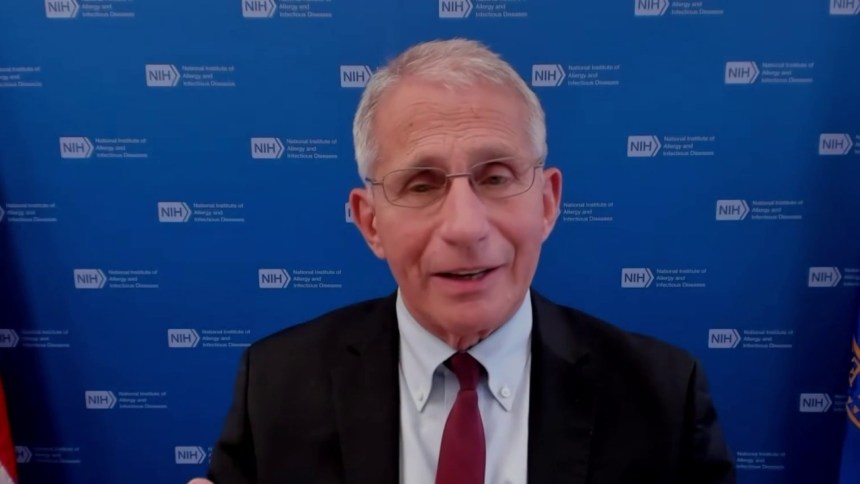
The data the Centers for Disease Control and Prevention released Wednesday “stops short of proving that a third dose would be any more effective in preventing severe outcomes than the current two-dose series,” NBC News reported. Instead, the plan from the CDC, the Food and Drug Administration and the National Institutes of Health is meant to be “an offensive move against Covid-19 in advance of winter.”
That would make total sense in a vacuum — that is, if the pandemic were limited to the U.S. After all, with over 300 million people — the vast majority of whom are eligible to be vaccinated — that’s a lot of potential hosts for the delta variant to spread and perhaps further mutate. Better to play it safe than to play catch-up (again) this winter, that thinking goes.
But the global demand for vaccines has stayed high — and that’s where the morality of this policy is on shaky grounds. COVAX, the U.N.-backed vaccine distribution program, has shipped out 209 million doses of vaccine to 138 countries. That sounds impressive — until you remember that even last month, before the booster shot announcement, it was predicted that most low-income countries wouldn’t get enough doses until 2023.

“We’re planning to hand out extra life jackets to people who already have life jackets while we’re leaving other people to drown without a single life jacket,” Dr. Michael Ryan, executive director of the World Health Organization’s Emergencies Programme, told reporters Wednesday. There is a bit of the Titanic’s “first class first, steerage class never” energy to this plan. Here we are in a country that, even before the vaccines were manufactured, hoarded the vast majority of them in production by buying up enough doses for everyone in the world’s third-most-populous country. And even as tens of thousands of doses have begun to expire for lack of willing recipients, there are still people who refuse to believe that we’ve even struck an iceberg.


Meanwhile, African health officials have said that fewer than 2 percent of people on the world’s second-largest continent are fully vaccinated, really driving home the inequity. “We have people in sizable numbers who have zero protection,” Ruth Faden, a bioethicist at Johns Hopkins University, told Axios. “The global ethics case is clear.”
Which brings us back to the Biden administration’s decision to promote third doses in a country that doesn’t have a federal vaccination mandate. Just as there’s no overarching rule that demands that Americans get either of the first two shots, there’s nothing saying people have to get their booster doses, either. And some experts, including MSNBC columnist Dr. Kavita Patel, say people shouldn’t rush to get in line for booster shots the day they’re approved for wider use.
Please don’t run to get vaccinated sept 20 and do not check antibody levels to sort this out. Talk to a physician and discuss your situation Biden administration to start offering vaccine booster shots to all Americans Sept. 20 https://t.co/HbSMLZFaZA
— Kavita Patel M.D. (@kavitapmd) August 18, 2021
I have no idea how the booster campaign will alter current mandates and regimens from cities, states and businesses that require people to be vaccinated for employment or access to services. But I do know that any changes made without a full federal mandate or its equivalent maintains the current paradigm in which vaccination is deemed a personal choice rather than a public health necessity. Once the FDA eventually grants full approval to the vaccines, the absence of clear guidance is going to seem more and more like a punt by the federal government during the worst public health crisis that anybody alive can remember. It’s unsustainable.
According to a Yahoo News/YouGov poll conducted in mid-July, about 60 percent of fully vaccinated Americans say yes, hit me with a third shot. I’m one of them — I will gladly get a third dose if that’s what keeps me and the people around me safe from delta and prevents another variant from developing.
But in doing so, I know that that’s one more shot diverted from the roughly 10 billion more pledged donations needed to get 70 percent of the world vaccinated, the goal the WHO has set to finally say the pandemic is over. It’s a pretty selfish feeling, and given the questions about whether a third shot is even scientifically necessary, I hope I’m not being pushed toward the unethical choice.

Hayes Brown is a writer and editor for MS NOW. He focuses on politics and policymaking at the federal level, including Congress and the White House.