




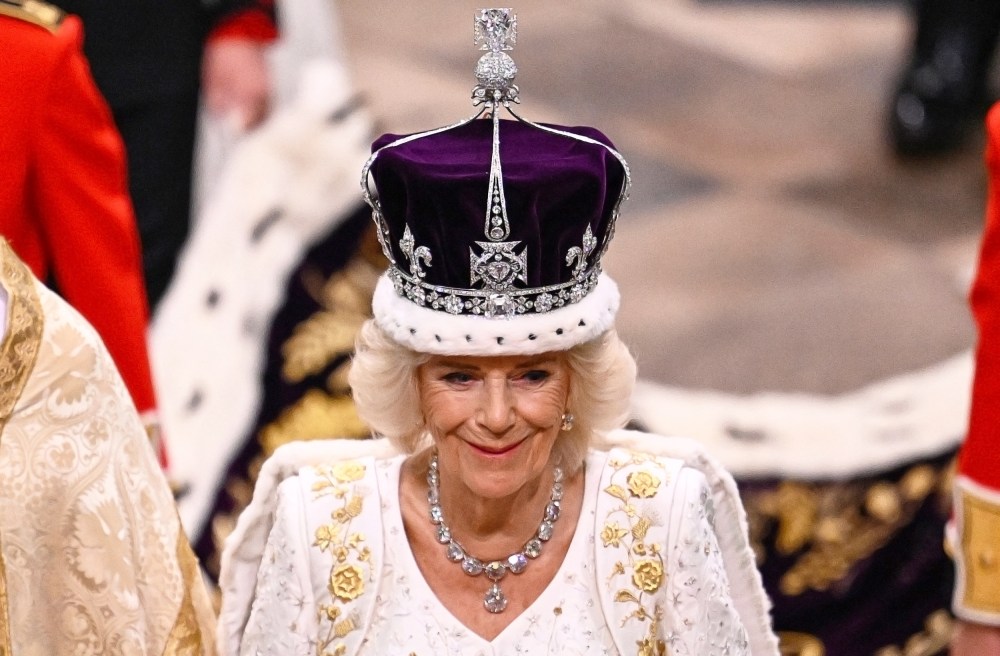
When Queen Elizabeth II died on Sept. 8, 2022, it marked the end of an era — in a literal sense. Her death brought to a close the second Elizabethan Age and ushered in the first English king in living memory for the majority of the world. Already the longest serving heir apparent at 74, Charles’ ascension to the throne has brought a host of firsts. His coronation on Saturday brought several firsts as well, with one of the most notable being the crowning of his spouse, Camilla, as queen, and not queen consort.
Camilla’s consort addendum always carried with it an unmistakable tinge of deference to Princess Diana.
Camilla’s consort addendum always carried with it an unmistakable tinge of deference to Princess Diana. Her official title change doesn’t give Camila any more authority or power, but it is symbolically significant in the context of a relationship that has felt at turns star-crossed and scandalous.
Elizabeth’s coronation took more than a year to prepare; and its historic BBC broadcast was watched by 20 million people. Charles’ coronation was carried live around the world as a matter of course. But unlike with Elizabeth, Saturday was a double-billed affair. The event was officially called “The Coronation of Their Majesties King Charles III and Queen Camilla,” seemingly in an effort to show the two as an equal partnership. (The royal family signaled it was dropping the consort part of the title a month before the coronation on April 6 — though it seems notable that the BBC continued to use it up until after her coronation.)
To be fair, wives were crowned along with their husbands before the event was televised — it was just never treated as newsworthy. The late Queen Mother was coronated along with Elizabeth II’s father George VI in 1937, though Queen Mary in 1911 got arguably more pomp — and jewels.

One might mistake this change as a sign of modernization, or proof the royal family now truly recognizes spouses as equals. If only. Philip was not crowned as part of Elizabeth’s ceremony in 1953, at least partly due to patriarchal fears that this Greek interloper, and his Mountbatten family, would become the real power behind the English throne. Camilla, as a woman, brings no such concerns.
And Charles’ insistence in having Camilla crowned publicly and given equal billing on TV (and on the custom classic music soundtrack created for the event, which included “Vivat Regina Camilla”) also feels like a long-delayed push for redemption after her initial reception by the public as “the other woman.”
Most people did not know who Camilla Parker Bowles was, despite her being one of Charles’ many near-misses, before the two rekindled their affair in 1986. Whispers of drama were prevalent in the U.K. tabloids — photos of Camilla attempting to avoid cameras in 1987 are still floating around in archives. But it wasn’t until Diana’s famous 1992 biography, followed by her “there were three of us in this marriage, so it was a bit crowded” BBC declaration, that the rest of the world learned her name.
Diana managed to control the narrative, one of the few times she did, by painting Camilla as the one who broke up her fairy tale. Camilla was instantly vilified — a divorced woman not nearly as beautiful as “the people’s princess” who had somehow stolen the future king of England anyway. Even after Camilla and Charles married, her “mistress who got lucky” reputation stuck, turning her into someone who “brought hope to side chicks everywhere.”


Charles, however, has done a great deal to rehabilitate both his own perception and Camilla’s. Since marrying in a small ceremony in 2005, the two have quietly worked to portray their union as the product of a long-term love story thwarted by inconvenient outside forces. “The Crown” has helped bolster this narrative. (Prince Harry’s autobiography “Spare,” on the other hand, portrayed Camilla as an ambitious interloper.)
Time has also played a role. Twenty-six years after her death in a car crash on a Paris highway, the specter of Diana no longer hangs over British society the way it once did. Now, perhaps, this arc of forgiveness will be completed.
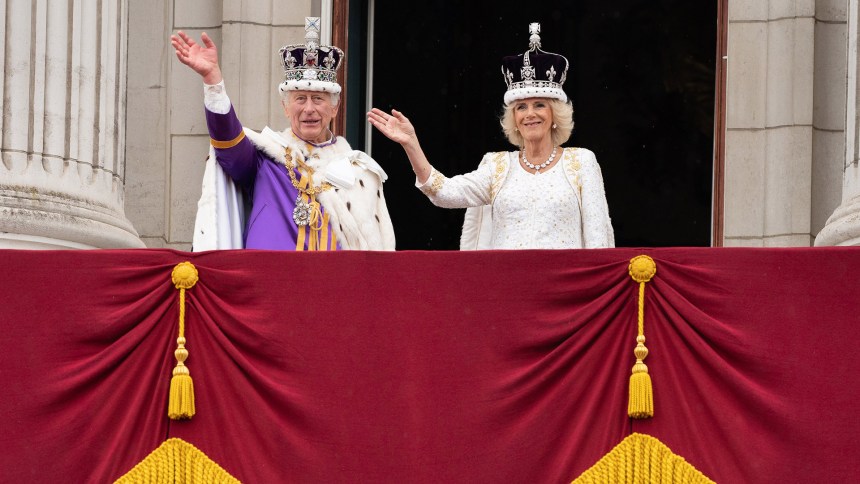
The U.K. monarchy has been in slow decline for more than a century, ever since the outbreak of the Great War in 1914 brought an end to the power of the British aristocracy. However, Queen Elizabeth II’s unprecedented 70-year reign managed to cannily keep up appearances. The system seemed to still be working, even as Britain’s empire split apart and colonies became independent “Nations of the Commonwealth.”
Without Elizabeth, many commentators have mused that perhaps Charles will be England’s last king. And yet, even in a time when the pound is falling, Brexit has made it so houses can’t be heated and food shortages are a fact of life, he rode through the country in a golden carriage, to the unmistakable sounds of cheering. At Charles’ side, glittering in her own robes and jewels, was a woman once universally despised. It appears that keeping calm and carrying on may have worked its magic in England once again.
King Charles III’s reign will never reach the lengths of his mother’s. But his treatment of Camilla creates a new piece of history, and a path for Prince William and Kate, the new Princess of Wales. It’s not exactly smashing the patriarchy. But it might be something like closure.

Ani Bundel
Ani Bundel is a cultural critic who has been writing regularly since 2010. Her work can also be found at Elite Daily and WETA's Telly Visions, where she also co-hosts "Telly Visions: The Podcast."