




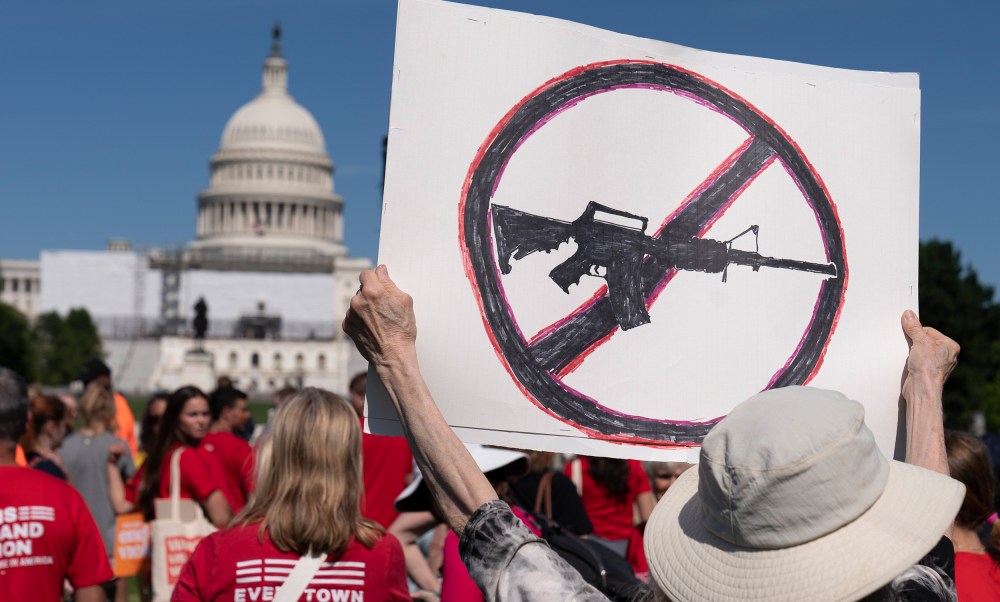
In the wake of horrific mass shootings in Buffalo, New York, and Uvalde, Texas, the national conversation about what should be done to prevent future attacks is the most intense it has been in recent memory. Protests are spreading, the president has called on Congress to act, and Democrats on the Hill are working to pass multiple gun safety bills. While the odds of a bill passing are low, it’s notable that Republican leadership has signaled an openness to some kind of legislation, and at least one GOP lawmaker, Sen. Cynthia Lummis of gun-loving Wyoming, has reported a change in perspective after receiving a surprising torrent of phone calls from her constituents demanding change.
But at this reform-minded moment, it’s critical to remember that mass shootings are only the tip of the iceberg when it comes to America’s problems with gun violence. Mass shootings were responsible for less than 2 percent of last year’s gun deaths. The rareness of mass shootings makes them no less tragic or tolerable, but it should inform what must be done about guns in America when there are windows for change.
Yes, America has a mass shooting problem, but it’s a symptom of a deeper malady of mass gun violence.
Yes, America has a mass shooting problem, but it’s a symptom of a deeper malady of mass gun violence. If we get caught up in solutions overly specific to unusual episodes of gun violence, like restrictions or bans on assault weapons, we’re bound to leave intact and further normalize the primary modes of gun violence that are at the heart of what make American gun fatalities and violence exceptional around the world.
Most of the mass shootings in America that make national headlines and drive conversations about the need for change tend to take a certain form. They typically involve a gunman wielding an AR-15-style rifle, taking the lives of strangers in a public place with an astonishingly high body count.
These scenarios are true horror stories, but they’re not what mass shootings usually look like. Most mass shootings, defined as a shooting involving four or more people who are shot and killed, excluding the shooter, mostly occur in private homes and mostly target current or former intimate partners or family members. The use of assault weapons and high capacity magazines in mass shootings are disproportionately high compared to other types of shootings, but still relatively rare.
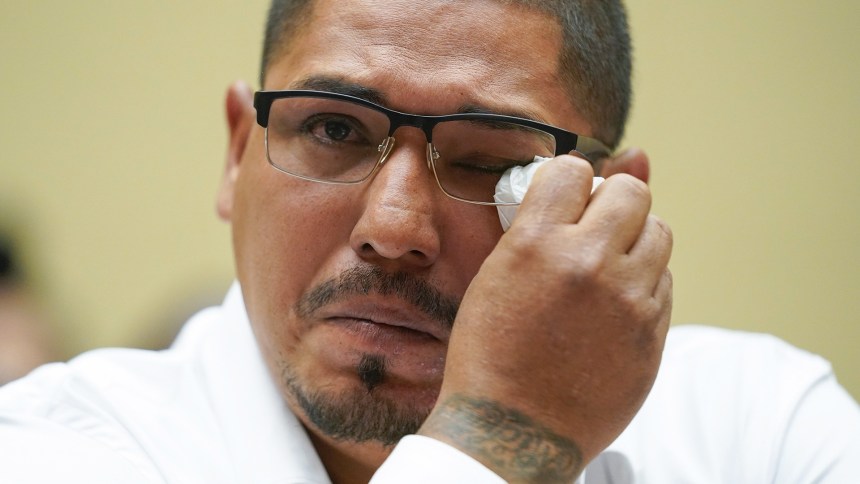
And again, deaths from mass shootings constitute just a couple percentage points of the roughly 40,000 firearm deaths that occur every year in America. The majority of gun deaths are suicides. Roughly 40 percent of gun deaths in the U.S. are homicides, and a vast majority of them are committed using handguns. Vulnerability to gun homicide is gendered, racial and class-related. Gun homicides are concentrated in racially segregated, impoverished neighborhoods in cities, and Black Americans represent the majority of gun homicide victims. Guns also make domestic violence far more lethal: Around 70 women are shot and killed by an intimate partner in the U.S. every month.
“The demographic atlas of gun violence reads pretty much like an atlas of broader American misery and vulnerability and desperation,” Patrick Blanchfield, an associate faculty member at the Brooklyn Institute for Social Research and the author of the forthcoming book “Gunpower,” told me.
The overwhelming majority of the gun deaths in this country — the main contributors to the statistics that make the U.S. an extraordinary outlier in the developed world — rarely make headlines. “What gets defined as a crisis, or what are seen as crises, are sort of like breaches in containment of a normalized system of mass gun death,” Blanchfield said regarding the popular reaction to mass shootings. Our culture’s tacit acceptance of widespread gun deaths as normal is driven to a significant extent by the fact that those most likely to be afflicted by it tend to be on the margins of society. Our selective attentiveness raises troubling questions of whom we think deserves to be exempt from the dangers of guns.
The way we conceptualize problems shapes the way we conceptualize solutions. And the focus on the exceptional features of shootings like the ones in Buffalo and Uvalde tilt us toward narrow solutions. Democrats and left-leaning media have focused a great deal on (correctly) characterizing assault weapons as dangerous “weapons of war,” and Democrats have discussed banning them. But there is little evidence that an assault weapons ban — which the U.S. has done before (and allowed to expire), and has no chance of passing in today’s Senate — will meaningfully reduce gun violence. House Democrats’ recent passage of a provision that will raise the minimum age to buy semi-automatic rifles from 18 to 21 is not going to move the dial in a significant way.


Cassandra Crifasi, director of research and policy at the Johns Hopkins Center for Gun Violence Solutions, told me that while no one reform is going to reduce all types of gun deaths, there are some that can address multiple types — and those are key to focus on.
One example she gave was red flag laws, or extreme risk protection orders, which allow people to petition to separate an individual temporarily from their firearms during a time of elevated risk or during a crisis. This not only helps protect against mass shooters, who often hint at or openly broadcast imminent violence to peers in advance, but it also reduces gun violence in everyday contexts. They can be used to take firearms away from someone threatening self-harm or against an abusive partner. There is a great deal of evidence that access to firearms dramatically increases the likelihood of death by suicide, and a woman is five times more likely to be killed by an abusive partner if they have access to a gun.
The other example Crifasi gave were permit-to-purchase laws, which standardize more robust background checks, close loopholes that allow individuals to obtain guns without completed background checks, and can take weeks longer than the typical background check process. Permit-to-purchase rules are more likely to catch prohibited individuals, and the delays they can produce can reduce likelihood of impulsive lethal behavior. They’ve been shown to reduce the flow of guns into the underground market, homicides — including mass shootings — and suicides. They’re also associated with a reduction in shootings by the police — perhaps, Crifasi hypothesized, because fewer guns in the underground market make the civilian population less likely to be armed when interacting with law enforcement.
These policies hint at a simple reality: more guns makes our country more dangerous; making it harder to get them makes the country safer. The U.S. doesn’t have an overall crime problem compared to other countries — the issue is that, as German Lopez once wrote at Vox, “the US appears to have more lethal violence — and that’s driven in large part by the prevalence of guns.” Over the longer-term, the solutions required to properly deal with mass gun violence will require getting much, much more aggressive with regulating access to every kind of gun.
Not all the legislation in Washington is futile. The good news is that House Democrats have recently passed a bill that would nationalize red flag laws — and five Republicans even joined them. It’s a substantive policy that could, conceivably, garner some bipartisan support in the short to medium term. The bad news is that there’s still a great deal of emphasis among Democrats on focusing on reducing access to assault weapons and their accessories, which, bad as they are, likely won’t do much to reduce our real gun crisis.
Given polarization on gun policy and the makeup of Congress right now, the reality is only extremely incremental or cosmetic reforms are likely to pass, if any pass at all. But there is still value in demanding a realistic appraisal of the real problem right now. As popular consciousness surrounding the role of guns in our society shifts and movements for public safety continue to grow, it’s crucial to build a mandate for policies that will actually work and tackle the true scope of the crisis.

Zeeshan Aleem is a writer and editor for MS NOW. He primarily writes about politics and foreign policy.