




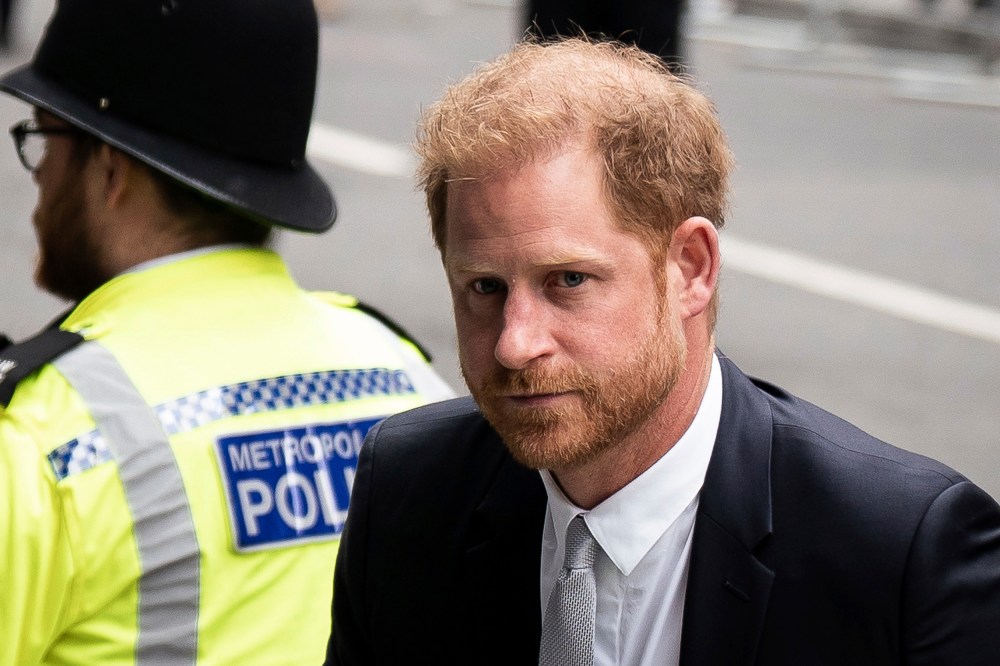
Prince Harry may be a royal, celebrity, and media mogul, but he’s not necessarily the best plaintiff.
Case in point, the Duke of Sussex spent part of this week in court as part of a larger lawsuit against Mirror Group Newspapers (MGN), publisher of the Daily Mirror, the Sunday Mirror and the Sunday People tabloids. Harry and his fellow plaintiffs are arguing the newspapers illegally violated their privacy via means like phone hacking. But while Harry’s testimony was historic — he was “the first British royal to appear in the witness box since the 1890s,” according to Reuters — opposing counsel called it “extraordinary” for very different reasons. (MGN has previously admitted to hacking other individuals, eventually settling hundreds of cases, but its legal team denies Harry was ever a victim.)
Harry did not appear in court, putting attorney David Sherborne in the unenviable position of having to account for his client’s absence.
The judge, Sir Timothy Fancourt, directed the duke to be in court in London on June 5, just in case the parties’ statements finished early and his testimony could then begin early. But Harry did not appear in court, putting attorney David Sherborne in the unenviable position of having to account for his client’s absence.
Sherborne informed the court that Harry would be “attending tomorrow” because “he flew yesterday evening from Los Angeles.” It was likely as unconvincing an argument in a London courtroom as it would have been in an American one. Was Harry physically in London, but jetlagged? The lawyers did not exactly clarify. But the episode seemed to add to the overall impression that Harry perhaps expected special treatment in the Royal Courts of Justice.
And why did Harry take a flight that would possibly make him late for court? According to Sherborne: “He was attending his daughter’s birthday.”
Not a great excuse. And not a great start for Harry, either.

In U.S. courts, criminal defendants generally must be at all hearings, proceedings, and, of course, trial. They have a constitutional right to be present. If that right is denied, it can be grounds to overturn a conviction. The rules are not the same for civil cases, though. A plaintiff in civil court, like Harry in the U.K., doesn’t have to be present during the entire trial. In fact, some plaintiffs’ attorneys think it can help the client to be strategically, periodically absent from trial.
In a recent Utah civil case, optometrist Terry Sanderson sued movie star Gwyneth Paltrow for injuries alleged in a skiing accident. Sanderson was not present every day of the trial, though he had a right to be there. There’s a good chance that his legal team wanted the jury to think his injuries were so severe that he couldn’t be comfortable for long stretches in court. Perhaps Sanderson’s lawyers were worried that their client would look too healthy to the jury if they saw him every day. Or maybe they just would notice things they didn’t like about him. Whatever the strategy was, however, Sanderson still lost.
In any case, by U.S. civil court standards, it’s not the end of the world for a plaintiff to only be present for part of the trial. This would especially be the case with someone as high profile as Harry. A celebrity plaintiff or defendant can make the courthouse an unpleasant place, with delays and increased security. It might help a superstar plaintiff’s case if he only showed up occasionally to his own trial. Even if the prince was allegedly harmed by the defendants’ conduct, that’s only half the battle. But Harry didn’t just skip a day of someone else’s testimony, he was late for his own proposed testimony. As a witness. After the judge told him to be there. It doesn’t appear that Harry will be sanctioned for blowing off his first day. Frankly, I wouldn’t want to be the judge to have to consider sanctioning a royal, when the title of my court, and the name on the building, includes the word “royal.” Generally, it’s difficult to grade a witness’s testimony from anywhere but inside the courtroom. But according to reports of the duke’s testimony, he focused on the alleged harm done to him by the defendants. It’s possible that this testimony falls flat with commoners who are not rich celebrities. But even if the prince was allegedly harmed by the defendants’ conduct, that’s only half the battle. He has to prove that the defendants did something wrong. Harry has a lot of theories about how the defendants may have obtained information about him. But so far, it’s mostly speculation. On cross-examination, the emotional toll of years of negative British press coverage seemed clear. Less so were the specific stories and reports that may have contributed to that toll. In other words, his legal team likely had their work cut out for him. Because Harry may well have been hurt, but he may not have proven that the people he sued wrongfully hurt him.

